The New Age of AI-Powered Creativity
Abstract:
Generative artificial intelligence is reshaping the creative industry by introducing new methods for content creation that were previously unimaginable. This technology leverages machine learning algorithms to produce original content, from art and music to text and code, that can mimic human creativity. By analyzing vast amounts of data, generative AI learns patterns and styles, enabling it to generate content that is both innovative and indistinguishably similar to that of human creators. This breakthrough is not only changing how content is created but also opening up countless possibilities for customization and efficiency in the creative process. For technology leaders, understanding the capabilities and applications of generative AI is crucial for driving innovation and maintaining a competitive edge in their respective fields. This phenomenon signals a pivotal shift in the intersection of artificial intelligence and creativity, posing both opportunities and challenges for creators and technologists alike.
AI-powered creativity: transforming the creative industry
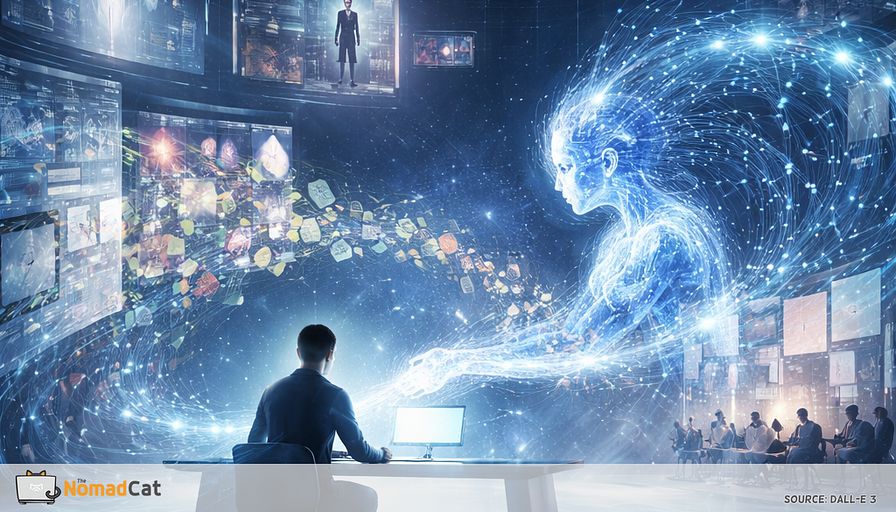
The transformative power of artificial intelligence has ventured well beyond traditional boundaries, making its mark on the creative industry. We're looking at a new frontier where machines are no longer just tools, but creators themselves. Imagine an AI that can craft original stories, compose music, paint striking imagery, and even develop novel concepts. It's astonishing to think that tasks once uniquely human can now be performed by sophisticated algorithms.
This innovation opens endless possibilities for creative professionals, technologists, and businesses alike. From enhancing productivity to inspiring novel ideas, AI's ability to generate content reshapes how we view creativity itself. As someone deeply embedded in the world of technology, I find it both exciting and humbling to witness these advancements firsthand.
But what does this mean for the future of creativity? How does AI generate such content, and what are the implications for people in creative professions? The promise of AI-powered creativity is vast, and as we explore further, we'll uncover its mechanisms, applications, and the potential challenges it may face. Get ready to delve into a world where human ingenuity and machine intelligence converge, sparking unprecedented innovation and creativity.
How generative AI works
Let me break it down for you—generative AI, at its core, is powered by machine learning algorithms that analyze vast amounts of data. These algorithms learn to recognize patterns, styles, and structures through a process called training. Imagine it as teaching a child to draw by showing them thousands of pictures. Over time, the child begins to identify common elements and can create their own drawings that mimic those they've seen.
In a similar vein, generative AI models are fed massive datasets that train them to understand the nuances of various creative outputs. For instance, a generative AI trained on a dataset of classical music scores can learn to compose new pieces that follow the musical rules and styles of Beethoven or Mozart. But how does it all work under the hood?
One of the most popular approaches is the use of neural networks, particularly Generative Adversarial Networks (GANs). GANs consist of two neural networks: a *generator* and a *discriminator*. The generator creates content, while the discriminator evaluates it. They engage in a kind of feedback loop, with the generator improving its output based on the discriminator's assessments until it produces high-quality, human-like content.
- Data Collection: Huge volumes of data are gathered to serve as the training material for the AI.
- Training: The AI is exposed to this data, during which it learns to recognize patterns, styles, and structures.
- Generation: The trained AI uses its learned knowledge to create new content, be it art, text, music, or even code.
- Evaluation: Frequent assessments are made to ensure the AI's output aligns with desired quality and creativity.
Another fascinating technique is the use of Recurrent Neural Networks (RNNs). These are especially effective for generating text and music, as they have a form of memory that helps them understand and generate sequential data. RNNs can create entire paragraphs of text or musical compositions that feel coherent and artistically sound.
The real magic happens in the remarkable ability of these models to adapt and improve. As the AI is exposed to more data and receives more feedback, it becomes better at producing content that is not only technically proficient but also emotionally resonant. This iterative process means that the AI can mimic the subtleties of human creativity, bringing forth new and surprising innovations.
From generating compelling stories to designing intricate artwork, the possibilities continue to expand. The deep mechanics behind generative AI may seem complex, but understanding them reveals just how extraordinary these technologies are. They offer a fascinating glimpse into a future where AI and human creativity intertwine, producing works that neither could accomplish alone.
Applications and benefits of generative AI
Generative AI is revolutionizing how we create and interact with content, offering practical applications and significant benefits across various creative fields. As someone deeply involved in technology, I am continually amazed by the versatility and potential of this technology to streamline processes and inspire innovation.
Customization and efficiency
Generative AI excels at customization, providing tailored content quickly and efficiently. For instance, in marketing, AI can generate personalized advertisements and promotional materials, ensuring that the message resonates with different audience segments. This level of customization was previously labor-intensive but is now achievable at scale, enhancing engagement and conversion rates.
Moreover, the efficiency generative AI brings to content creation cannot be overstated. In the film and entertainment industry, AI can assist in scriptwriting, special effects, and even character development, significantly reducing production time and costs. This allows creators to focus on higher-level creative decisions while the AI handles the repetitive tasks.
Enhancing creativity in various fields
The impact of generative AI spans multiple domains:
- Art and design: AI algorithms can generate unique artworks and design concepts, providing artists with new inspiration and techniques. For example, the collaboration between AI and human artists can produce pieces that push the boundaries of traditional art.
- Music composition: Musicians are using AI to compose new melodies and harmonies, exploring musical territories that have never been ventured before. The AI can serve as a co-creator, suggesting novel combinations of notes and rhythms.
- Fashion: Designers leverage AI to predict trends, create innovative garment designs, and even generate digital clothing for virtual fashion shows. This helps fashion houses stay ahead of the curve and cater to evolving consumer preferences.
- Literature: AI-assisted writing tools help authors in generating plot ideas, developing characters, and even drafting entire chapters. This collaboration can lead to richer storytelling and diverse narratives.
Real-world case studies
One notable example is how companies like Adobe have integrated AI into their creative suite, allowing users to automate mundane tasks and enhance their creative workflows. Whether it's using AI to automatically remove backgrounds from images or to colorize black-and-white photos, these tools enable artists to produce high-quality content more efficiently.
In another instance, fashion brand Zalando successfully utilized AI to generate new clothing designs based on customer preferences and purchasing data. This not only streamlined the design process but also ensured that the collections were aligned with market demand, boosting sales and customer satisfaction.
Staying competitive and innovative
As technology leaders, it's crucial to recognize the strategic advantages of generative AI. By incorporating these solutions into our workflows, we can maintain a competitive edge and foster a culture of innovation. Encouraging experimentation with AI-driven tools can lead to unexpected breakthroughs and keep our businesses at the forefront of the industry.
In conclusion, generative AI offers a multitude of applications and benefits that are reshaping the creative sector. From enhancing efficiency and customization to driving unprecedented innovation, the possibilities are endless. Embracing these technologies can unlock new potential and elevate the creative capabilities of professionals across various fields.
Challenges and future of AI in creativity
While the advancements of artificial intelligence in the creative field are exciting, they come with their share of hurdles. One significant challenge is the ethical implications. By venturing into areas traditionally dominated by human ingenuity, AI raises questions about authorship and originality. Who owns a piece of music composed by AI? Can a painting created by an AI hold the same value as one crafted by a human hand? These issues need thoughtful consideration to navigate the evolving relationship between human creativity and machine-generated art.
Another concern lies in the potential disruption to traditional creative professions. As AI increasingly takes on roles such as writing, designing, and composing, many professionals may feel threatened by the encroachment of automation. It's crucial for technologists and industries to strike a balance, where human and AI skills complement rather than replace each other. This collaboration can open new avenues for creativity, with humans focusing on conceptual and emotional aspects while AI handles repetitive tasks and explores new stylistic possibilities.
Furthermore, ensuring the quality and integrity of AI-generated content is paramount. While neural networks like GANs and RNNs can produce impressive results, they are not infallible. The quality of AI creations largely depends on the data they are trained on. Poor-quality data can lead to subpar or biased outputs, potentially perpetuating harmful stereotypes or misinformation. Continuous monitoring and refining of these systems are essential to maintain high standards and unbiased results.
Future trends and potential
Looking ahead, the evolution of AI in creativity offers a fascinating landscape. One notable trend is the increasing use of AI in collaborative tools that enhance human creativity rather than replace it. Imagine a digital assistant that suggests plot twists for a novel or provides unique chord progressions for a song, acting as a muse that sparks human imagination.
Moreover, advances in AI are leading to more personalized and interactive creative experiences. In gaming, for instance, AI-driven characters could adapt to players' behaviors and preferences, creating dynamic and immersive storylines. This level of interactivity can provide a novel degree of engagement, pushing the boundaries of traditional media.
Ultimately, the promise of AI in creativity lies in its ability to amplify human potential. While we must address the ethical and practical challenges, embracing AI can lead to groundbreaking innovations. As a Chief Technology Officer, I advocate for a balanced approach that harnesses AI's capabilities while safeguarding human creativity and ethical considerations. By fostering a collaborative relationship between AI and human artists, we can pave the way for a future rich with extraordinary creations and artistic exploration.
You might be interested by these articles:


Generative AI Revolutionizing Content Creation

Technology Is Key To Creativity

Elevating Robotics with AI Mastery

AI's Role in Shaping Tomorrow's Jobs

The Symphony of Creativity in an AI-Powered World

Revolutionizing Work with Immersive Learning

Edge computing redefining data privacy standards