 Gilles Crofils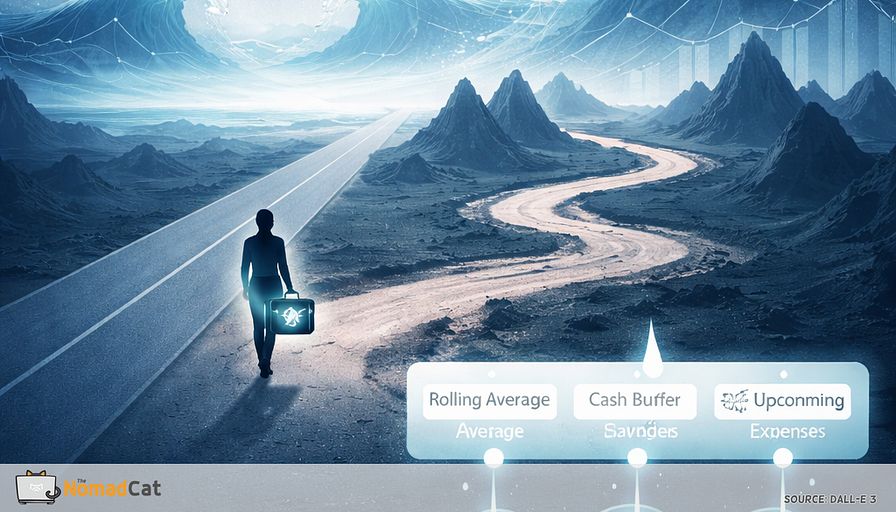
Stepping away from a steady paycheck after years in tech jobs—well, it’s a bit like leaving a smooth highway for a dirt road full of potholes. Suddenly, nothing is predictable. When I first left salaried work, I thought I could just copy-paste my old budgeting habits. Spoiler: that did not work. Income that comes and goes? It laughs at fixed budgets. I found myself stressed, missing savings, and making tough choices I never had to face before. But, with some stubbornness and a few hard-won lessons, I learned there are ways to make this new path less bumpy.
Here, I want to share why those old money habits from salaried jobs tripped me up, the extra stress that came with clinging to them, and the practical ideas that finally helped me find some stability—even when my income graph looked like a mountain range (good thing I like hiking). I’ll mix in research, but also stories from my own journey: founding a science popularization company, running a cross-border e-commerce platform, and managing a multicultural team in Beijing—all while my income zigzagged like crazy. You’ll find tips on budgeting that don’t care how much you make, minimalist dashboards, and habits that actually keep things calm.
If you’re a tech pro making the leap, or just want to tweak your money game, maybe these tools will help you build confidence—even when every month brings a new surprise.
Why fixed-paycheck thinking fails
Old habits don’t fit new income
When I first started freelancing after years in salaried roles, I tried to stick with my old budgeting habits. Fixed budgets felt safe when my paycheck landed like clockwork. But with unpredictable earnings, those habits fell apart fast. Some months, I spent more than I made. Other months, a big payment arrived and disappeared before I could save a cent.
The CFP Board (2022) points out that freelancers who use rigid budgets are more likely to struggle—overspending in slow months and missing savings when money comes in. I lived that. Here’s what tripped me up:
- Linear income thinking: I expected every month to look like the last. But freelance income bounces around. The Financial Health Network (2021) found many gig workers aren’t ready for those wild swings.
- “Save what’s left at the end”: This habit barely works with steady pay, and with variable income, it often means saving nothing. NEFE (2023) says flipping this—saving first, not last—is crucial.
- Overcommitting in good months: I’d have a few strong months, then lock into a pricey lease or buy equipment, thinking the good times would last. Intuit QuickBooks (2021) found more than a third of self-employed people overestimate yearly income this way.
These patterns weren’t just tough on my wallet—they wore on my peace of mind.
The mental cost of sticking with old routines
I’ll be honest: the first year with variable income, I was anxious all the time. I tried to force my full-time worker habits onto my new, unpredictable reality. When the numbers didn’t meet my expectations, the tension just grew. Mullainathan & Shafir (2013) talk about the “scarcity mindset,” where planning feels overwhelming. I felt that in my bones.
Here’s what happened to me (and maybe to you, too):
- I was always tweaking budgets, never catching up.
- I’d jump to quick fixes—credit cards, short-term gigs—just to plug holes.
- I planned only for the next month, never the long term.
Rigid routines made things worse. The Urban Institute (2017) and Pew Charitable Trusts (2017) found that inflexible money habits push people to chase fast solutions instead of building real security. For me, it was a loop: stress, patch, repeat.
What finally helped? Admitting that my old mindset didn’t fit this new life. I had to accept unpredictability as the new normal and build habits that could handle it.
Adopting the variable pay mindset
Accepting unpredictability as normal
After a while, I realized: unpredictability isn’t a glitch—it’s the ground I stand on now. Behavioral science backs this up. Research from IPSE (2020) and Ungar (2019) shows that accepting volatility as normal helps independent workers make better choices. Once I stopped wishing for smooth sailing, I could focus on what I actually controlled.
Resetting expectations to lower stress
Behavioral economics says it’s not just about how much money you have, but what you expect. Kahneman and Tversky (1979) explain that our “reference points” set the mood for gains and losses. When I expected steady income, every dip felt like a disaster. But when I shifted my expectations—treating changes as part of the deal—the roller coaster was less scary. Giné et al. (2021) found this mental shift cuts down fear and helps you stick with your budget. It’s like learning to surf: once you expect the waves, you stop panicking every time one hits.
Building habits that work with variable income
Simple, income-agnostic budgeting rules
I learned to build rules that work no matter what I earn. Instead of rewriting my budget every payday, I picked percentages that always apply:
- Save 20% of every payment, no matter the amount.
- Use the 50-30-20 rule: 50% for essentials, 30% for wants, 20% for savings (Warren & Warren Tyagi, 2005).
- “Pay yourself first” by moving a set amount or percent to savings before spending a cent (David Bach).
These rules cut down on tough decisions and help me stick to good habits, even when my income jumps around.
Automating discipline with defaults
I took it further by automating things. For example, I set up my bank accounts so 30% of every payment goes straight to savings. Sometimes, I live only off the average of my last three months’ income. Bill Perkins (2020) and the CFPB (2017) say these tricks make saving automatic, which means less stress and more time for, well, real work or life.
Focus on what I control
I’m a minimalist at heart, so I lean on these simple rules. Instead of spending energy predicting every dry spell, I control my actions: save a percent, cap spending, and let the chips fall where they may. The Minimalists and Cal Newport have pointed out that this approach brings more calm and stability. Once habits feel steady, it’s easier to actually see them work—not just as nice ideas, but in real life.
And honestly, founding my science popularization company taught me this the hard way. Some months, we’d land a big contract; other months, nothing. I had to build a system that didn’t care if the month was feast or famine.
Adaptive frameworks for minimalist money management
Smoothing budgets with rolling averages
Instead of matching spending to last month’s income, I use a rolling average—usually the last three to six months’ earnings. Despard et al. (2022) and tools like YNAB recommend this because it smooths out the tough months and the lucky ones. It’s simple: add up the last six months, divide by six, and use that as your spending baseline.
But no average catches every surprise. So I plan for the worst:
- Build a three-month cash cushion.
- List must-pay expenses.
- Have a plan for what to cut if things get slim.
The Aspen Institute (2021) and FPA Journal (2023) both say backup plans ease the stress of missed checks.
Running a cross-border e-commerce platform, I learned this lesson fast. Sales cycles were unpredictable—some months, orders poured in; others, crickets. Using rolling averages and keeping a cash buffer was the only way I could sleep at night.
Minimalist dashboards and automation
I keep my dashboard simple:
- Rolling average of last six months’ income.
- Cash buffer in months covered.
- Next big expenses or deadlines.
Templates from Vertex42 or Tiller Money show that simple dashboards save time and cut confusion. Automation helps even more. For example, I schedule an automatic transfer to savings every time a deposit comes in. Apps like Earnin’s Balance Shield can change the amount saved based on real income, so the process just happens.
Regular check-ins—maybe monthly—help catch problems early. I use simple triggers, like “if buffer falls under two months, cut all extras.” These small routines, mentioned by CFSI (2022) and NEFE (2023), add up to less stress and more peace of mind.
Real-world examples and mental models
How I and others built resilience
I’m not alone in this. Patrick McKenzie left a salaried engineering job to do consulting and SaaS. He tracked all his cash flow and made sure not to depend on just one client. That’s smart. I did something similar when I managed a multicultural team in Beijing—our project funding was never guaranteed, so I tracked every yuan and made sure we had backup plans.
Others, like Saron Yitbarek, leaned on community and process. She shifted from software development to running her own business, building support networks and systems to handle unpredictable money flow. For me, having a few trusted friends to talk money with made a huge difference.
Skill-building and negotiation matter, too. Aline Lerner went from engineer to founder by learning how to negotiate, setting up services that could scale, and gaining new skills to deal with income swings. I had to do the same—learning to pitch new clients, diversify income streams, and say no to risky projects.
How behavioral economics shapes my habits
Mental accounting is real. I split my money into buckets: essentials, fun, savings. It helps protect key needs, but sometimes makes it tough to adjust when income changes. It’s like having jars for bills and treats—if one runs dry, I have to remind myself it’s okay to move money around (Thaler, 1985; Morduch & Schneider, 2017).
Reference points—the amounts I’m used to earning—set the mood. If a month drops below that, it feels worse than it is. Resetting these mental points, as Kahneman & Tversky (1979) and Giné et al. (2021) note, helps cut down the worry. If one month is unusually high, I don’t assume that’s my new base, or I’ll make risky decisions.
Buffer, baseline, bonus: my favorite model
Here’s the model I use:
- Buffer: a cash cushion for slow months or emergencies.
- Baseline: covers the must-pay bills and basics.
- Bonus: anything extra, for savings, paying off debt, or just treating myself.
This setup, backed by the CFPB, Aspen Institute, and CFSI, means needs come first and stress stays lower. Keeping a healthy buffer is key for smoothing out lean times.
With a solid buffer, late payments or a slow season don’t hurt as much, while the baseline keeps essentials covered before I think about the fun stuff. Advisors like Bari Tessler and Jesse Mecham suggest sorting out the buffer and baseline before spending leftovers. For me, getting comfortable with variable income is about building habits and frameworks that keep me steady, even if the income graph jumps up and down.
Building financial confidence when the ground moves
My reflective practices
Tracking cents is fine, but reflection goes deeper. Every quarter, I sit with a coffee and my spreadsheet, looking for patterns instead of panicking about the latest dip. NEFE (2023) and Serido et al. (2019) say this helps spot trends and make choices based on real patterns, not just the latest up or down.
I make a habit of small rituals. Sometimes, I journal—just a few lines: “What went well this quarter with money, and what was stressful?” Kramer & Weber (2018) note that writing things down turns worry into clear steps.
Setting a regular planning ritual—like a monthly check-in on where new money should go—makes unpredictability just another routine. The CFPB (2021) says these habits help cut down stress and make good routines stick.
Reframing uncertainty as opportunity
Some days, bouncing income feels like a curse. But sometimes, it opens new doors. Cognitive reappraisal—looking at uncertainty as a chance, not just a problem—helps with resilience (Troy & Mauss, 2011; Shepherd, 2018). If a month’s income looks slim, maybe it’s time to try a new skill or offer. Seeing ups and downs as flexibility often leads to better satisfaction and faster changes for the better.
When I lean into being flexible, I find new ways to adjust, grow, or solve problems. Unpredictability becomes something positive. Teaming that mindset with regular reflection makes bumpy income less scary—and sometimes, even exciting.
Minimalist rules for variable income
Three rules for resilient budgeting
- Pay yourself first: Set up an automatic save of a set percent from every payment, before spending a thing. This habit, suggested by David Bach and the CFPB, keeps savings growing—even with bumpy income.
- Set spending limits with rolling averages: Use the average of your last three to six months’ income as your spending cap, not the latest paycheck. YNAB and Bill Perkins (2020) favor this method for smoothing out wild swings.
- Always keep a buffer: Have enough set aside to cover one to three months of basics. The Aspen Institute (2019) and CFPB (2015) show a cash cushion can shield you from rough patches and lower anxiety.
Simple tools make these habits stick, freeing my mind for life’s bigger stuff.
My dashboard and self-checks
I use a minimalist dashboard—just a Google Sheet, nothing fancy. I track:
- Average income over the last three to six months.
- Cash buffer (how many months I could cover).
- Any big expenses coming soon.
This keeps my focus sharp and stress down. For self-checks, I ask:
- “Is my stress because income is actually low, or am I still thinking like I have a salary?”
- “Does my dashboard say the buffer is safe and needs are covered?”
With my background in fundamental physics and a work history built on data-driven decisions, I’ve found that watching just a couple clear numbers—not an endless pile of stats—helps me trust my judgment, even when pay is lumpy. These tools, they help to keep both my finances and my mind a bit more steady, even when income is jumping everywhere.
Leaving steady paychecks behind felt risky, but building new habits for life on variable income turned out to be doable—and sometimes even rewarding. Letting go of stiff, salary-based routines gave me more flexibility and less worry. Using rules like income-agnostic budgeting, rolling averages, and always keeping a buffer helps me navigate unpredictable months with a calmer mind. Minimalist dashboards and automated habits clear up space for what matters. Regular self-checks and simple reflections replace stress with clarity, making it easier to spot what works and what needs a tweak. Turning unpredictable income into opportunity—not just a headache—has sparked new growth and ideas for me. Maybe just a tiny change in your money routine or mindset is enough to feel steadier, even when things go sideways.


