When minimalist brands need more than a quick fix
Abstract:
This article provides a practical guide for minimalist brands to recognize when surface-level fixes aren’t enough and a deeper, intentional pivot is needed to align with their market and maintain relevance. It outlines how repeating issues—such as mismatched clients, declining engagement, or generic feedback—signal the need for more than cosmetic changes, and offers simple tools like checklists and decision matrices to clarify decisions. The approach emphasizes preserving a brand’s core identity, using frameworks like the Brand Essence Wheel and “This, Not That” lists to define essential values and visual elements. Drawing on real-life examples, such as Paul Jarvis’s shift from designer to entrepreneur while keeping his minimalist ethos, and Jason Fried’s transition of 37signals to Basecamp, the article illustrates that successful pivots protect what makes a brand unique. It stresses clear, human communication during transitions, gradual updates to key brand elements, and engaging the audience for feedback to ensure trust and smooth adaptation. The author’s experience managing brand changes in Berlin reinforces the advice to keep metrics and updates simple for a calm process. Finally, the article cautions against losing brand personality or making abrupt, unexplained changes, advocating for small, data-driven steps and emotional resilience. Ultimately, it argues that minimalism makes pivots simpler and more sustainable, enabling brands to adapt and grow without sacrificing their identity.
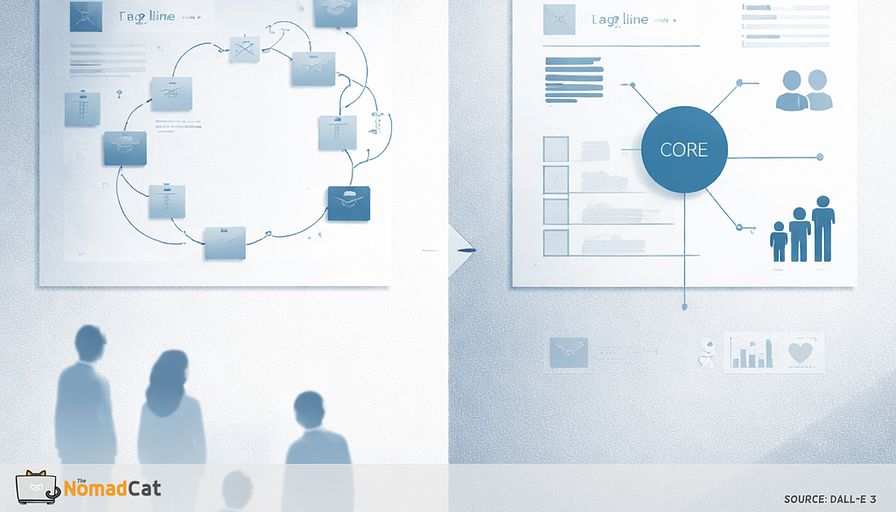
Recognizing when a minimalist brand needs more than a surface-level fix isn’t always obvious. It often starts with subtle signals: the same mismatched clients keep showing up, or feedback repeats familiar frustrations. Changing colors or taglines might seem like the answer, but sometimes the real problem goes deeper. I’ve learned this firsthand—sometimes, no amount of tweaking will solve a misalignment between what you offer and what your audience actually wants. In this article, I’ll share how to spot when small fixes aren’t enough, and why a real brand pivot might be the smarter move.
You’ll find a practical approach here, grounded in my own experience leading multicultural teams in Beijing and running data-driven marketing campaigns in Shanghai. I’ll show you how to spot clear signs that a pivot is needed, use simple tools like checklists and decision matrices to figure out the right direction, and protect what makes your brand unique as you change course. I’ll also share examples from well-known minimalist brands—and a few personal stories—about managing pivots without losing what matters. From communicating change to measuring what matters afterwards, the advice here is designed to be easy and useful.
Minimalism doesn’t mean losing your brand’s personality or making huge changes overnight. It’s about focusing on what matters, adapting with intention, and staying strong even when things get tough. I’ll show you how small brands and independents handle big changes without losing their confidence or connection with their audience. Let’s look at how a minimalist mindset can make pivots simpler and more sustainable.
When small changes aren’t enough
Spotting deeper brand signals
Minimalist brands often try quick updates—a new logo, a tagline tweak. But when the same problems keep coming back, it usually means there’s a bigger misalignment between what the brand says and what the market really wants. Small changes can mask these problems for a while, but if the same issues repeat, it’s time to look deeper. I remember in Shanghai, after a series of website tweaks, our e-commerce venture kept attracting bargain-hunters instead of the loyal, quality-focused customers we wanted. That was a wake-up call: the problem wasn’t the website color, it was the core offer.
Signs a pivot is needed
It’s easy to miss when things go off-track, especially if you’re making small updates. But some signs stand out:
- Engagement metrics stay flat or drop, even after changes
- People say the brand feels generic or not unique
- You keep attracting clients or projects that don’t fit your skills or goals
- Negative or indifferent feedback from your main audience
For example, as a tech consultant, I once kept getting offers for projects outside my expertise, even after updating my profiles. When these signals repeat, it’s time to think beyond surface changes.
Pivot or drift?
Letting little changes pile up can lead to “silent drift”—slowly moving away from your original brand without noticing. A true pivot is different. It’s a clear, data-backed decision, based on patterns like repeated feedback, slowing engagement, or losing what makes you stand out. A pivot is proactive and planned, using real data and frameworks for guidance. Once you see the need for a pivot, the next step is deciding how to pick the right path.
Simple frameworks for deciding to pivot
Minimalist checklists for clarity
When big brand problems keep coming back, I rely on focused questions and checklists. Here’s a simple decision checklist I use, inspired by my physics background and love for analytical frameworks:
Minimalist Brand Pivot Checklist
- Has my market changed significantly in the last 6–12 months?
- Is my main value proposition still clear and unique?
- Are the issues only surface-level (visuals, copy), or do they go deeper (offer, audience)?
- Are my best clients or customers different from a year ago?
- Am I seeing repeated feedback about the same problems?
- Do my core metrics (see below) show a downward trend?
If you answer “yes” to three or more, it’s time to consider a pivot.
Decision matrix example
To make the choice clearer, I often use a simple decision matrix. Here’s a version I used in Beijing when our team was debating a brand shift:
Question Yes (2 pts) Somewhat (1 pt) No (0 pts) Market has changed? Core offer still unique? Audience feedback negative? Engagement metrics dropping? Attracting wrong clients?Add up your points. A score of 6 or more means a pivot is likely needed. This approach helped us cut through endless debate and make a confident, data-driven decision.
Regular brand check-ins
Regular audits and feedback loops act like check-ups for your brand identity. I set a recurring calendar reminder every quarter to review surveys, analytics, and quick interviews. This habit has saved me from nasty surprises more than once. It keeps things calm and helps your audience keep trusting you. Once a pivot is needed, the next part is holding onto the unique parts that make your brand stand out, even while changing.
Defining and preserving your core
Finding your irreducible minimum
Every minimalist brand has a core—a set of values, a tone, and a few visuals that make it special. Knowing this is extra important when thinking about a big change. Without it, a pivot can wash away what made you memorable in the first place.
You don’t need long workshops to find your core. I like to use simple exercises, like picking a brand archetype (“the creator” or “the sage”) to align values and personality. The Brand Essence Wheel is another easy tool. It helps map out your main values, character, and what you give to your audience. These frameworks help you see what really matters, so you can hold on to these pieces during changes.
Exercises to clarify your brand’s essence
After you spot your brand’s core, make it real. One way is the “Why-How-What” framework:
- Why does your brand exist?
- How do you create value?
- What do you actually offer?
I used this in Shanghai to keep our messaging clear and tied to our purpose, especially when we were tempted to chase every new trend.
Another exercise I love is “This, Not That”—writing quick contrasts like “calm, not loud” or “data-driven, not guesswork” to show your style. These lists help define the must-keep pieces of your brand: your values, voice, and visuals that should always stay.
Mapping your signature elements
With your core clear, see how it appears in your branding. Identify your tone and voice. Are you direct and logical, or warm and chatty? Writing this down helps you keep the same style, even as things change.
Do a visual audit as well. Check your website, logo, and social media for repeated elements—a certain color, a phrase, or a simple layout style. Some brands are remembered for one strong color or a clean logo. Others keep a special tagline or headline style. Protecting these signature elements keeps your brand trustworthy and easy to spot during changes.
Before/after brand snapshotHere’s a real example from my Berlin days:
Before Pivot:
- Brand colors: muted blue and gray
- Tagline: “Smart solutions for complex problems”
- Audience: mostly local startups
- Engagement: steady, but plateaued
After Pivot:
- Brand colors: kept blue, added a bold accent
- Tagline: “Clarity for fast-moving teams”
- Audience: expanded to remote teams across Europe
- Engagement: up 30% in three months
This snapshot helped us see what to keep and what to change, making the transition smoother.
Minimalist pivots that kept their soul
Paul Jarvis is well known in the tech and creative space. He changed from being a designer to a minimalist entrepreneur. During this time, he stuck to a focus on independence and simplicity. His website and message became even simpler, and his audience kept trusting him since his core never changed.
Jason Fried with 37signals moving to Basecamp shows a similar path. Shifting from many products to one main product made the brand message clearer. The brand got simpler, but the focus stayed on clarity and helping users, making it stronger.
I’ve also seen this in my own work. When I led a multicultural team in Beijing, we pivoted from a broad “digital solutions” brand to a focused “cross-border e-commerce” identity. We kept our signature color palette and direct tone, but narrowed our offer and updated our tagline. The result? Less confusion, more of the right clients, and a team that felt more confident in our direction.
Minimalist pivot protocol
Communicating change clearly
When it’s time to announce a pivot, clear and direct messaging is key. Explain the “why” and “what” of the change in plain language—it reassures your audience. Brands such as Dunkin’ did this well when they became Dunkin’, telling people the focus was now on coffee and convenience. Mailchimp also explained its updates simply, making the new direction easy for everyone to get.
How and where you share the news matters too. Share updates across your website, social, and email, with the same message. This keeps things consistent and lets your audience see the change is planned, not random. For small brands, this steady touch is extra important for trust.
Showing the human side also helps, especially for solo brands or small teams. When the people behind the brand speak up—maybe in a video, email, or note on the website—it feels more real and reassuring. I remember recording a short video update for our Berlin clients during a major pivot. My hands were shaking, but the honest explanation built more trust than any polished press release.
Updating only what matters
Minimalist pivots don’t mean changing every little thing. Choose the elements that must shift—like your tagline, service list, or about page—and hold onto core visuals such as colors, logo, or signature fonts. Google switched from a serif to a sans-serif logo, but the colors stayed. Instagram updated its icon but kept the frame recognizable.
Rolling out changes slowly helps your audience adjust. Start with digital platforms or test changes on social profiles before going everywhere at once. This softens the change and avoids what people call “brand whiplash.” Many brands test new looks on small groups first, then make tweaks if needed.
Keeping visuals steady is just as important as your message. Dropbox and Airbnb show this well. Dropbox switched to a more abstract icon but kept its core “box” idea. Airbnb debuted a new geometric symbol but held onto community as the focus. This kind of consistency makes it easier for people to trust the brand during changes.
Transitioning your audience
Quick feedback during a pivot is helpful. Small surveys, website feedback boxes, and social polls let you see how people feel right away. They’re easy to set up and give fast insight. Having this feedback loop shows you care and lets you spot problems early.
Explaining what’s better and what happens next lets people feel included. Brands like Instagram and Lego do this by showing how new changes will make things better. Instagram, for instance, explains new features and how they help users—rather than just announcing them. Lego involves its fans in launches, saying updates are from community input. Framing your pivot as an upgrade keeps people positive. After launching, it’s smart to check how well the change is working.
Measuring brand health after a pivot
Five key metrics (with sample dashboard)
After a pivot, I track how the audience responds with a simple dashboard. Here’s what I use, based on my data-driven marketing experience:
Minimalist Brand Health Dashboard (Quarterly Review)
| Metric | Source | Target/Goal | Q1 | Q2 | Q3 | Q4 |
|----------------|----------------------|---------------------|----|----|----|----|
| Brand trust | NPS, sentiment score | 8/10 or higher | | | | |
| Engagement | Likes, shares, DMs | +10% per quarter | | | | |
| Repeat loyalty | Returning clients | 80%+ retention | | | | |
| Awareness | Mentions, reach | +15% per quarter | | | | |
| Share of voice | Social/listening | Top 3 in niche | | | | |
I fill this in every quarter. If two or more metrics drop, I dig deeper. This keeps things focused and avoids drowning in data.
Keeping reviews light and useful
A quarterly check on these few points is usually enough to spot big trends, not just short-term blips. I use a simple spreadsheet or dashboard to see how each number changes over time. This helps me stay on course and not overreact to tiny ups and downs. Short feedback loops are also helpful for adjusting your message after a pivot, so your brand keeps building trust.
Lightweight feedback loops
Catching early signals
You don’t need to wait months to know how your pivot landed. Micro-interviews, short surveys, and watching social media give you fast, informal feedback. Even a quick poll or a few conversations can show if the new direction is clear and welcomed. Fast feedback lets you fix problems early, before they get big. Still, I’ve learned not to chase every unusual comment—some reactions need time to settle.
Tweaking as you go
If feedback shows a hiccup, make small tweaks instead of starting over. Little changes—like editing a confusing line or updating an FAQ—keep things steady and lower the risk. In my Shanghai venture, we found that changing a single headline on our landing page improved signups by 20%, without a full redesign. Small, reversible changes work better than constant overhauls. Brands that stay flexible and listen avoid the trap of panicking and losing what makes them special.
Lessons and pitfalls from real minimalist pivots
Step-by-step framework for a successful pivot
Here’s the process I use, broken down into actionable steps:
- Spot the signals: Use the checklist and decision matrix to confirm if a pivot is needed.
- Define your core: Clarify your values, voice, and visuals with simple exercises.
- Map before/after: Create a snapshot of your brand elements pre- and post-pivot.
- Plan the change: Decide what to update and what to keep.
- Communicate openly: Share the “why” and “what” with your audience, using your own voice.
- Roll out gradually: Test changes on small platforms or groups first.
- Track metrics: Use a dashboard to monitor trust, engagement, loyalty, awareness, and share of voice.
- Adjust as needed: Use lightweight feedback loops to tweak, not overhaul.
Do/Don’t list for minimalist pivots
Do:
- Keep your core value in focus
- Let data guide your decisions
- Communicate openly and honestly
- Make small, reversible steps
- Involve your audience early
Don’t:
- Strip away all personality or become generic
- Ignore what your audience loves about you
- Make changes that confuse or frustrate users
- Roll out abrupt changes with no explanation
Common pitfalls
Some traps can undermine a minimalist brand pivot:
- Going too far and making the brand feel plain or forgettable
- Ignoring brand identity or forgetting what people like about you
- Making things less usable—minimalism should not cause confusion
- Abrupt changes with no explanation, which can break trust
I’ve made some of these mistakes myself. In Berlin, we once launched a new visual identity overnight, without warning. The next morning, the office was tense—emails from confused clients, teammates unsure about the new direction. It taught me to always roll out changes gradually and keep communication open.
Minimalism makes pivots manageable
Building emotional resilience
Brand changes can be stressful, especially for small teams or solo founders. I still remember the anxiety in our Berlin office the night before a major pivot—cold coffee on the desk, the hum of computers, and the quiet tension as we waited for feedback. I barely slept, worrying we’d lose what made us special. But by focusing on the essentials—our core message, our most loyal clients, and honest updates—we got through it. Minimalism helped us keep things simple and steady, even when emotions ran high.
Staying balanced
Things can go wrong if you change too much at once or give too many confusing details. Minimalist pivots should be about changing just enough to move forward, while keeping the brand’s heart. Watch out for sudden, unexplained changes or removing all personality. Small, clear steps keep transitions smooth.
Minimalist brands are built to adapt—change is a strength. The real benefit of minimalism is that it makes change easier and longer-lasting for everyone. By sticking to a simple approach and trusting your plan, you help your brand grow while staying true to what matters.
Minimalist brands don’t have to fear big changes. When done on purpose, pivots can strengthen your identity and loyalty. The main message: look for clear signs before making a big shift, use simple tools like checklists to make decisions, and always protect your brand’s key elements. Real examples—and a few hard-won lessons—show that honesty, sticking to your values, and making small changes are the best way to stay steady. Minimalism isn’t about removing everything; it’s about focusing and growing with intention.
You might be interested by these articles:


Keeping minimalist tech brands sharp and memorable

minimalist brands thrive by filtering feedback

how recurring themes make minimalist tech brands stand out

Why small signals matter for minimalist tech brands

Minimalist brand audits for solo tech professionals made simple

Tech Innovations Boosting Disaster Aid

Cybersecurity essentials for startups strengthening defenses without breaking the bank