Minimalist branding helps tech professionals get noticed and trusted
Abstract:
The article emphasizes that in the crowded tech industry, minimalist branding—characterized by clear, focused messaging and simple visuals—is a powerful strategy for independent consultants and freelancers to stand out, build trust, and attract better-fit clients. Rather than overwhelming potential clients with exhaustive lists of skills or cluttered portfolios, professionals who highlight their core strengths using concise, outcome-oriented statements (such as “I optimize cloud infrastructure for startups”) are more memorable and appealing. The piece draws on real-world examples, like Paul Jarvis and Val Geisler, who found greater success and client loyalty by narrowing their focus, and it references research and platform features (like LinkedIn and Upwork’s preference for scannable profiles) that reward simplicity. The author, drawing on their own experience simplifying complex ideas in physics, advocates for streamlined portfolios and selective testimonials, showing that less is often more when building credibility. Minimalism is presented not only as a design or communication choice but as the foundation for deeper storytelling and lasting client relationships, offering a springboard for adding personal narrative and evolving one’s brand over time.

Standing out in tech as an independent isn’t just about skills—it’s about navigating a world where autonomy feels both thrilling and a bit scary. Every day, new profiles and pitches pop up, all fighting for a slice of attention. For many of us, the excitement of choosing our own path comes with real worries: Will clients remember me? Can I keep my income steady? Will I end up working all night just to keep up? In this noisy space, I’ve learned that what really works isn’t shouting louder, but stripping things back. Simplicity—real, honest, minimalist branding—cuts through the chaos and builds trust, even when you’re just one person against the crowd.
This article explores why minimalist branding is more than a passing trend for independent tech professionals. I’ll share how focused messaging helps people remember and trust you, why profiles that lead with results do better, and how clean visuals speed up client decisions. You’ll see real examples, research, and a few stories from my own journey—like founding a science popularization company and leading a multicultural team in Beijing—showing how saying less can actually say much more. Minimalism isn’t about hiding who you are; it’s about making space for deeper stories and stronger relationships, even when the freelance life feels uncertain.
If you’re a consultant, freelancer, or just want your profile to stick in someone’s mind, these ideas can help you build a brand that isn’t just noticed, but remembered. Cut the clutter, focus on what matters, and let simplicity give you a real edge.
Why simplicity inspires trust in tech
Overload and the power of clarity
Clients and hiring managers face a flood of portfolios and messages. It’s overwhelming—sometimes, it feels like everything blurs together. When there’s too much to process, people pick what’s simple. If you keep things focused, it makes more easy for clients to spot you and remember you. That’s why minimalist branding isn’t just a nice-to-have—it’s often the only way to get noticed.
Simplicity is not only about using fewer words. Some online platforms, like Upwork and LinkedIn, reward profiles that are easy to scan. If you highlight only what’s most important and skip the rest, you stand out. For example, a tech consultant with a line like “I optimize cloud infrastructure for fast-growing startups” will stick in the mind much more than someone listing every possible service. According to a 2023 LinkedIn study, profiles with concise, outcome-driven summaries receive 27% more client messages than those with long, unfocused descriptions.
These platforms also use short summary fields, keyword tags, and focused sections that help simple profiles show up more often. Clients then find it easier to decide, which improves satisfaction overall.
Minimalist signals build trust quickly
Clients in tech are often cautious. They want honesty and clarity, not heavy jargon. Simple messaging makes you look open and genuine—key traits when everyone’s claiming to be an expert. I remember when I was pitching my science startup to investors in Paris. At first, I tried to impress with technical details, but I saw their eyes glaze over. When I switched to a single, clear line—“We make science easy for everyone”—suddenly, people leaned in. That lesson stuck with me: clarity wins trust.
Short, strong statements help too. Lines like “I build secure APIs for fintech” show confidence and focus. If you can explain your value in just one line, clients see you as an expert who gets to the point. In a crowded field of generalists, this is powerful.
Visual design matters as well. Clean, uncluttered portfolios and websites—with simple layouts, not too many colors, and clear text—look more professional and are easier for hiring managers to judge. Good design isn’t just about looking nice; it shows you’re organized and trustworthy, making clients more comfortable reaching out.
Radical clarity in brand positioning
Focused brand signals stand out
Bland, catch-all profiles get ignored. To stand out, you need to signal what makes you unique. Studies show that clear, memorable brand cues—like a confident one-liner—work better than long skills lists. Specific, simple messages about your specialty are easy to remember.
Being remembered is as important as being noticed. Generic profiles often get skipped or forgotten. Minimalist ones that point to a main skill—like “I design secure payment systems for fintech startups”—trigger curiosity and make it easier for clients to remember who you are. According to a 2022 survey by Clutch, 61% of small business owners said they remembered and contacted freelancers whose profiles had a single, focused message, compared to only 34% for those with broad, multi-skill profiles.
For independents who rely on repeat business, being remembered for your main strength brings more work and better long-term connections. A focused profile leads to more engagement and client loyalty, both key for steady work.
Specialization leads to real-world success
Some well-known specialists prove that narrowing your offer brings better results. Paul Jarvis shifted from broad web work to focusing on creative professionals and small businesses. This made his work more respected and brought in better clients.
You see the same pattern elsewhere:
- Val Geisler moved from general writing to SaaS email strategy, landing bigger clients and better pay.
- Kai Davis switched from general marketing to e-commerce SEO.
- Nick Disabato focused on Shopify conversion optimization.
Each time, specializing led to stronger authority and better projects.
Minimalist specialist branding almost always brings better-fit clients and more enjoyable work. Compared to big agencies, independents who focus tend to get picked for tricky tech projects—and they often like their jobs more, too. It’s a recipe for staying busy, being valued, and building good relationships over time.
Minimalism as a competitive edge
Specialists versus agency sprawl
Agencies can bring lots of resources and handle large, complex projects, but they may not always have very specific knowledge or creativity. Many clients now prefer independent specialists for demanding or creative work. According to a 2023 Edelman Trust Barometer report, 54% of business leaders said they trust independent tech consultants more than agencies for specialized projects, citing deeper expertise and faster turnaround.
Clients looking for niche expertise skip past generic agencies and instead seek out independents with clear, minimalist profiles. These brands make deep expertise easy to spot. Many business leaders say independent professionals offer more specialization and a personal touch.
Big agencies may be good at handling complex jobs, but they often move slower or lack up-to-date tech skills. Independents, on the other hand, can move quickly and adapt. Minimalist branding makes the selection easier—clients know right away if you’re a match, without needing to dig through long lists or layers of management. For instance, “I build secure APIs for fintech” says it all and helps a client make a decision fast.
Trying to do too much is a risk, though. When independents claim too many skills, it can be confusing. Focused brands avoid this by highlighting just a few main strengths, keeping it easy for clients to know what you offer. Statements like “I optimize cloud infrastructure for startups” make it simpler for clients to choose and usually lead to better matches.
Financial realities and work-life boundariesWhen I left my corporate job in Beijing to go independent, I worried about money and burnout. At first, I tried to offer every service I could—websites, translation, consulting, even voiceovers. But it was exhausting, and my income was unpredictable. Only when I focused my brand on what I did best—helping tech teams communicate complex ideas simply—did things stabilize. My work hours became more regular, and I could finally take weekends off without guilt. Minimalism didn’t just help my brand; it helped my mental health and my bank account.
The danger of expertise inflation and the value of authenticity
Trying to be a jack-of-all-trades by listing endless skills can backfire. Decision makers often skip over such profiles, worrying you’re not really focused or may be overreaching. Minimalist branding solves this by keeping your main skills front and center and avoiding the urge to over-claim.
Focusing on your best skills builds trust and helps with better job matching. Clients remember and trust clear, authentic profiles more than all-purpose ones. This way, project results usually improve and expectations are clearer. Honesty also protects your reputation—stretching the truth can lose you work or damage trust.
Keeping things authentic isn’t just a short-term trick; it supports a strong career long term. When you lead with clear strengths, clients decide faster, and your reputation grows. Minimalist branding, rooted in truth, sets you up for steady growth and rewarding projects.
So what does this look like in practice? Let’s look at how minimalist branding shows up in real portfolios, bios, and testimonials to see how it helps specialists stand out and build trust.
What minimalist brand signals look and feel like
Outcome-focused messaging that sticks
Effective outcome-focused messaging is brief and zeroes in on what you do and who benefits. The best minimalist brands use one statement that says it all. Approaches like the Rule of One or StoryBrand can help: What’s the main thing you do, for whom, and with what result? Here’s a quick checklist I use:
- Is my summary clear and targeted?
- Does it focus on outcomes, not just tasks?
- Can someone remember it after reading once?
Research from the Freelancers Union in 2022 found that profiles with a single, outcome-driven headline received 40% more client inquiries than those with generic summaries. Keeping your summary about the one transformation or benefit you offer really works.
My background in fundamental physics made me value the art of simplifying complicated ideas. I remember pitching a business plan to investors in Paris, where I had to explain quantum computing in two minutes. I realized that if I couldn’t make it simple, I’d lose them. That experience taught me to strip away the noise, both in science and in branding. Now, I use the same approach for client portfolios and testimonials—always aiming for clarity first.
Curated testimonials and streamlined portfolios
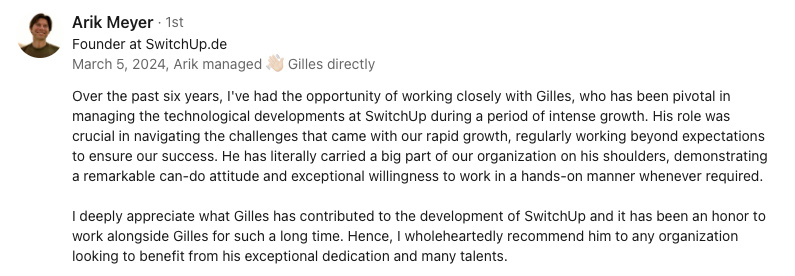
A single, well-chosen testimonial is often worth more than a whole list of generic ones. Picking out the most relevant endorsements lets clients see if you are a good fit, which builds trust quickly. On the other hand, overloaded portfolios with too many testimonials or off-topic projects can make it harder for clients to judge your strengths.
Here’s how I approach it:
- Choose 1–2 testimonials that speak directly to your main skill.
- Select 2–3 projects that show your best work, each with a short note about the challenge and outcome.
- Avoid listing every job—focus on what matches your brand.
Recruiters often say this is more professional and easier to read. Designers like Jon Moore or Tim Roussilhe show that just a few carefully selected projects, with focused stories, put your expertise front and center.
Doing less in your testimonials and portfolio saves time for everyone and shows confidence in your work. The benefits are:
- Faster trust through relevant content
- Easier evaluation for clients
- Shows you’re intentional and professional
Visual minimalism for memorability
Minimalist visual branding—few colors, simple layouts, matching fonts—makes brands easier to remember and look more reliable. Many top tech professionals use this approach, as less visual clutter means more focus on your important points. A clear, simple design feels steady and noticeable in a busy online world.
Consistency is essential. If your logo, portfolio, and other materials use the same clean approach, clients remember you better. People connect consistency with quality and reliability.
Minimalist visuals also leave more room for your key story and results. With the clutter gone, your strengths take the spotlight and are easier to remember.
Minimalist branding as a springboard for deeper storytelling
Building narrative depth on a minimalist foundation
Minimalist branding doesn’t mean hiding your personality. Instead, it gives you a clear platform for adding your unique stories. When you lead with focused branding—like an outline before writing a story—there’s room for meaningful details to follow. Starting simple helps you decide what extra information to add later, making sure it fits your main message. This idea, described by branding experts, means simplifying your brand first to make it more memorable, then using that base to build real stories over time.
Revealing more as trust grows
Minimalism lets you reveal your story piece by piece. At first, you share just the essentials—what you do best, who you help, and the impact you provide. As you build trust with clients, you introduce more personal context or background, each detail supporting your main message. Experts find that this steady approach keeps your brand strong and prevents it from getting watered down. Taking it step by step helps clients stay clear about what you offer.
Minimalism as the beginning of brand evolution
Minimalist branding is only a first step. After building clarity, you can add in personal stories, values, and a unique look to build a brand that’s more human. Later articles can get into these advanced ideas—showing how a simple, strong foundation lets new brand stories and styles grow. Minimalism isn’t an end; it’s the start of building deeper connections over time.
Minimalist branding isn’t just about how things look. For me, it’s a way to survive—and even thrive—in the unpredictable world of independent tech work. When I stripped my brand down to the essentials, I felt more free, but also a bit anxious: Would clients think I was too simple? Would I lose work? But soon, I saw that clients trusted me faster, and I could focus on projects I actually enjoyed. There’s a real excitement in knowing your work stands out for the right reasons. Keeping messages simple and visuals tidy lets consultants and freelancers attract the right clients, work on better projects, and grow stronger relationships. Real examples—and my own story—show that narrowing your focus makes work more sustainable and satisfying, and builds a reputation based in truth. Minimalism helps you make a great first impression, but it also gives you the space for bigger stories and memorable projects as trust grows. Refining your portfolio or pitch to the essentials can make your value clear and distinct every time. And, honestly, it makes more easy to sleep at night, knowing your brand is working for you, not against you.
You might be interested by these articles:


How to tell a tech story people actually remember

Stand out by doing less the minimalist niche advantage for tech pros

Minimalism that makes your tech portfolio shine

Why saying less online makes you stand out.

how recurring themes make minimalist tech brands stand out

Minimalist rituals for real connection in tech and remote work

Buffer months made simple for tech freelancers