Choosing your legal structure as a tech independent in Europe made simple
Abstract:
The article addresses the complexities tech independents face when choosing a legal structure in Europe, highlighting how varying national rules and confusing paperwork can overwhelm even the most organized professionals and cause costly delays. To combat this, the article introduces a practical, visual decision canvas—a one-page comparison tool that lays out the main types of legal entities (such as sole proprietorships, limited companies, freelancer status, and partnerships) against key criteria like liability, setup speed, costs, client expectations, and administrative load. By using clear icons and side-by-side comparisons, the canvas helps individuals quickly identify the structure best suited to their needs, whether they are solo developers seeking a fast start, partners balancing credibility and risk, or product builders planning for growth and investment. The article shares real-world scenarios to illustrate how different priorities guide the choice of entity and emphasizes that making a timely, “good enough” decision is usually better than endless research. A checklist for essential setup steps—like registration, opening a business account, and securing contracts and insurance—underscores that simplicity should not come at the expense of legal compliance. Drawing on the author’s own data-driven approach, the article encourages tech professionals to use the canvas for clarity and confidence, ensuring a smooth start and foundation for future growth.
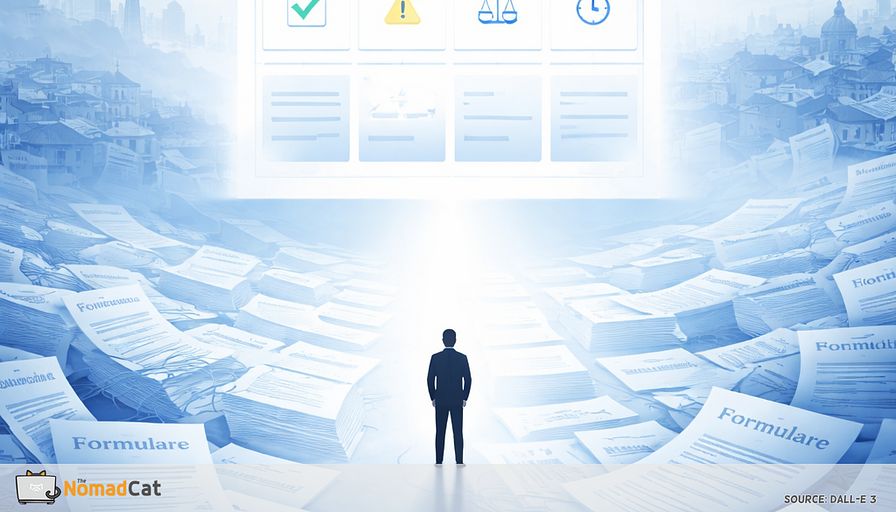
Choosing a legal structure as a tech independent in Europe is rarely simple. I’ve been there myself—one minute, I’m excited about freelancing, the next, I’m knee-deep in forms that seem to multiply with every new client or border. Even the most organized among us can feel stuck. For those who like clear frameworks and decisions backed by data (guilty as charged, thanks to my physics background), the confusion can get overwhelming. Sometimes it’s enough to hit pause before really beginning.
If you’re about to leave a corporate post and want to launch fast, here’s the day-one legal and admin checklist I wish I’d had in my own transitions (from Berlin to Lisbon, and a few places in between):
Day-One Launch Checklist
1. Choose your legal entity (sole trader, limited company, freelancer, or partnership)
2. Register with business and tax offices (get your company number, tax ID, VAT if needed)
3. Open a business bank account (keep work and personal finances separate)
4. Draft basic contracts and agreements (for clients, or a partnership agreement if relevant)
5. Check for required insurance or permits (don’t skip this—missing it can cause big headaches)
Keep this list handy. It’s the backbone for a safe, fast start—no matter which country you’re in.
This article explains why picking a legal entity can feel confusing, especially if you want to start fast. I’ll lay out the main options, share why the process can be frustrating, and introduce a simple tool that helped me clear things up. Focusing on what really matters—speed, simplicity, liability, and future flexibility—I’ll keep the legal jargon to a minimum.
Here’s what’s inside: a real look at the main types of legal entities in Europe, a simple way to compare them, and everyday scenarios showing how these choices work for solo developers, partners, and product builders. There’s also a checklist for setting up once you’ve picked, and reminders of why skipping the steps can lead to trouble later.
If bureaucracy ever left you feeling lost or you froze facing too many options, trust me, you’re not alone. I still remember my first week after leaving a corporate job in Berlin—staring at a pile of forms, half in German, half in legalese, and feeling like I’d wandered into a Kafka novel. The good news? With the right approach, finding a structure that works for your setup—and keeps you sane—can be possible, and maybe even a bit enjoyable.
Why choosing a legal entity is so confusing for tech independents
The patchwork of legal options across Europe
Choosing the right legal entity as a tech independent in Europe can feel like walking through a maze built just for paperwork lovers. Every country has its own rules, names, and requirements. Things get even trickier if you dream about working remotely or serving clients across borders. Suddenly, every form appears in a different language, and the rules change every few steps. It’s enough to make your head spin.
When I first looked at the main types of entities, I found there are usually four main choices, each with their local twist:
- Sole proprietorship: EI (France), Einzelunternehmen (Germany), Sole Trader (UK), Eenmanszaak (Netherlands)
- Limited liability company: SARL (France), GmbH (Germany), Ltd (UK), BV (Netherlands)
- Freelancer or independent contractor status: Auto-entrepreneur (France), Freiberufler (Germany), ZZP (Netherlands)
- Partnership: SNC (France), PartG (Germany), Partnership (UK), VOF (Netherlands)
Knowing these and their local names is important. Each type comes with its own paperwork, risks, and benefits, so simply picking what sounds familiar isn’t the best plan.
But even after narrowing things down, finding guidance is hard. No single guide covers all of Europe. I remember patching together info from a dozen sources—some in French, some in German, some in English—and the advice never quite matched. So a lot of time goes into reading and comparing, but the answers stay fuzzy. It’s not shocking that many people feel stuck or annoyed.
The hidden costs of indecision and overwhelm
Confusion doesn’t just slow you down—it comes with real costs. I’ve seen it (and felt it) firsthand: leaving a corporate job, ready to dive into independent tech work, only to waste weeks researching legal entities. Every day of doubt is a day of lost income and chances. The stress gets heavy. I’ve circled the same questions, feeling less sure as the search went on.
Worrying about mistakes leads to more waiting. Administrative pressure and the fear of a one-way decision drive some to put things off or just take the easiest option, not checking if it’s a good fit for future needs. That might bring quick relief, but it can cause bigger trouble if the business grows or if the legal scene changes.
I remember one night in Lisbon, surrounded by stacks of paperwork, feeling like I’d never get through the fog. It was only when I started sketching out a visual matrix—literally on the back of a napkin—that things started to clear. It felt like clearing a fog after weeks of paperwork-induced headaches.
Tech professionals often like building with data and strong frameworks. For me, that’s second nature—my background in physics and business analytics means I see everything as a system to optimize. But here, the lack of clarity is frustrating. Most guides lack simple, visual tools, which makes compliance and planning for growth feel difficult.
A visual tool helps here. When I co-founded a science popularization company, I used a decision matrix to weigh entity types, risks, and costs. Later, managing a multicultural team in Beijing, I relied on visual frameworks to cut through ambiguity and align everyone fast. Without a framework, even this process felt exhausting. A clear, visual approach makes the process about fitting your needs, not reading more legal lingo.
The one-page decision canvas for entity selection
What a one-page canvas really looks like
Picture a single page that acts like a cheat sheet for your business plans. The entity canvas uses a simple table, with a row for each main entity type—sole trader, limited company, partnership, and umbrella company. Across the top, you see the key things that matter most for tech independents. This layout puts everything side by side, making comparison easy.
The real value is in which criteria you pick. Each space on the table gives a quick idea of how an entity stacks up for each factor.
Practical, real-world concerns sit at the heart of the canvas. Some typical factors are:
- Liability: Are you personally responsible, or does the entity protect your assets?
- Setup time: How fast can you start?
- Cost: What will you pay upfront and then each month or year?
- Tax simplicity: Is handling taxes easy, or do you need outside help all the time?
- Client preference: Do clients prefer or trust this setup?
- Intellectual property (IP): Who owns the work?
- Admin load: How much paperwork is there?
- Insurance: Is it simple to get covered?
Each part of the table shows how an entity performs for each factor—so spotting what fits you is much simpler.
The canvas keeps things clear with visual cues. Simple colors or icons—green checkmarks, red crosses, yellow warnings—do a lot of the work. The important ideas pop out without deep reading. It’s a bit like using emojis for your business plans: quick, clear, sometimes a little funny.
How the canvas helps
Most guides drown tech independents with legal comparisons, making the task feel endless. The decision canvas changes this, focusing only on what matters for starting out. Instead of reading pages of rules, you see the big ideas in one go. That makes moving ahead easier, especially with limited time or energy.
The canvas also skips guessing every possible future problem. The point is to focus on what you need to start. For example, someone wanting to freelance as a developer doesn’t need to worry about international tax planning or rare legal wrinkles from the start. The canvas brings it back to basics, making things less scary.
This way of looking at things can stop the endless research loop. The goal isn’t finding some perfect answer, but choosing what works for your first year in business. Changes are possible later as things grow or shift.
So how does this help when making your own choice? By clearing away extra noise, the canvas builds clarity and enough trust to move. Sometimes, a solution that’s good enough is the smartest and easiest way to get going.
How to use the decision canvas to make choices fast
Get your basics ready
You don’t need to be a legal expert to use the canvas. A little preparation makes it all run smoother. Here’s what’s good to list before starting:
- Business activity: What are you selling—services or products?
- Expected clients: Will you work with people, companies, or agencies?
- Risk appetite: Are you fine with personal liability, or do you want extra protection?
- Country rules: Are there special freelancer setups or legal steps in your country?
Getting these clear helps avoid slip-ups like missing out on useful tax setups or underestimating the paperwork.
A simple checklist helps focus before getting buried in details. You don’t need to know all the tax codes—just where your main risks and needs are. This makes moving to the next step less stressful, oui.
A quick checklist:
- What do you sell?
- Who are your main clients?
- Will you work alone or with a partner?
- Do clients care about your business structure?
Having these answers means you won’t overlook something key as you choose.
Decide in under 30 minutes
Use the canvas to score each entity type based on what matters to you: liability, time, clients’ opinions, and so on. The side-by-side look makes it easy to see the best fit, skipping the confusion of legal language.
Sometimes, two options seem equal. In this case, look at your priorities for the next few months. If you want to skip paperwork and start fast, sole proprietorship or freelancer status often stands out. If you dream of scaling or working with someone else, a limited company could make more sense. The canvas shows these trade-offs clearly.
Before choosing, look for deal-breakers that might change your mind. If you lean toward partnership, but find out insurance needs are too big or the IP rules don’t fit, you’ll save yourself a headache by spotting that now.
Common deal-breakers:
- Insurance you can’t easily get
- IP rules that don’t work for your plans
- Paperwork workload that’s too much
Here’s where my data-driven side comes in handy. When I was CTO in Berlin, we used a simple scoring matrix—just a spreadsheet, nothing fancy—to weigh risk, admin load, and client perception. It cut through the ambiguity and let us make a call in under half an hour. Quick, smart decisions are often better than long delays chasing perfection.
The main thing is making a clear, solid choice and not getting stuck searching for the perfect answer. Most tech independents can move forward with the confidence that they can revisit the structure later as their work grows or shifts.
Real-world scenarios using the decision canvas
Speed and simplicity for solo developers
A solo developer, looking to consult for agencies and small clients, usually values speed and low hassle the most. The canvas makes comparing options quick and easy. Getting set up fast, with little paperwork and low costs, is often the top need. Many in this situation try to avoid early admin headaches.
The canvas highlights sole trader or freelancer status as the easiest for starting—accepting a bit of personal risk in exchange for low barriers to entry. This choice lets you start invoicing almost right away, no waiting for big registration steps.
- Pros: Fast start, little paperwork, low costs, full control.
- Cons: Unlimited personal liability, sometimes less credibility with big clients, less access to certain benefits.
At this stage, most clients don’t ask for a formal company. The ability to start quickly can save lost opportunities and help momentum. Bigger ambitions or partnership plans make the priorities look different.
Balancing risk and credibility in a two-person consultancy
When two tech professionals join forces for consulting with larger clients, new questions pop up: clients may want extra proof of credibility and managing risks together becomes important. The canvas helps with weighing partnership versus limited company. One might say, A partnership looks simple, but what about risk? while thinking, Do bigger clients see us as professional?
A partnership is easy and means shared admin, but both partners share risk. Limited companies give protection for personal assets and usually look more trustworthy to enterprise clients, but with more ongoing work and higher set-up costs.
- Partnership: Simple start, shared admin, but both take the risk.
- Limited company: Asset protection, better client trust, but more paperwork and expense.
Often, the extra paperwork and steps of a limited company are worth it for credibility and safety. Product builders have other priorities.
Planning for scale and investment as a product builder
A tech founder wanting to build a SaaS tool faces different choices. Growth, investment, and hiring may all be on the roadmap. The canvas quickly makes clear which options have space for this. For big visions, bringing in new people or investors means the entity structure must suit expansion.
Sole trader won’t work for bringing in investment or building a bigger team. A limited company is designed for these needs, offering structure for hiring, ownership, and attracting investors.
- Sole trader: Quick start, but won’t support future scaling or funding.
- Limited company: Ready for hiring, investment, and IP management, with more required admin.
Looking at these options side by side, founders can choose with confidence, saving later drama or switches. I learned this the hard way when co-founding a cross-border e-commerce platform in Shanghai—choosing the wrong entity at first slowed our launch by weeks and made onboarding investors a bureaucratic nightmare. Once we switched to a structure built for scale, things moved much faster.
When I was CTO in Berlin, I had to balance short-term needs (get the first client, keep costs low) with long-term vision (build a team, attract funding). The decision canvas helped me see that starting with a flexible structure was worth a little extra paperwork upfront.
Once the choice is made, next comes putting all the pieces in place.
What to do after choosing your legal entity
Essential next steps for a smooth start
With your legal entity picked, a few important steps will turn your choice into a real business. First, register your business with your national authority—this is how you get your company number, tax ID, and VAT registration if needed. Next, open a dedicated business bank account. This makes separating your personal and work finances much simpler. Then, put together basic contracts for clients or, in partnerships, a partnership agreement. This gives clarity from the beginning. Also, check if your work needs any particular insurance or permits, as missing these can cause big problems later.
Doing these things early on saves trouble and surprises. Official websites and sector guides can help you avoid missing anything—key steps like required filings or registrations. Following a checklist is a practical way to avoid nasty surprises such as sudden tax bills or compliance trouble.
It’s also smart to do a regular check—maybe every year—to see if your setup still fits your needs or if change would help. Minimalism doesn’t mean skipping the steps that keep your business safe and running.
Minimalism means simplicity, not skipping essentials
A minimalist way of working isn’t about forgetting the basics. It’s more like packing for a trip with only what you need—but not leaving your passport behind. Registration, contracts, and doing the right filings are the foundation for a safe business. These steps keep you out of trouble without burying you in unnecessary paperwork.
Skipping the main setup steps can end up in fines, lost clients, or even getting stopped from trading. The decision canvas guides you to a simple setup, but it’s not about missing out on what keeps you legal and safe. Setting things up efficiently makes sense, but cutting corners on compliance is not worth the headache. As someone who loves gardening and carpentry, I know you can’t build a sturdy shed or grow tomatoes without the right groundwork. With good foundations in place, you’re ready for whatever comes next.
If you’re feeling lost in the paperwork maze, know that I’ve been there too. The right checklist and a clear framework can turn the fog into a path forward. And if you ever need a sanity check, just remember: even a physicist can get tangled in bureaucracy—but with the right tools, you’ll find your way out.
You might be interested by these articles:


How to launch your tech business in Europe in 24 hours

Simple Habits That Keep Tech Freelancers Protected

when minimalist admin backfires for tech pros

Why simple contracts make freelance tech work easier and safer

How to pick your tech niche without getting overwhelmed

Debugging self-doubt after big tech with structured journaling

03:00 planning mode is a context bug not stress