simplifying debt for indie tech pros
Abstract:
The article addresses the often-overlooked problem of overlapping debts among indie tech professionals, such as freelancers, developers, and founders, who frequently juggle multiple forms of credit—credit cards, buy-now-pay-later plans, microloans—due to unpredictable income and blurred lines between business and personal expenses. It highlights the unique challenges this group faces, such as the hidden risks of debt sprawl, the mental strain of managing fragmented debts, and why conventional debt advice doesn’t always fit their context. The author recommends building a detailed debt map, using digital tools to visualize obligations, and adopting minimalist strategies—like focusing on quick-win payoff methods, automating payments, and conducting monthly check-ins—to regain control and reduce stress. The article also emphasizes establishing clear boundaries for future borrowing with decision filters and easy-to-use scripts for declining unnecessary credit. Distinctive personal examples from indie founders, including Courtland Allen, Daniel Vassallo, Tyler Tringas, and Arvid Kahl, illustrate how simplifying or eliminating debt not only improves financial health but also creates the freedom and mental space needed for creative and business pursuits. Overall, the article’s main message is that, for indie tech professionals, managing overlapping debts with clarity, minimalism, and routine can transform financial chaos into manageable order, ultimately supporting both professional and personal well-being.
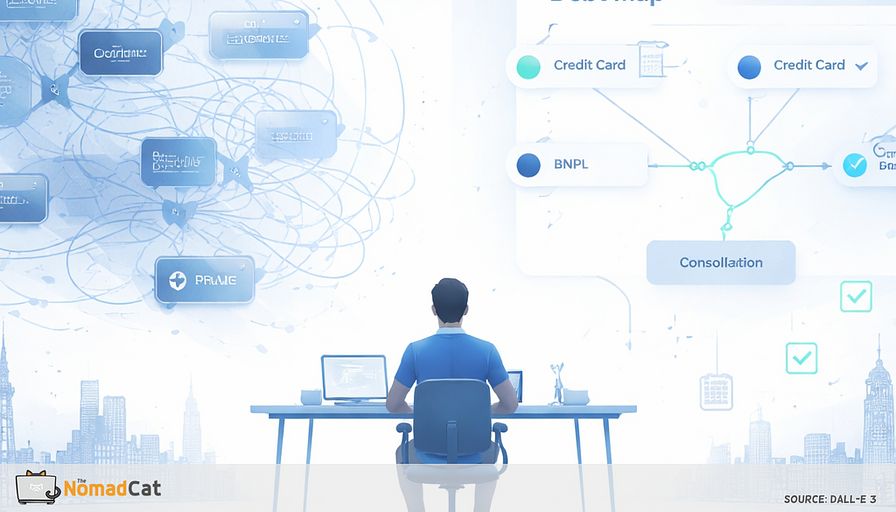
There’s a kind of disorder that comes with managing money as an indie tech professional. Some weeks, it’s a credit card bridging the gap while waiting for a client payment. Other times, it’s a buy-now-pay-later for a laptop or a microloan for a vital SaaS tool. These small debts, they add up fast. And when business and personal expenses overlap, it all gets blurry. I find it’s easy to lose track, and even easier for risks to sneak up on me while I focus on work.
I’ve found that overlapping debts are a real but often hidden problem for freelancers, indie developers, and tech founders. In my own journey—especially when I moved from Berlin to Lisbon and had to juggle several small business loans and personal expenses—I learned the hard way how quickly things can spiral. Here, I’ll share simple ways I use to see my true debt picture, notice trouble early, and use minimalist strategies to get back on top. The focus is on building a clear debt map, picking the right way to pay off what I owe, using digital tools, and setting clear rules for borrowing. I’ll also bring in stories from indie founders who reduced debt and found more freedom, to show these steps work outside of theory.
Whether my income is steady or up and down, understanding overlapping debts isn’t just about saving money—it helps reduce stress and gives me more space to build projects that matter. If debt feels overwhelming, I hope you’ll find routines and ideas here to make it all more manageable—and a bit lighter.
The hidden risks of overlapping debts
Why debt stacking is a silent threat for indie tech professionals
For many indie tech folks, debt isn’t just one credit card or a single loan. It’s a mix: credit cards for daily costs, credit lines to fill gaps between projects, buy-now-pay-later for new gear, and sometimes microloans for a surprise tool. These blend together, especially when work and personal expenses mix.
And with income that’s never guaranteed—a late client here, a slow month there—the debt pile can grow without much notice. The problem? I often don’t see how exposed I am until it’s almost too late.
Unlike salaried jobs, tech freelancers and founders often depend on whatever credit they can get to keep afloat. One month, maybe it’s a buy-now-pay-later for a laptop. The next, a credit card for urgent software. Each piece of debt comes with its own deadlines and quirks, making it tough to keep track, especially if income changes each month. Hidden fees, they can sneak in, and debt becomes hard to manage.
Standard debt advice usually expects a set paycheck and a clean split between personal and business costs. The classic advice like “pay off the highest interest debt first” may sound great, but for indie tech pros, slow months sometimes mean needing that credit just to pay rent. When there’s no clear line and income jumps around, the usual approaches might not work and can even backfire. That makes it even more important to look closely at the small costs of letting debts add up.
The real price of debt sprawl
When several debts pile up, I end up paying interest on many balances—often at high rates. Even small debts, like €50 here or €30 there, can add up and quietly drain money that could be used for something better. If I miss a payment, late fees and penalties add to the strain. The operational side is just as tough: the more debts I’m juggling, the easier it is to lose track. Missed due dates mean late fees and credit score dings. For those with unpredictable income, keeping up with payments gets tricky.
Fragmented debts are like background noise: constant reminders, worries, and a sense that something is always slipping. This tension, it can make it harder to focus, both at work and at home. The first solution is simple—map out your entire debt picture. Clarity cuts through the mess.
Making your debt visible
Building your debt map
The first move I make to get control over overlapping debts is to make everything visible. I list every single debt—credit cards, loans, buy-now-pay-later, even a leftover microloan for software. For each one, I write down what’s owed, the interest rate, minimum payment, and the due date. Even debts that seem small or temporary, they matter. Once I have the list, I sort it this way:
- Split debts by type: personal, business, or mixed-use
- Add what each debt is for (like hardware, marketing, or living costs)
- Write interest rates and payment details next to each
Having all this in front of me makes it much easier to spot where money is leaking or which debts need attention first.
After listing, I organize my debts by type and purpose. I see which ones are important for my business and what can be cleared. Using colors or digital tags—one for business, one for personal, another for mixed-use—turns this process into less of a chore and helps me see patterns. I once color-coded my debts and realized my laptop was more expensive than my first car—c’est la vie.
Digital tools, they bring the debt map to life. Spreadsheets, tracking apps, or dashboards can show everything in one place—balances, due dates, totals for the month. For example, YNAB (You Need A Budget) lets me tag each debt and see upcoming payments at a glance. When I see my numbers, progress feels real. I might spot trends I’d miss with just a list. Try different tools until you find one that fits. Watching the numbers go down, even a little, can be a good motivator. But how do I know when debt is getting out of control?
Spotting warning signs early
Some numbers make it clear when debt starts to become an issue. I look for these signs:
- Debt makes up more than about 30–40 percent of my income
- Monthly payments are taking a big piece of my pay
- More than a couple of late payments in recent months
- Short-term debts are growing faster than I can pay them off
If any of these feel familiar, it’s time to hit pause and rethink the plan.
But it’s not just about numbers. If I’m always moving money to cover bills, worried about opening my banking app, or confused about what’s due, that’s a big signal that debt has gotten too complicated. Emotional stress and avoidance count, too. When I spot the warning signs, it’s time to simplify and get control back.
Minimalist frameworks for debt simplification
Picking the right payoff path
Quick wins often matter more than perfect math, especially when juggling projects. The avalanche method pays off the highest-interest debts first, which saves money but takes lots of tracking. The snowball method pays off the smallest debts first, giving quick wins and less stress. Here’s a quick look:
Method Pros Cons Avalanche Saves on total interest More complex, slower wins Snowball Fast wins, less stress May cost more in interestBoth work, but if my income bounces around, the snowball can keep me motivated. Sometimes, I just need to see one less bill in my inbox to feel like I’m making progress.
Momentum through simplicity
Digital tools help me stick to any strategy. Clearing two small debts in the same month means fewer accounts to track and a bit more focus for creative work. These fast wins, they boost my confidence and free up energy for more important things.
Automating progress and staying alert
Visual dashboards and trackers make debt payoff automatic. Apps can show my progress, catch missed payments, and flag new risks. Automation makes things less overwhelming. But sometimes, it makes sense to take real steps to make debts even simpler—by rolling a few into one or closing old accounts.
Streamlining with consolidation and closure
When to consolidate and how to do it
Debt consolidation means rolling a few debts into one loan or credit line. Freelancers can find flexible options with fintech platforms that work with shifting income. For example, I used a digital lender in Lisbon that offered a single monthly payment, which made my life much easier. Simplifying payments and lowering cost pays off, but only if I don’t add more debt on top. Closing accounts needs care to avoid hurting my credit.
Closing accounts without hurting your score
When it’s time to close accounts, I aim to shut down only newer or extra cards. I keep the oldest, no-fee cards open to protect my credit score. Here’s a quick list:
- Pay off or move balances first
- Keep your oldest no-fee cards
- Close only cards you really don’t need
If I plan changes, I talk to creditors about better terms or special help if needed.
Negotiate and document for smoother transitions
Always clear other balances before closing anything. I keep track of negotiations—who I spoke with, what was agreed, and when. Even a simple log or digital note can help. Once debt is streamlined, automation keeps things steady and prevents surprises.
Automation and minimalist routines for debt
Setting up automated repayments
Setting up automatic payments is one of the easiest ways I keep my debt under control. Most banks and fintech apps let me schedule payments for minimum or custom amounts, making sure bills are paid on time—even during busy or slow months. No more stressing over missed payments. Apps like Mint or Prism sync with my accounts and send reminders before money is taken out, making things smooth.
A few clever apps, like Tally or Cushion, even sort out which debts to pay first, cutting interest costs automatically. These tools alert me if money is low, so I’m not caught by surprise. Automation handles the routine so I can focus on work.
Still, automation isn’t everything. I check my setup every month to catch errors or surprises. Setting a calendar reminder, say for the first Monday each month, helps me stay updated without feeling bogged down.
Monthly debt check-ins as a minimalist ritual
A short monthly review keeps my debt clear and helps avoid surprises. I use a checklist—list all debts, balances, due dates, and payments. Apps or templates make it quick. I ask myself a few key questions: “What’s my total debt now?” “Did I miss any payments?” “Do my payments fit my budget?” Five minutes is all it takes.
Even light research suggests fast self-checks help—people who do a quick debt check every month stay more confident and stress less. Keeping it short and regular means debt doesn’t take over my schedule.
The one-card, one-purpose rule
I give each credit card or loan its own purpose—one for business, one for personal—to make tracking easier. With fewer cards, it’s simpler to catch mistakes or even spot fraud. Fewer cards often means less debt and fewer missed payments. Minimalism here brings peace of mind and makes day-to-day life simpler.
Studies agree: fewer cards, less trouble. Simple borrowing rules leave more space for what matters—building, not balancing.
Minimalist boundaries for future borrowing
Creating clear borrowing filters
Digital tools let me check real costs before taking more credit. A clear checklist—does this debt serve a real need?—keeps borrowing in line with actual goals, not just shiny offers. A decision tree or a quick yes/no filter can help stop impulse borrowing.
It’s useful to use calculators or a decision worksheet. Apps make it easy to see fees, interest, and how new debt fits my current setup. For example, the fintech app Qonto, which I used in Berlin, shows the true cost of new credit lines before I accept them. This way, I dodge surprises later.
A simple rule also works: for every new credit line, close or lower an old one. This avoids new piles of debt. Often, the trickiest part is just saying no to “last chance” offers at checkout—a short pause can save me trouble.
Saying no to unnecessary credit
Short scripts make declining offers easy. A simple, “Thank you, but I am not interested at this time,” works well, or, “I only take new credit when it’s needed.” I keep responses clear and save my boundaries.
I can also avoid future offers by unsubscribing from emails, changing app settings, or asking for offers only by email. Stories show these habits help people stay focused and avoid new debt.
Stories from indie founders
Real-world wins from debt simplification
Many indie tech founders find that clearing debt early brings more than money—it eases stress and opens space to focus. Courtland Allen, the creator behind Indie Hackers, chose to cut recurring expenses. By only keeping essentials and reducing debt, he not only made a profit but felt less anxiety. This gave him energy for creative work, showing that focused finances help with bigger projects.
Bootstrapping with minimal debt pays off, too. Daniel Vassallo cleared debts before going solo, giving him freedom to try new business ideas and less pressure from bills. The result? More satisfaction and time to build.
Some avoid debt as much as possible. Tyler Tringas built companies without loans, seeing less burnout and clearer choices along the way. Keeping things simple was a win for his business and his own balance.
Minimalist debt strategies aren’t just theory. Arvid Kahl’s debt-free approach also ended in a smooth business sale with less stress throughout.
When I moved from Berlin to Lisbon, I had to juggle several small business loans and personal expenses. At first, I tried to keep everything in my head, but it was a mess. Only when I consolidated debts and set up a simple spreadsheet did I finally feel in control. That experience taught me: the earlier I simplify, the more freedom I have to focus on building—not just balancing.
Handling overlapping debts as an indie tech professional isn’t easy, but small changes add up. Laying out my debts, setting clear categories, and using digital tools can bring clarity. Simple methods, automation, and a monthly check-in turn a mess of bills into a routine that fits my life. Stories from founders show that simplifying debt frees up energy, lowers stress, and leaves more room for fresh ideas. Even a minimalist trick like using one card per job clears the mental fog and keeps finances cleaner.
One thing I wish I’d known sooner: according to a recent survey by Qonto, 62% of European freelancers say that automating payments was the single biggest factor in reducing late fees and financial stress. So, if you do one thing this week, set up that first automated payment—even if it’s just for your smallest debt. Sometimes, the smallest step is the one that finally gets you moving.
You might be interested by these articles:


Why my best money moves started with mindset not math

Minimalist borrowing for indie tech founders

Taming subscription creep for tech minimalists

Micro-debt for indie tech pros staying flexible with small, smart borrowing

Automating money for freelancers and founders who want less stress

Harnessing the Power of Gesture Control for Startup Success

Reclaim your focus with mindful journaling