Simple rituals for smoother work-life boundaries
Abstract:
The article explores how simple, intentional end-of-workday rituals can help remote and flexible workers maintain boundaries between professional and personal life, especially as these lines blur in home settings. Drawing from behavioral science, it explains that small transition rituals—like closing a laptop, lighting a candle, taking a walk, or making tea—act as powerful signals to the brain that the workday has ended, reducing stress and improving well-being. The article emphasizes a minimalist, personalized approach, recommending that rituals be easy, sensory, and adaptable to changing routines, with examples such as a developer who lights a candle to mark the end of work or the author’s own habit of stepping outside after closing their laptop in new cities like Lisbon. Visual cues and habit-stacking are suggested to reinforce routines, while self-compassion and flexibility are highlighted as essential for making rituals sustainable rather than burdensome. Ultimately, the piece frames these rituals as small acts of self-care and autonomy that anchor balance and clarity in daily life, showing that even the simplest routines can provide comfort, motivation, and a resilient sense of control amidst the unpredictability of remote work.
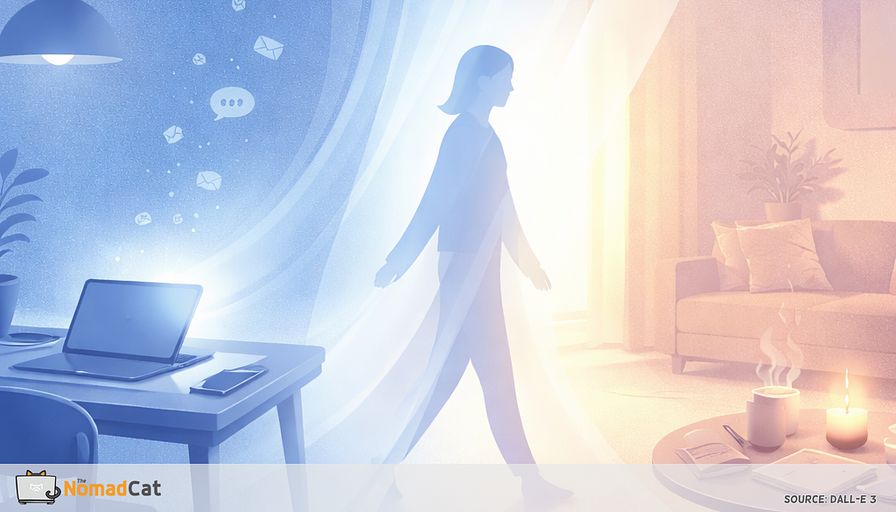
Closing your laptop at the end of a long day should feel like drawing a curtain between two acts of your day—not just ticking off the last task. For me, it’s a small ritual, a gentle “au revoir” to work and a “bonjour” to my own time. But, ah, with remote work, those boundaries can melt away faster than butter on a hot croissant. I’ve caught myself checking emails at midnight, or feeling a strange guilt if I don’t reply to a Slack ping right away. It’s a recipe for stress and, frankly, less joy in both work and life.
Let’s talk about how small, intentional rituals can help bring back those boundaries—especially if, like me, you prefer to keep things simple and your workspace is sometimes just a corner of the kitchen table. Here’s what you’ll find:
- Why transition rituals matter for mental well-being (with a dash of science and a pinch of personal experience)
- Minimalist tips for crafting your own end-of-workday routine
- How to personalize rituals so they feel natural, even when your schedule is as wobbly as a Parisian café chair
- Ideas for keeping rituals light—never just another task on your list
You’ll get practical advice, a bit of humor, and maybe a few crumbs of wisdom for making work-life balance feel more possible, one simple ritual at a time.
Boundary rituals and well-being
Transitions as signals, not just habits
When I started working from home in Lisbon, I found it surprisingly hard to switch off without a clear ritual. Closing my laptop felt like nothing—work would just spill into dinner, then into the evening. But that small act, if done with intention, is more than a habit. It’s a signal to my brain: “Work is over, mon ami.” Behavioral science backs this up—transition rituals help your mind detach from work, giving you a sense of closure that routines alone don’t always bring. Setting these boundaries reduces stress and supports well-being, which is even more important when work and home overlap.
- Without a ritual, I’d find myself drifting back to work, like a moth to the blue light of my screen.
- With a ritual, there’s a clear line—work here, life there.
Small rituals, big impact on stress and focus
Even short, simple rituals—changing clothes, making tea, jotting down a quick to-do list for tomorrow—can make a difference. A recent survey found that 68% of remote tech workers felt more in control of their work-life balance after implementing a daily shutdown ritual. These actions lower anxiety by giving your brain a clear sign that the day is ending. This matters a lot for people working at home, especially those who want to keep their tech use minimal. A small end-of-day ritual helps switch gears, reduces mental fatigue, and signals that relaxation can begin.
- For me, making a cup of mint tea is like a little ceremony. The smell, the warmth—it tells my brain, “C’est fini.”
- One developer I know uses a physical notebook to jot down the day's wins before closing their laptop—this small act helps mark the end of work and boosts motivation.
The third space: a buffer for well-being
A “third space” is just a buffer between work and home. It could be a short walk, a stretch, or making a cup of tea. These little rituals let your mind reset and your mood lighten. Research shows people who set aside this kind of transition space often feel better emotionally and more satisfied after work. For those at home, this step might be a quick dance, a stretch, or whatever brings a sense of mental distance and a bit of joy after work.
Why remote work blurs boundaries
When work happens at the kitchen table or in the corner of the living room, job and home life blend together. Without the usual signals—like a commute or leaving an office—it’s tempting to keep working or check messages at odd times. Many who work at home find it hard to switch off, and this constant connection can slowly raise stress. Without clear boundaries, it’s tougher to rest, and you can feel more tired and stretched.
The psychological cost of blurred digital boundaries
Always being available isn’t just about having less free time. It can really affect you:
- Sleep can get thrown off, and it’s harder to recharge.
- Emotional exhaustion builds up.
- Satisfaction with work and home life drops.
- Feeling the need to always be reachable adds more pressure.
There were evenings in Berlin when I felt the weight of unread emails pressing on my chest, making it impossible to relax. This digital mixing makes it tough to focus or just enjoy your downtime. Luckily, intentional small rituals can help push back against these problems.
Reclaiming control with simple, intentional rituals
Boundary rituals don’t need to be complicated. Even just shutting down your laptop, tidying up, or writing down a few priorities for tomorrow works as a strong signal that work is finished. For tech minimalists, low-tech transitions are a simple way to take back control and help your mind shift from work to personal time. Having these boundaries in place gives space for better routines and makes keeping work-life balance feel doable.
Quick framework: setting your personal office hours and digital detox- Decide on your work hours (e.g., 9am–6pm) and write them down.
- Communicate these hours to clients, colleagues, and family.
- Set a daily shutdown ritual (e.g., close laptop, tidy desk, make tea).
- Plan a digital detox window (e.g., no work notifications after 6pm).
- Use a visual cue (sticky note, mug, candle) to remind yourself when work is done.
Designing minimalist rituals
Simple rituals to end work
A boundary ritual is most effective when it’s simple and easy to repeat. Some common ones:
- Shutting down a laptop
- Changing into comfy clothes
- Playing music
- Making tea
- Stepping outside for a few minutes
These clear actions help both your mind and body shift into after-work mode. The best advice? Keep the ritual consistent—doing the same thing at the end of each workday makes the habit stronger and marks the change from work to free time.
Checklist: enforcing your boundaries- Choose a ritual that feels natural (e.g., closing your laptop, lighting a candle).
- Set a reminder or visual cue (sticky note, special mug).
- Communicate your boundaries to others (see script below).
- Stick to your chosen office hours—even if it feels awkward at first.
- Reflect weekly: Is your ritual helping? Adjust as needed.
Sensory cues make rituals stick
Adding senses to your ritual can make it memorable. Lighting a candle, the sound of a laptop closing, or the smell of fresh tea gives your brain real signals that the workday is done. Engaging the senses helps anchor the ritual, making it easier to separate work from the rest of your life almost automatically.
Small environmental changes reinforce boundaries
Physical changes in your workspace can help, too. Moving from a desk to a comfy chair, tidying up your workspace, or setting a special object on your desk at day’s end all help mark work as done. Even in small apartments, switching off a bright light or clearing the table reinforces the boundary and makes it easier to unwind.
Personalizing your ritual
Start with a natural transition point
A ritual is easiest to keep if it fits into your day naturally. Look for a regular transition—finishing a key task, making afternoon coffee, or closing your last tab. Keep the ritual brief, clear, and enjoyable, so you look forward to it. For example, after the last email, put on music and water your plants. The simpler and more pleasant the ritual, the better chance it becomes a solid part of your day.
When I first started freelancing, I worried that turning off notifications after 6pm would cost me clients, but it actually improved my focus and relationships. The anxiety around stability is real, but boundaries are a form of self-respect.
Anchor new rituals to existing habits
‘Stacking’ new rituals onto existing habits makes them stick. For example, after closing your computer, tidy your desk or play a favorite song right away. Using this kind of piggyback makes your new routine automatic. If the ritual feels strange at first, don’t hesitate to adjust it until it feels natural.
Experiment, reflect, and adjust
Try out a new ritual for a week and pay attention to how it feels. If it feels clunky or too hard to remember, change when you do it or make it simpler. The goal is for the ritual to be something you can do easily and repeat, not just another task. With some trial and a bit of tweaking, you’ll find a routine that helps your boundaries without feeling forced.
Everyday rituals in practice
Visual cues and reminders
Sometimes a little visual nudge helps. A sticky note on your screen, setting out a special mug, or leaving a small object nearby can be a handy reminder to start your ritual. These gentle cues help make the switch from work to free time smoother—they take the work out of remembering.
Treat missed rituals as learning moments
If you forget your ritual or skip it, see that as a chance to learn, not a reason to feel bad. Sometimes, I just forget my own ritual, c’est la vie. Adjust your cues or make the routine a bit simpler if needed. Long-term, it’s more about being easy on yourself and making small changes, not getting everything right all at once.
Communicate boundaries with clarity
Sometimes you’ll need to tell others about your new boundaries. Here’s a script you can use with clients or colleagues:
“I’ve set my work hours from 9am to 6pm to protect my focus and well-being. Outside these hours, I won’t be available for work-related messages, but I’ll respond as soon as possible the next day. Thank you for understanding!”
Explaining your ritual’s purpose makes it easier for others to respect your work-life wall and even pitch in with support.
Using these methods, boundary rituals can become a handy, real part of day-to-day life—simple but flexible, and strong enough to protect your well-being no matter how often work and life get tangled up.
Real-world impact and adaptation
Minimalist rituals in daily life
Even the smallest ritual can do a lot to separate work time from personal time. One developer I know uses a physical notebook to jot down the day's wins before closing their laptop—this small act helps mark the end of work and boosts motivation. After a while, that notebook becomes a real cue for relaxation, making it less tempting to check emails at night.
Other rituals can give you the feeling of a commute, even at home. Taking a short walk in a nearby park, for example, can work like a daily reset between work and leisure. Movement and a change of scenery help make the workday feel finished. Studies have found that even short, physical rituals like a walk help people mark the end of work and improve well-being.
Having regular rituals, even minimalist ones, brings lots of benefits. For example, a recent study found that remote workers who practiced a daily shutdown ritual reported a 23% improvement in sleep quality and a 30% reduction in self-reported stress after just one month. This effect is easy to notice for anyone who works remotely or in tech settings where those lines blur easily. But what should you do when routine gets disrupted?
Keeping rituals alive when routines change
Rituals don’t have to break when your schedule does. If you keep the same symbolic element—a song, a gesture, or a little object—the benefit sticks. For example, if you’re traveling or life gets busy, maybe all you can do is listen to the same song wherever you are, or repeat a familiar gesture. This flexibility keeps the message to your brain clear: the workday is done.
Thinking of rituals as flexible boundaries makes them stronger. Often, it’s helpful to keep them simple or use small, portable cues, like a special token or a digital phone reminder. That way, rituals can follow you and the feeling of closure sticks, even during uncertain times.
It helps to see rituals as self-care and a sign of personal choice, not strict rules. Flexibility is important—changing your rituals when life shifts means they stay helpful, not stressful. When viewed this way, rituals offer comfort and mental space even when things get hectic.
Minimalist mindset: rituals as self-care and autonomy
Rituals nurture well-being, not just productivity
Rituals do more than move you through tasks or make you more efficient. Unlike habits built only for output, rituals bring comfort and a sense of control. They help bring you into the moment instead of always rushing ahead. Mindful rituals can ease stress and help balance your emotions. Making a simple, personal ritual isn’t just about adding structure—it’s a gentle way to support self-respect and give some order to the day.
Autonomy and motivation through personal rituals
Shaping a ritual for your own needs is a subtle sign of self-direction. Having the freedom to create transitions that suit you can lift motivation and make routines last. Even a tiny but chosen gesture makes a strong difference in motivation and helps keep boundaries firm.
Small acts, big impact for minimalists
Little, repeated rituals can make boundaries clearer and work-life split more satisfying, especially for those who care about independence and keeping things simple. After moving from busy cities like Beijing and Berlin to Lisbon, I noticed that these small routines became important for finding balance and focus. For me, closing the laptop and stepping outside for a few minutes helped set the barrier between work and personal life. There’s research that supports this—a minimalist approach to routines can make a real difference for well-being and feeling good about your boundaries.
Keeping rituals resilient and compassionate
Adapting rituals with reflection and flexibility
Rituals last when they can gently change as you do. Checking in from time to time and tweaking as needed means they’ll fit your energy and schedule, not the other way around. This kind of flexibility is what keeps rituals working for the long run.
Self-compassion is key to lasting rituals
Missing a ritual doesn’t mean failure. It’s only a chance to learn and update what works. I remember one week when I was swamped with deadlines and skipped my ritual three days in a row. Instead of feeling guilty, I realized I needed something even simpler—just a deep breath and a stretch. Having a kind attitude toward yourself keeps away guilt and lets the ritual stay helpful, not a burden. Over time, this way of thinking means rituals can become a quiet anchor—ready when you need them without being a rule you have to follow.
Rituals as anchors for autonomy and well-being
With steady patience and a relaxed approach, boundary rituals can turn into a main support for your independence and general well-being. They make balance between work and life more enjoyable and less of a struggle, giving moments of peace during even the busiest days. When rituals can adapt, they offer both comfort and self-direction—the heart of minimalist living.
Small rituals can become steady anchors that help you feel balanced and clear—especially when work and home are mixed together. Doing something at the end of your workday, like closing your laptop, lighting a candle, or taking a walk, helps your mind and body switch gears. These actions cut down on stress and save your personal time. Their beauty lies in how flexible they are—they’re helpful for anyone who wants a bit more calm and control. Over time, rituals adjust with your life, bringing comfort even when things get hectic. When you treat these moments as acts of self-care, keeping boundaries gets a little easier and even a bit lighter. And if you forget once in a while—eh bien, tomorrow is another day.
You might be interested by these articles:


How small rituals make solo tech work feel less lonely

Drawing the line between work and life in indie tech

how simple rituals bring meaning and connection to solo tech work

Routines that spark creativity and balance work with passion

Simple rituals for real connection in tech life

AI-Powered Threat Detection

Thriving in Europe's Startup Ecosystem: Turning Challenges into Opportunities