Abstract:
The article explores the pervasive yet often overlooked phenomenon of invisible work in tech—tasks such as mentoring, onboarding support, glue work, and emotional labor that keep teams functioning smoothly but rarely appear in official documentation or performance reviews. It highlights how this crucial behind-the-scenes effort, like quietly updating documentation, resolving conflicts, or guiding new hires, forms the backbone of healthy teams and can cause significant disruptions when left unrecorded, especially during transitions. The article emphasizes that invisible work is frequently unequally distributed, with women and minorities disproportionately carrying the load, and warns that failure to recognize or document these contributions can harm individual careers and weaken teams. To address this, it offers practical advice: document informal routines and unlisted tasks in handover notes, use clear, team-oriented language to describe your impact, prompt references to mention hidden contributions, and invite peers to validate your efforts. Concrete examples—such as leaving behind onboarding guides or including a “day in the life” overview—illustrate how making invisible work visible benefits both departing employees and their teams. Ultimately, the article calls for a cultural shift in tech to value these unseen efforts, arguing that simple documentation and acknowledgment can transform hidden contributions into a lasting legacy that supports team health and future opportunities.

Invisible work is everywhere in tech, but you only notice it when it’s missing—especially when you’re leaving a team. I’ve seen this firsthand: you spend months mentoring, smoothing onboarding, or quietly fixing processes, but when it comes time for handovers or references, those efforts risk vanishing. Suddenly, your reputation is reduced to what’s on a dashboard, and the small things that kept the team running are forgotten. That’s a tough pill to swallow, no?
Let me share what I’ve learned about making invisible work visible before you move on. I’ll draw from my own transitions—like leading a multicultural team in Beijing and scaling a product team in Berlin—because I know how it feels when your behind-the-scenes work is overlooked. I’ll also give you practical steps, scripts, and a few hard-won lessons to help your contributions get the recognition they deserve.
Invisible work in tech
What counts as invisible work
Invisible work is the glue that holds tech teams together, but it rarely shows up in job descriptions or performance reviews. I’ve been the person who quietly updated docs, fixed messy code, or helped new hires get settled. Maybe you have too. These are the things that keep teams healthy—mentoring, sharing debugging tips, answering late-night questions, or smoothing over conflicts before they start. Without them, a team can fall apart quickly.
It’s not just about people skills. Invisible work also means guiding discussions, documenting decisions, or scheduling meetings when everything feels stuck. I remember in Berlin, when I led a transformation plan for a scale-up, it was the teammate who kept our onboarding checklist fresh and reminded others about handoffs who made the biggest difference. Yet, none of this showed up in our official metrics.
There’s also the emotional labor: settling arguments, checking in on colleagues, or being the person others trust. I’ve seen how informal leadership—supporting team well-being, offering a listening ear—can make or break a workplace. Still, these efforts almost never make it into formal records.
Why invisible work is overlooked
Companies track what’s easy: tickets closed, code shipped, features delivered. If it’s hard to measure, it gets missed. In my experience, even when we tried to track onboarding metrics in Berlin, the hidden contributions didn’t show up in our standard dashboards. Reviews and handovers focus on what can be counted, so the informal support and process improvements fade into the background.
This isn’t just a simple oversight. I’ve noticed, especially when managing diverse teams in Beijing, that invisible work often falls disproportionately on women and minorities. They pick up more of these hidden tasks, but without recognition, it rarely leads to promotions. The cycle just keeps going. When someone leaves and this work isn’t spotted, the consequences are real. I once watched a team struggle for weeks after our unofficial onboarding champion left—nobody realized what she’d been holding together until new hires started floundering.
The hidden costs of ignoring invisible work
When your contributions go unrecognized
Leaving a team after months of mentoring, late-night troubleshooting, and keeping docs in order, only to have your reference mention just the features you delivered—it stings. I’ve felt that myself. The anxiety of seeing only your deliverables mentioned, while the late-night Slack messages and quiet support fade away, is real. If you don’t document invisible work, even your friends may forget your bigger impact. This can mean missed chances and weaker job prospects down the line.
How your reputation can get flattened
This lack of recognition doesn’t stop with the hiring process. It shapes how your network remembers you. If your peers can’t explain your behind-the-scenes work, your reputation gets reduced to just what was officially tracked. The process fixes, the emotional support, the leadership—all that slips away. I’ve watched my own story get flattened in this way, and it’s frustrating.
The long-term impact on your network
Letting invisible work fade out weakens your network and limits new opportunities. Strong recommendations need the full story, not just what was logged on a dashboard. If those details are missing, relationships fade and future jobs might not show up. But this issue goes beyond the individual—teams and companies pay the price too.
Teams stumble when invisible work disappears
When someone leaves and their invisible work is missing from documentation, teams can feel the loss fast. In Berlin, after our onboarding lead left, new hires struggled, and morale dipped. A project might slow down if nobody knows who kept onboarding running smoothly, or people’s morale could dip without the unofficial team mediator. Confusion, double work, and delays are common. Without these informal roles filled, team stress rises and project risks increase.
Unrecognized work creates chaos and conflict
If responsibilities aren’t written down, invisible work can slip through the cracks or get misattributed. Teammates might end up trying to cover jobs they didn’t know existed, which leads to frustration. I’ve seen this chain reaction erode trust and make working together harder. What helps? Good documentation and honest conversations before saying goodbye.
Making invisible work visible
Simple documentation brings invisible work to light
If you’re preparing to leave a tech role, clear, helpful docs make life better for whoever comes after you. Go beyond the simple checklist—try a few lines about what a regular day looks like or notes about routines you kept up. Add a few sentences about how you kept onboarding smooth, tweaked documentation, or helped with team chats. Even simple lists can highlight these crucial, hidden tasks so no one has to guess.
Lists and tools that capture what’s often missed
Bullet lists are great for surfacing overlooked stuff. Note things like:
- Key contacts for emergencies
- The unwritten rule about Friday deployments
- Weekly routines, like checking project dashboards
When I co-founded an IT services company in Beijing, we used a shared Notion page to document unwritten rules—like who to ping for urgent server issues or how to handle local holidays—which made transitions much smoother. Using digital tools like Notion or Confluence helps new folks quickly see how the team really works.
Using digital platforms for invisible know-how
Platforms like Notion or Confluence let you leave guides or FAQs behind for future teams. Making a How We Work page, or a FAQ with onboarding advice and reminders about team customs, keeps both formal and informal knowledge in reach. This way, what you know isn’t just buried in old messages. But documentation alone isn’t enough—how you talk about your work also counts.
Language and scripts for subtle self-advocacy
Framing invisible work in team-oriented language
When writing handover notes or goodbye emails, use words that point to team outcomes. For example, I enjoyed helping new hires, which made our project delivery faster. Phrasing like this shows why your efforts mattered for the team as a whole, making it easier for others to value them. This style works well in conversations and interviews too.
Mentioning behind-the-scenes work in conversations
In 1:1 meetings or exit chats, naming a few specific, informal things you did and linking them to team wins is helpful. Try saying, “I helped keep our onboarding checklist fresh so new developers ramped up faster.” These concrete, team-connected examples tend to stick in people’s minds, and you can also ask references to mention them.
Prompting references to spotlight invisible work
When you need a reference, try gently asking your boss or teammate to speak to your hidden work: If you’re comfortable, please mention the mentoring or process improvements I worked on. Giving a few talking points makes it even easier for them to cover both the visible and invisible work you did.
Reference requests that tell your full story
Giving references the right examples
It helps to give your reference a short list that covers both official tasks and the extra invisible support you gave. For example, when I left the Berlin scale-up, I sent my manager a note like this:
- Led project X to completion on time
- Supported onboarding for three new teammates (including running their first retros)
- Maintained team docs and made handoffs easier
A simple template makes it easier for your reference to tell your full story.
Sample email language for making invisible work visible
You might write: I’d appreciate if you could mention my work on team onboarding and process documentation, since these parts don’t always show up on paper. For example, helping new hires in their first weeks or keeping our documentation up to date. This keeps things honest and low-key while helping your invisible work get recognized. Giving both humility and a bit of advocacy makes it comfortable for others to highlight your whole story.
Balancing humility and self-advocacy
Framing invisible work as a team contribution
Stressing shared value keeps the focus where it should be. Use group terms and outcomes to surface hidden work, instead of making it sound like self-promotion. For example, We improved sprint retros by testing the new format I set up, or, Our onboarding is smoother because of the checklist I created. This turns individual effort into a win for all, no?
Show how your work helped others—whether quicker onboarding or better morale. Instead of I fixed onboarding, try, The onboarding was faster after we set up that new checklist. When colleagues see the shared benefit, your stories stick.
Peer validation and ongoing impact
Letting friends add their feedback to handover docs or including a team acknowledgments section means others can vouch for your hidden work. Their words add proof and help your contributions last longer. If you leave behind guides, checklists, or FAQs, the next person can continue or grow your invisible work, turning your last day into a real starting point for the team. This makes your hidden work part of the ongoing team story, not just a memory. Good documentation supports smoother transitions and stronger relationships.
Real-world outcomes when invisible work is noticed or not
When invisible work is surfaced and valued
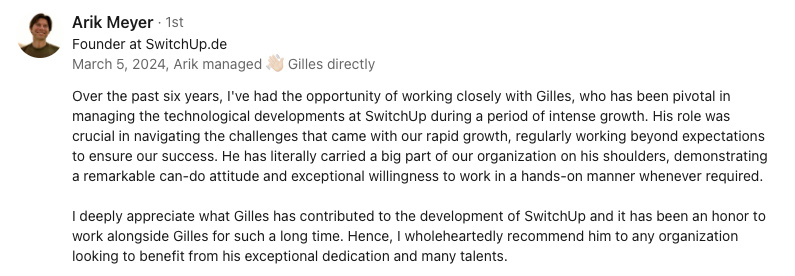
Sometimes, just noting informal routines or team habits makes all the difference. I remember wrapping up a project in Lisbon—not just handing off code, but sharing notes about daily standups, quirky team rituals, and unwritten team habits. The new hire came in, found a guide, and the team stayed steady. Transition went well, and references could reflect both mentorship and team glue, opening more opportunities. When invisible work gets captured, everyone benefits.
When invisible work is erased and forgotten
On the flip side, if the person who quietly held things together leaves and nothing is written down, things often unravel. New hires might take twice as long to catch up, and projects miss deadlines. It creates real chaos: confusion grows, work stalls, and references only tell half of the story. Even a basic checklist or extra notes could have changed the outcome.
A minimalist checklist for surfacing invisible work
Steps to make your invisible work visible
A quick self-review is the best place to start. Look through your calendar, old chats, and feedback reports and spot the informal work—mentoring, small process improvements, support—that rarely gets written up. These are the things that quietly keep everything running. Next, add them to your handover notes:
- List repeating or informal tasks you managed
- Note any small fixes or docs you quietly kept up to date
- Point out times you pitched in to help resolve issues or support a colleague
Adding peer validation and team context
After you’ve found these hidden tasks, drop a day in the life or unwritten tasks section into your docs. This catches your critical but silent efforts. Let colleagues read over or add notes, making your record stronger and more honest. Peer notes help new team members see the whole picture.
Framing your contributions for maximum impact
When you exit or ask for a reference, focus on team results. Instead of listing work, show how it lifted the group. For example: By maintaining our onboarding guide, we helped new hires get up to speed quickly. This keeps the sharing honest and focused on what matters most. Then, think what simple tools you can give your successors.
Leaving practical artifacts for your successors
A checklist, quick-start guide, or FAQ can turn invisible routines into real resources. These help everyone that follows to keep things steady and improve them. With these steps, your invisible work won’t fade away—it becomes a solid base for the team’s future.
Invisible work really is what keeps tech teams moving forward. From mentoring and emotional support to glue work and informal routines, these actions build healthy teams and open up strong career paths, whether or not they get named in meetings. If these contributions aren’t shared, teams can end up confused or even fighting when people move on. Thankfully, a few practical moves—like simple docs, clear language, and peer feedback—can make a big difference in highlighting this hidden value. By turning invisible work into part of your team's story, you set everyone up for a better future. Maybe it’s time to ask yourself: what’s one behind-the-scenes effort that needs a little more daylight in your team? In my case, it was always the Friday afternoon bug fixes—never glamorous, but always essential.
You might be interested by these articles:


silent advocates the secret to a lasting tech reputation

making solo tech wins count

Leaving tech roles gracefully without burning bridges

How to leave your tech job without a digital mess

How to capture hidden know-how and make smoother project handovers

Microgrids: Empowering Europe’s Energy Revolution

move ideas forward without chasing perfection