 Gilles Crofils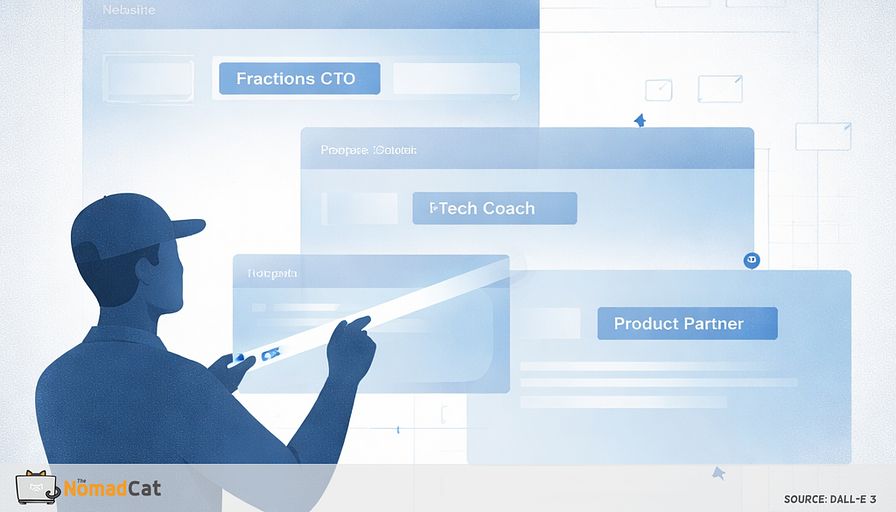
Brand debt is not a vibe problem. It is a maintenance problem.
It starts small. A headline says one thing, a proposal says another. Your offer has two names depending on the PDF. Your tone goes “serious corporate” on the website and “super casual” in email. None of this is dramatic on its own. But together, it creates friction. People build multiple mental pictures of you, instead of one clear one. And that is when good conversations get weirdly sticky.
This article gives you a simple way to spot that friction and fix it. This matters even more if you keep your identity minimalist, with only a few cues. In minimalism, every cue weighs more. One small mismatch can change what someone expects will happen after the call. And when cues conflict, the extra effort the reader has to do often becomes doubt. Not rational doubt. Just a small “hmm”. The expensive kind.
You’ll learn how to treat these mismatches like operational bugs, not an identity crisis. We’ll cover
- what brand debt looks like in real life and the symptoms to watch for
- why the hidden cost is often context switching, rewriting, and explaining again
- the difference between incurred debt and accrued debt, and why the fix is not the same
- a quarterly brand debt ledger that stays strict, observable, and calm
- a fast triage method using severity, frequency, and blast radius
- how to refactor without accidentally triggering a full rebrand
- how to run a lightweight “migration” when changes are real, with a small changelog and acceptance criteria
The goal is not to polish yourself into a product. It’s simpler than that. Reduce friction so the right people understand you faster, and you spend less energy justifying work you could be doing.
Brand debt for minimalist identities
Small mismatches create friction
Brand debt is the pile of small inconsistencies across your main surfaces that creates friction over time. Once you see it as mismatches, you stop judging “vibe” and you start spotting operational bugs.
Typical debt items look like this
- Two different names for the same offer depending on the page or PDF
- A role label that shifts between “CTO advisor”, “fractional CTO”, and “tech coach”
- A value prop that changes meaning between LinkedIn and your website
- Proof points that are still true, but no longer match what you sell today
- Visual cues that don’t repeat, so nothing feels like it belongs to the same set
- A tone that swings from very corporate in proposals to super casual in emails
Symptoms you can notice
These mismatches show up when conversations get sticky.
- Wrong-fit inquiries that looked good in the inbox, then collapse on the call
- The same clarification questions coming back again and again
- Longer back-and-forth before someone can say “yes this is what i need”
- Partner intros that start with “so… what do you do exactly”
- Proposals that sit there, not rejected, not accepted, just floating
That last one is not just annoying. It delays forecasting next month’s revenue, which is a special kind of stress when you’re independent.
The cost is often hidden in time, attention, and emotional load. Treat the symptoms like signals. If the same moment keeps stalling, something in your message or proof is out of sync.
The hidden cost is context switching
Solo work rarely “breaks” from brand debt. It just adds a micro-tax everywhere.
More explaining. More rewriting. More switching between “doing the work” and “justifying the work”.
You do not need perfect measurement. You need enough observation to pick the next fix with confidence. Even a basic count can help, like tracking how many clarification emails you send in a week, or how many follow-ups a typical proposal needs before it gets a clear answer.
To keep it measurable without turning your life into a dashboard, define your counts once:
- Clarification email = any message where you explain what you do / who it’s for / what’s included (not scheduling or “here’s the doc”).
- Wrong-fit call = a call where, within the first 10 minutes, you both realize the offer doesn’t match (budget, stage, problem type, or expectations).
A simple weekly log is enough:
- Wrong-fit calls: __
- Clarification emails: __
- Proposals sent: __
- Proposals decided (yes/no): __
- Proposals “still floating” after 7 days: __
Why the debt metaphor works for me
Minimalism makes every cue heavier. And i tend to trust simple models you can observe and measure, even if reality is messy.
I studied fundamental physics, so i’m comfortable with imperfect models that still help you predict what happens next. And in transformation work as a CTO, small drifts compound fast when nobody owns maintenance.
At a Berlin scale-up, the pattern was familiar: ship now, clean up later. If you don’t schedule cleanup, you end up paying it during high-pressure weeks, when you can least afford it. The same thing happens with messaging. You grab a phrase that works on one call, it leaks into a proposal, then your website quietly tells a slightly different story.
It turns brand anxiety into maintenance work. Something you can schedule, scope, and finish.
Minimalism makes drift louder
One small cue can change the whole system
When an identity uses only a few cues, each cue becomes a main signal, not decoration. So a small tone shift or a new promise is not a detail. It changes what people predict will happen after the call.
Like a single wrong tile in a clean bathroom wall. You can’t unsee it. Same with carpentry: one door slightly out of square, and suddenly every hinge feels “off” when you touch it. Maintenance is how you get back to quiet alignment.
Friction gets read as risk
In high-trust services, people don’t only evaluate the work. They evaluate how safe it feels to buy.
When cues repeat, things are easier to process, so they feel more solid. When cues conflict, the reader has to resolve the mismatch. That effort often becomes doubt. Not rational doubt. Just a small “hmm”. That “hmm” is expensive. You can feel it on calls as a pause that shouldn’t be there, or a polite hesitation where you expected momentum.
The upside is that minimalist setups are fast to audit. Friction shows you where to look, without needing a big branding project.
A small system is easier to repair
With fewer elements, mismatches have fewer places to hide. You can limit the scan to a few core surfaces that carry intent and risk, like
- website offer page
- LinkedIn headline
- proposal intro
- onboarding emails
Less surface area, less chaos, faster fixes.
Incurred and accrued brand debt
Two kinds of drift need different fixes
Incurred debt is mismatch you took on on purpose to keep shipping. You knew it was imperfect, you accepted it for speed.
Fix it like planned cleanup. Use a canonical “source of truth” for your core copy, then do a small review workflow after the busy period ends.
Accrued debt is drift you did not choose. It shows up when you add a new service line, move into a new niche, or borrow a client’s language because it works in the moment, and then it spreads.
At first it feels normal. Adapting language is part of transitions. Later you see the same confusion signals.
A quick diagnostic keeps this calm
- If you can name the day you chose the mismatch, it’s incurred
- If it crept across your pages and templates without a clear moment, it’s accrued
Most of the time the answer is not “rebrand”. It’s triage, stabilize the core, then improve.
The quarterly brand debt ledger
Keep it strict and operational
One page. One table. Review every quarter.
The point is to write items so they are observable, not emotional.
- Debt item (headline says “fractional CTO”, site says “tech coach”)
- Where it shows up (LinkedIn, site hero, proposal intro)
- Symptom (repeat clarification questions, wrong-fit calls, proposal limbo)
- Cost (more follow-ups, longer back-and-forth, extra meetings)
- Owner (one accountable person)
- Decision this quarter (fix, merge, deprecate, accept)
Good item
- “Website hero says product and tech partner but proposal intro says fractional CTO”
Bad item
- “Brand feels inconsistent”
A single filled example row (so it’s not just theory):
Debt item Where it shows up Symptom Cost Owner Decision this quarter LinkedIn headline says “fractional CTO”; website hero says “tech coach” LinkedIn headline, website hero, proposal intro repeat “so what do you actually do?” + proposal limbo 2 extra clarification threads/week + slower yes/no me fix (standardize to one role label)Modular message blocks help here. A tiny glossary and a few reusable paragraphs reduce drift because you stop rewriting the same idea in five different ways.
Keep cost rough
Use buckets like low, medium, high, based on time and attention, not accounting. Fake precision is a trap.
Still, it helps to track a minimal set with simple thresholds, so you know when something deserves a ledger line. Here’s a calm baseline:
-
Wrong-fit calls (per month):
- 0–1 = normal
- 2+ = log a debt item
- 0–1 = normal
-
Median clarification emails per lead (weekly check):
- 0–1 = normal
- 2+ = log a debt item
- 0–1 = normal
-
Proposal decision time (from send to clear yes/no):
- 0–7 days = healthy
- 8–14 days = watch
- 15+ days = log a debt item
- 0–7 days = healthy
Ownership prevents the same rows coming back next quarter. Even solo, “owner” still matters. Otherwise the ledger becomes a pretty graveyard.
Triage like an incident not an identity crisis
Severity, frequency, blast radius
Treat mismatches like incidents.
Severity is the risk of mistrust, confusion, or wrong expectations. It is not taste.
Frequency is how often a prospect sees it during the journey. A LinkedIn headline is high frequency. An invoice footer is low.
Blast radius (how many pages/docs you’ll have to touch) is how many surfaces are affected, and how painful it is to update them. If it repeats, it hurts.
To keep it fast, score each debt item on a 1 to 3 scale
- Severity
- Frequency
- Blast radius
- Add scores and sort
- Keep only the top three to fix this cycle
That hard constraint protects stability. Too many parallel fixes looks productive. It usually slows everything down. And it increases the chance you create new inconsistencies while fixing old ones, which is the funniest kind of self-own.
If scores tie, pick the item closest to a high-intent moment, like
- LinkedIn headline
- website hero
- proposal intro
Parking the rest is not laziness. It is discipline. Unfreeze a little, change a little, then refreeze so people can build a stable mental model again.
Refactor not rebrand with a change budget
Set a quarterly change budget
A change budget is a cap on edits per quarter. If you change too much at once, you don’t reduce inconsistency. You multiply it. Half the system updates, half stays old, and you just created fresh debt.
An illustrative budget can be small. For example
- 2 messaging edits (headline and offer boundary)
- 1 visual micro-change (spacing, typography)
To make the visual part feel grounded (not aesthetic wandering), tie it to triggers. Good reasons for a micro-change in a minimalist identity:
- Typography mismatch: website uses one type style, proposal PDF uses another, and it reads like two different people.
- Repeated layout drift: margins/spacing differ across templates so your docs feel “off” even when the words are right.
- Logo/wordmark inconsistency: different lockups or placements across email footer, proposal cover, and website header.
- Color usage divergence: a “one accent color” setup quietly becomes three different blues across surfaces.
It’s not a rule. It’s a guardrail. It also saves you from the classic solo move of editing your LinkedIn at midnight.
What counts as a refactor
A refactor improves clarity without changing meaning. Common refactors
- tighten the headline so it is more specific
- clarify boundaries of the offer, what is in and what is out
- update proof points so they match the current offer
- remove jargon that makes people pause
- standardize terminology with a small glossary
Anchor everything to one canonical block, then propagate the same words into your website, LinkedIn, proposals, and templates.
The most underrated refactor is deletion. Remove an extra tagline, a secondary offer that confuses people, or proof that no longer supports what you sell. Less surface means less maintenance.
What counts as a breaking change
A breaking change is any shift that makes past expectations unreliable.
- new audience
- new category
- new primary promise
- new economic trust contract
A simple test
- Would an old client or partner ask if you still do X
If yes, you need more than a quick copy tweak. You need a migration plan. Otherwise you end up half-updated everywhere and referrals keep using the old story.
Run a lightweight brand migration
Version changes like software
Versioning makes change explicit. Instead of “my whole identity is wobbling”, it becomes “we shipped a new version, and here is what changed”.
In plain language: it’s a small note you (and anyone referring you) can follow, so the story doesn’t fork into three versions.
A simple mapping
- Patch for tiny wording fixes that don’t change meaning
- Minor for refactors that improve clarity while keeping the same promise
- Major for breaking changes
I like this because it keeps me calm. When you work alone, it’s easy to take every confusing week personally. A simple “version note” turns it back into maintenance.
Write a tiny changelog
- Added … (why)
- Changed … (why)
- Deprecated … (why, and until when)
- Removed … (why)
Use a deprecation window and one compatibility line
Update high-risk surfaces first. Let old phrasing survive a bit longer in low-risk places like old PDFs or deep templates.
Add one compatibility sentence so referrals and partners can keep up. Something like
- still helping X with Y, now more focused on Z
Use it only on a few core surfaces, then remove it once stable.
Acceptance criteria so it ends
Decide what must be true for the migration to be “done”. Keep it observable
- fewer wrong-fit calls
- fewer repeated clarification questions
- faster proposal yes or no
- clearer recall in partner intros
Leading indicators show up in conversations quickly. Lagging indicators take time. Don’t interpret every quiet week as message failure.
Keep a rollback principle. If the new message increases confusion, revert quickly and treat it as maintenance, not personal failure.
Reduce surface area so drift has fewer hiding places
Choose a few core surfaces
For most solo tech professionals, core surfaces are a small cluster
- LinkedIn headline and About
- one landing page
- proposal intro or email pitch opener
Rule of thumb
- if the surface is where someone decides trust, it is core
More surfaces means more coordination cost. Minimalism helps, but only if you keep the system small.
Delete non core surfaces safely
Most drift comes from forgotten duplicates, not from your main page.
Common debt generators
- old speaker bios on event sites and directories
- stale profiles in communities you don’t use
- abandoned landing pages from past experiments
- duplicate about pages in tools
- extra taglines living in footers and signatures
A safe cleanup flow
- Pick one canonical page as the source of truth
- Redirect old pages to the canonical page
- Update only surfaces that still get real attention
- Add one compatibility line where deletion is impossible
The payoff is operational and psychological. Fewer places to maintain means less low-grade guilt. And when you work alone, that guilt has no place to go. So i delete surfaces first. It’s the quickest way to get your head back.
Show changes like a diff
Diff your headline and one liner
Keep old and new lines side by side so the change is reviewable, not emotional. Add a short note so you remember why you changed it.
- Fractional CTO and tech coach for startups
+ Fractional CTO for product teams in scale-ups
- I help founders build scalable platforms
+ I help founders turn legacy platforms into scalable systems
Keep terminology stable with a tiny glossary so your role label doesn’t mutate across surfaces.
Diff your proof points
Upgrade proof without hype by being clear about
- context and constraints
- before and after state
- who you worked with
- the type of system
- your scope of responsibility
When proof no longer matches your work, deprecate it instead of stretching it.
- Led a fast growth phase and scaled the platform
+ As CTO, led a transformation plan toward a scalable solution, balancing short-term needs with a long-term vision
The quarterly loop that keeps it calm
A simple maintenance cycle can fit in one focused session per quarter
- Update the ledger with new mismatches and the symptom that exposed them
- Triage fast with severity, frequency, blast radius
- Fix only the top items on core surfaces
- Write tiny release notes so the why is not lost
Fast fixes usually come from the source of truth. Update the canonical positioning block first, then propagate the same wording into your core surfaces. Copy-paste is ok.
After the window, freeze the system unless something is breaking trust in live conversations. Stability is a feature.
When a weird week makes you want to redo everything, park the impulse in the ledger. Before changing anything, check
- is the symptom repeated
- is it on a core surface
- is severity real, meaning it changes expectations
- is blast radius manageable
Brand work is not about turning yourself into a product. It is about reducing friction so the right people can understand you faster, and so you spend less time explaining the same thing in five slightly different ways.
Brand debt is rarely a big dramatic thing. It’s the small mismatches that stack up until people are holding two versions of you in their head. And then the “hmm” shows up. More clarifying emails. More rewrites. More proposals that just float.
The good news is you don’t need a personality transplant. Treat this like maintenance, track a few simple signals, and cap the number of changes you make at once. My default “home base” is the proposal intro, because it’s where money and expectations meet in the most direct way: if that paragraph is stable, everything else has something clean to attach to.


