 Gilles Crofils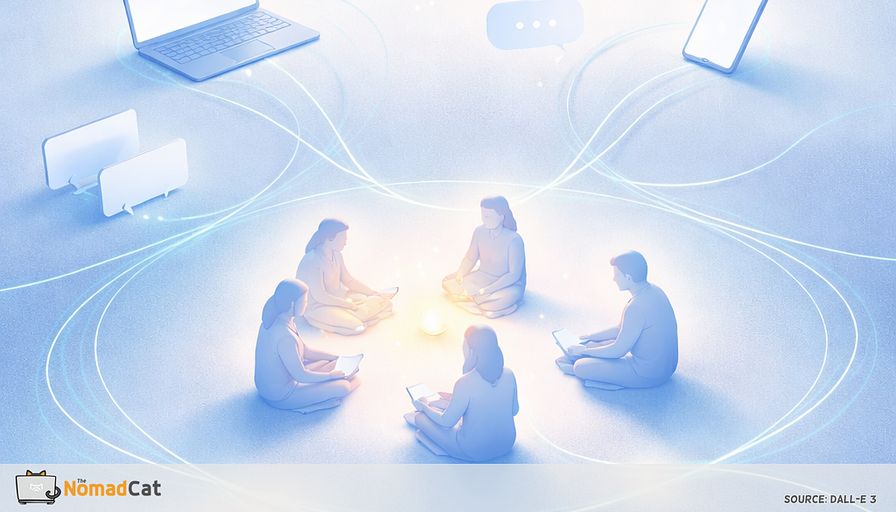
Ever feel like routines just don’t quite do the trick, especially in tech or remote work? I know I did. When I first started working remotely after years bouncing between Berlin and Beijing, I quickly realized that to-do lists and daily check-ins weren’t enough. There was something missing—a spark, a sense of connection that made work feel meaningful, not just efficient. That’s when I started experimenting with rituals. Unlike habits, rituals create shared moments that help people feel connected, even when we’re separated by distance and screens.
I want to share why rituals matter so much to tech minimalists and independent professionals like me. Over the years, I’ve seen how rituals help build trust and belonging where office chatter and coffee breaks don’t exist. Digital rituals can pull remote teams together, and for solo tech workers, routines alone often aren’t enough. I’ll show you how to spot chances for meaningful rituals in everyday life, with examples from minimalist tech communities—and from my own journey. Connection doesn’t always mean more digital noise.
Here’s what I’ve found works best, both alone and with a team: simple tips for starting rituals, keeping them fresh, and using them to fight loneliness or strengthen group identity. If you’re hoping for more meaning in your tech life without feeling overwhelmed, these ideas about intentional rituals might be just what you need.
Why rituals matter for tech minimalists
How rituals build trust and belonging
Rituals aren’t just tasks you repeat—they’re meaningful moments shared by a group. Studies by Hobson et al. (2018) and Xygalatas (2020) show that even simple rituals can increase trust and help people feel emotionally close. Unlike habits, rituals have intention and shared meaning, acting as signals of belonging. Daniel Coyle (2018) calls them “belonging cues”—they help people feel seen and valued. In tech, where face-to-face contact is rare, rituals can fill the gap and help people connect.
Digital rituals glue remote and async teams together
In remote tech teams, rituals make digital work feel more human. They add structure and shared meaning to online exchanges. Norton et al. (2022) and Belkin et al. (2021) found that even small digital rituals—like a weekly themed check-in or a virtual coffee break—can reduce isolation. For example, when I was CTO in Berlin, we started every Monday with a quick “Monday wins” video call. At first, it felt a bit awkward, but after a few weeks, people started looking forward to it. These moments helped us feel more connected and supported group stability, even when we were spread across three time zones.
Rituals anchor solo tech professionals and strengthen identity
Group rituals, even in online-only communities, can boost retention and build group identity (Fischer et al., 2013; Koudenburg et al., 2021). For freelancers and solo tech workers, who lack office rituals, this anchoring is especially helpful. Regular rituals turn lonely routines into something shared. I remember after leaving a big team, I felt a bit lost—no more spontaneous chats or Friday drinks. It took me a while to realize that even a simple, recurring ritual—like a weekly check-in with a peer—could make a huge difference. Still, loneliness is a challenge for many who work independently.
The loneliness challenge for independent tech workers
Why solo tech workers feel isolated
Surveys from Buffer and MBO Partners show that independent tech workers feel lonely more often than those in offices. The main reason is the lack of everyday, in-person chat and spontaneous networking. Materials from the GitLab Remote Playbook and Harvard Business Review also point out that, even with routines, the absence of informal contact can leave solo workers feeling isolated.
I’ve felt this isolation myself, especially after moving to Lisbon and working from home. Some days, the silence was heavy. It makes more sense for me now why so many remote workers struggle with this—routine alone doesn’t fill the gap.
Rituals versus routines for genuine belonging
Routines help with structure, but don’t often create the kind of shared emotional moments that make people feel part of a group. Studies by Norton & Gino (2014) and Xygalatas (2022) show that rituals can build these feelings of belonging much more effectively. For tech minimalists, it’s not about doing more things, but about choosing simple, recurring rituals with a clear purpose and group feeling.
Minimalist rituals: Connection without digital clutter
If you prefer a minimalist approach, there’s no need to add more screens or busywork. Instead, choose simple, regular rituals that bring depth and meaning. These practices connect people without adding digital clutter (Syvertsen et al., 2020). The trick is to fit new rituals into your life naturally, without making things more complicated.
Finding minimalist rituals that fit your tech life
Spotting opportunities for meaningful rituals
To start a ritual, I usually begin by mapping out when and how I connect with others, both online and offline. Here’s what helps:
- Note daily or weekly moments that come up again and again—transitions or highs and lows that could be made into rituals.
- Turn a Friday wrap-up or Monday sync into a shared ritual instead of a bland routine.
- Use tools like habit loop analysis (Duhigg, 2012) and experience mapping (Stickdorn et al., 2018) to find spots where connection is missing.
Writing down your reflections, as Clear (2018) suggests, can also help you see what activities feel good and which ones don’t. Organizational ritual audits (Casciaro et al., 2019) can identify meetings or habits that might work better as rituals.
Focus on strong moments—like project launches, weekly check-ins, or end-of-month reviews—to turn forgettable routines into real bonding experiences. This idea is backed by the peak-end rule (Kahneman et al., 1993): people remember the most intense and final moments best. Target these points with rituals, such as:
- Ending a sprint with a gratitude round
- Starting the week with a special check-in
- Celebrating milestones after big projects
Examples from minimalist tech communities—and my own story—show how these ideas work in practice.
How minimalist tech communities use rituals to connect
Minimalist tech communities find simple ways to connect. The Minimalists’ Community, for example, holds regular meetups where people share their decluttering stories—these gatherings support a shared purpose. On Reddit, r/digitalminimalism hosts “30-Day Digital Declutter” challenges, where members check in and cheer each other on without much tech. These examples show how rituals give a sense of belonging without being complicated.
Analog rituals also matter. Retreats like Camp Grounded focus on device-free meals and circles to help people reconnect. The Slow Tech movement encourages regular device-free activities and check-ins. Syvertsen et al. (2020) found that these offline rituals can foster even more trust and connection than digital ones.
Let me share a personal example. After moving to Lisbon, I missed the spontaneous energy of in-person teams. So I started organizing device-free meetups in local cafés—no laptops, just conversation and a shared notebook for ideas. At first, only two people showed up, but after a month, we had a small group who met every Friday. The result? People reported feeling less isolated, and one member even said it was the highlight of her week. Not always easy, but worth the try.
The key is to do these rituals intentionally, repeating them just enough to keep them fresh but not overwhelming. This helps prevent burnout and keeps group energy up (Smith & Prohaska, 2020). With these lessons, it gets easier to design rituals that match minimalist tech lives.
Designing rituals that work for minimalist tech groups
What makes a minimalist ritual work
Good rituals in minimalist tech settings are:
- Simple: Easy to do, with little setup
- Clear in purpose: Everyone gets why the ritual matters
- Repeatable: Happens often enough to feel natural but avoids getting dull
- Voluntary: People join in if they want, with no pressure
Symbolic touches can also boost the experience. Custom greetings, group emojis, or special phrases (Coyle, 2018; Xygalatas, 2020) can help the ritual stand apart from regular tasks—for example, a unique sign-off at the end of a call or a shared background image.
At the same time, balance is important. Consistency helps people know what to expect, but rituals shouldn’t get stuck. Smith & Prohaska (2020) and Bohns et al. (2022) note that allowing some flexibility—letting people opt in or tweak the format—prevents fatigue and keeps things interesting. With these basics, it’s much easier to create rituals that last.
How to launch and refine rituals
Launching a ritual is easier than it sounds. Involving everyone in planning boosts engagement and relevance (Priya Parker and van der Hoek et al., 2021). Here’s a straightforward framework:
- Define the purpose—be clear about the goal: connection, reflection, celebration, or something else.
- Co-design the format—let group members help set the structure, such as brainstorming or voting on times.
- Set boundaries and roles—decide who joins, how often, and what roles are needed.
- Plan the flow—create a simple beginning, main activity, and ending. Keep it easy to remember.
- Debrief and iterate—after trying the ritual, get feedback and make improvements.
Starting small is usually best. Try out the ritual in a small or low-stress group first. The Community Roundtable’s Guide suggests making rituals regular (weekly or monthly) and short (about 10-15 minutes) to make participation easy. For example, try a quick gratitude round at the end of the week and adapt the format as needed for your group.
Good communication is key. Make sure the purpose and steps are clear, especially for remote teams (Ferrazzi, 2020). After each run, ask quick questions:
- What worked?
- What was awkward?
Kniffin et al. (2021) say that this regular feedback helps rituals stay engaging and grow with the group’s needs.
Keeping rituals going means balancing structure and new ideas, and making sure participation is always by choice. With a little intention and clear feedback, rituals can become a positive, energizing part of minimalist tech life—bringing people together without adding clutter.
Keeping rituals energizing and sustainable
Sharing leadership to prevent burnout
Rotating who leads helps keep rituals lively and avoids burning out any one person. Sociocracy and Liberating Structures suggest swapping facilitators now and then. This spreads the effort and keeps meetings interesting. For example, in a minimalist tech group, you could nominate a new volunteer or team to lead each cycle of rituals. It keeps things fresh and helps more people feel ownership.
Clear roles and a bit of mentoring help new facilitators step in smoothly. Brief handovers or checklists can be very useful. Regular feedback sessions, as suggested by the Center for Courage & Renewal and adrienne maree brown, allow rituals to change as needed. Having an open feedback culture helps rituals stay relevant and full of energy.
Other helpful strategies include:
- Scheduling breaks
- Working in pairs
- Sharing the lead role—especially in small or async groups
These methods, recommended by the Nonprofit Leadership Alliance and Wenger-Trayner & Wenger-Trayner, let people step back when needed while the group keeps rolling along.
Lightweight facilitation for minimalist and async groups
Simple, flexible rituals suit minimalist and asynchronous groups best. Examples include:
- Rotating daily prompts (like on Reddit’s r/StopDrinking)
- Sending digital reminders through apps like Insight Timer
- Using open time windows so members can join rituals at their own pace
These lightweight formats are easy to join and maintain, even for distributed teams.
Basic documentation also helps—having a short guide or checklist (like those from MURAL’s Virtual Ritual Design Checklist) makes sure everyone knows how the ritual works so they can help facilitate, too.
Regular feedback keeps things lively and tuned to what members want. Checking in and tweaking the ritual format helps avoid routine fatigue. The Community Roundtable’s Guide says this ongoing process helps rituals grow along with the group. With these small steps, even minimalist or tech-heavy groups can keep rituals engaging.
The lasting impact of rituals and adapting them over time
Rituals deepen trust and relationships in tech groups
Even remote companies find that rituals can build trust and real relationships. Google has regular “gPause” mindfulness sessions—helping teams boost empathy and make it easier to share ideas (NYT, 2016). Atlassian’s “ShipIt Days” let teams work on personal projects together, then come together to share what they’ve made—breaking silos and growing a sense of belonging (Atlassian Blog, 2019). These examples show how small, regular rituals can turn groups into supportive communities.
Plenty of remote companies, like GitLab, rely on regular rituals such as virtual coffee chats and icebreakers to help teams connect beyond project talk (GitLab Remote Playbook, 2022).
Research supports all this. Groups practicing meaningful rituals tend to be more cohesive, stick around longer, and bounce back more easily from setbacks—even without meeting in person (Norton & Gino, HBR, 2020). But sometimes, a group needs to pause or tone down rituals without losing their close ties.
Scaling back rituals while keeping the group strong
Sometimes, rituals need to be paused or simplified due to time or workload changes. Sharing the reasons for the change helps maintain trust and purpose. Instead of stopping completely, it's usually better to adjust rituals—change their format or how often they're done (Norton & Gino, 2014).
Groups can keep connected by shortening rituals, moving them online, or keeping just the most meaningful bits—like a group emoji, quick gratitude round, or special sign-off (Van Bavel et al., 2020; Xygalatas, 2022). These small touches maintain belonging. Informal chats or sharing stories can also help fill gaps for connection.
Staying open to feedback and communicating changes helps keep morale up and everyone included (Stanford Social Innovation Review, 2021; Kessler et al., 2022). These habits help tech minimalists and solo workers keep their communities strong, even if rituals look a bit different sometimes.
Simple rituals for solo and small tech groups
Plug-and-play rituals for connection and depth
You don’t need a big team for a good ritual. Small groups and solo tech workers can also find support and connection through easy, adaptable rituals. Here are some options I’ve used or seen work well:
- Weekly Wins: Each week, everyone shares a small win—work-related or personal—on a chat or video call. It boosts morale and keeps progress visible.
- Code & Coffee: (Virtual or in-person) coworking sessions with cameras on and mics off, helping with focus and gentle accountability.
- Silent Brainstorms: Work silently on a challenge for 20–30 minutes, then share ideas. This setup is great for introverts and deep thinkers.
- Demo Days: Monthly or quarterly events where members show their latest projects or experiments. Inspired by Google’s demo days and Edmondson’s advice for psychological safety.
Let me give you a real-world example. When I moved to Paris, I joined a peer mentoring circle for solo tech founders. We met every two weeks, each sharing a recent struggle or win. At first, I was skeptical—would this really help? But after a few sessions, I noticed I felt less alone. One founder said the ritual helped her finally set boundaries with a difficult client. For me, it made more sense to keep going, even on tough weeks, because I knew others were rooting for me.
Gratitude rounds also help build trust and support. Each person thanks a colleague or notes a positive moment for the week, following the peer mentoring and retrospective style (Derby & Larsen). Demo days let people share work in progress, making it safe to be open about successes and setbacks.
These rituals work for both virtual and physical settings. A virtual coffee can be as easy as a calendar invite and a friendly message, as some at MIT and Buffer do. Here’s a checklist to get started with your own minimalist ritual.
Minimalist checklist for launching your first ritual
Starting a new ritual doesn’t have to be a pain. This checklist, based on Priya Parker, MURAL, Ritual Design Lab, and the Community Roundtable, helps keep things clear and manageable:
- Clarify the purpose—what’s the ritual for: connection, celebration, something else?
- Co-design with group input—let others help shape the format and timing.
- Keep it simple and repeatable—easy structure with little setup.
- Communicate clearly—share purpose, steps, and schedule with everyone.
- Rotate leadership—give everyone a chance to facilitate.
- Gather feedback—check in regularly about what works and what needs tweaking.
- Iterate regularly—make small changes to keep it fresh and relevant.
This approach makes rituals fun, accessible, and in line with minimalist values—connection without fuss.
Rituals are more than routines—they add meaning, trust, and real belonging for tech minimalists and independent professionals. For me, the biggest surprise was how a simple gratitude round could make even a remote team feel like a real community. They turn distance and isolation into connection, whether you work by yourself or on a remote team. Simple rituals like gratitude rounds or virtual coffee breaks prove that connection doesn’t have to mean more digital stuff. Keeping rituals simple, clear, and flexible helps them stay energizing instead of a chore. Small, intentional changes can make routines into memorable anchors for both individuals and groups.


