Abstract:
The article argues that the aches, tension, dry eyes, and irritability that often show up right after you close your laptop are “delayed error logs” from a day spent under load, not a personal discipline failure, and that the real reason desk-health plans collapse by Tuesday is an unspoken workplace “professionalism spec” that rewards visible stillness, instant responsiveness, green-dot availability, and camera optics—making even a 90‑second stretch, water refill, or lunch break feel like a reputational risk. Drawing on the author’s own recurring upper-back tightness after years of late-night desk work across Beijing, Berlin, and Lisbon, it explains how tools and norms turn latency into a KPI, how constant context switching creates a mental “reloading tax” that makes breaks feel expensive, and how telepressure keeps people in monitoring mode even after hours. Instead of self-blame, it предлагает a simple “failure autopsy” (attempt, hidden assumption, constraint violated, result) to identify predictable blockers like optics risk and meeting capture, then recommends “spec-compliant” micro-actions that look like normal working (slow exhale and shoulder drop, unclench jaw, brief distance gaze, under-desk calf raises, subtle posture shifts, standing during audio-only moments, widening the camera frame) because they require no gear, no timers, and can stop instantly if pinged. Finally, it proposes small team-level “spec edits” as explicit agreements—camera-optional internal meetings, protected lunch, defined response times by channel, and permission to be unreachable for 10 minutes with a return time—so movement and recovery become socially safe and sustainable even when the calendar is on fire.
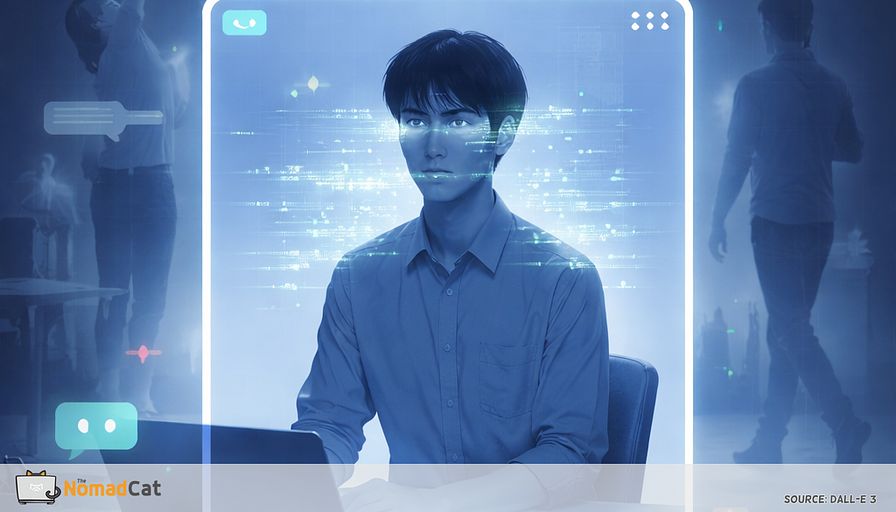
A desk day can feel fine right up until you close the laptop. Then the body starts dumping error logs. Tight shoulders. Upper-back stiffness. Dry eyes. Jaw tension. That low-energy post-lunch slump that makes every message look slightly more annoying than it should.
If you recognize that pattern, the annoying part is not the symptoms. It’s the little flicker of guilt that comes with fixing them. Standing up mid-call. Turning the camera off for 2 minutes. Walking to refill water. Taking lunch when the chat is still moving. All normal things, yet they can read as “not working” in the wrong room.
This article is about why that happens, and how to work with it instead of treating it like a personal discipline problem.
More specifically: why your break-reminder plan dies by Tuesday. Not because the reminder was dumb, but because it keeps violating local norms and charging you a small reputation tax.
We’ll cover:
- The delayed “after work” symptoms that show up when the load drops
- How responsiveness, green dots, and meeting optics turn availability into the score
- Why breaks feel expensive once you factor in context-switching and the mental reloading tax
- A simple failure autopsy you can reuse so you debug the system, not yourself
- Spec-compliant micro-actions that look boring, don’t need gear, and still reduce stiffness
- Small team “spec edits” that make movement and recovery socially safe during real workdays
The goal is not a new lifestyle to manage. It’s a set of low-friction behaviors and agreements that can actually run in production, even when the calendar is on fire.
The health spec at work
The runtime looks fine. The logs come later.
Those after-hours symptoms aren’t random. They’re delayed error logs from a system under load. During the day you can brute-force your way through stillness, screen glare, and “don’t be weird on camera.” Once the load drops, the logs finally print.
Sometimes the signals are very consistent. The author’s early signal is upper-back tightness that builds quietly until it forces movement, after years at a desk across Beijing, Berlin, and now Lisbon, often past midnight—and on remote workations across Europe on bad chairs and worse desks. When symptoms show up after work, it often means the day suppresses them until the load drops. Then they become visible, and somehow you still feel guilty about it.
That guilt has a source.
The invisible professionalism spec
Most workplaces run on an unspoken “professionalism spec.” Not written policy, more like rules you learn by watching what gets rewarded.
The clauses are usually boring, but real:
- Instant responsiveness as default
- Visible engagement most of the day
- Low-disruption presence in shared spaces
- Predictable availability for pings and meetings
- Camera etiquette that signals attention
Under this spec, your break-reminder plan isn’t fighting your motivation. It’s fighting optics.
When small health actions look like you stopped working
In that world, a 90-second behavior can read as “not working.” Step out of frame and it looks like disengagement. Stretch and it looks like boredom. Stand up and someone clocks “restlessness.” Walk during a call and the audio bumps make it feel sloppy.
And the break reminder makes it worse, because it creates a visible moment where you “should” move.
You get the nudge, you finally follow it, you turn the camera off for 2 minutes… and someone immediately asks, “Everything ok?” Now you’re not just taking a break. You’re managing impressions.
The mild guilt is not irrational. It’s your brain tracking incentives.
This is presenteeism logic in miniature. If people work while sick because norms and evaluation pressure are stronger than formal permission, it’s not surprising they also skip tiny recovery moments that are technically allowed.
Once a behavior gets socially penalized a few times, the brain learns compliance and stops trying.
Why plans decay even when they were smart on paper
This is the part that gets mislabeled as “lack of discipline,” but it’s often just friction plus small penalties. If a plan repeatedly violates local norms, it quietly dies.
- The standing desk becomes an expensive coat rack
- Break reminders turn into notification spam
After the third ignored reminder, you stop trusting yourself and you mute the app.
Time pressure, meeting density, and social acceptability decide what survives. Name the environment rules, and the “failure” becomes predictable.
Availability becomes the score
The scoreboard is reply speed, not output
Most tools don’t need to spy on you. They already publish the scoreboard.
- Reply speed
- Green dots
- Read receipts
- Meeting attendance
- How little friction you create for others
So your break reminder isn’t competing with your spine. It’s competing with the fear of being the slow one.
Why breaks feel expensive when your brain pays the reloading tax
Continuous reachability rewards fast context switching. But switching has a cost.
So a “simple” break is not just 2 minutes away from the desk. It is the re-entry tax afterward.
You answer a Slack ping, edit a doc, open the meeting agenda “just to check,” and now the original task is still there but the mental cache is cold. You can feel why people stay in monitoring mode longer than they notice.
Always kind of on call keeps the system in monitoring mode
Availability pressure doesn’t only steal minutes. It changes recovery.
If you feel you must reply fast, it gets harder to mentally clock off after work. You notice it in sleep and in how often you check your phone without thinking. Even when you do step away, part of you stays on standby.
When the nervous system is stuck in monitoring mode, basic needs get deprioritized. That’s when you end a day realizing you skipped food, water, and movement not because you “don’t care,” but because your brain was scanning for pings.
Visibility makes stillness the safest posture
Then there is optics. Open-plan sightlines and camera-on norms create behavior changes even without formal surveillance. If you feel observed, you simplify your movements.
In a camera frame, stillness is the least interpretable behavior. Standing, stretching, or walking is easy to misread. Once you name that pressure, it becomes easier to see why past “good plans” died.
The failure autopsy that skips the self blame
A spec violation template you can reuse
Instead of “be more consistent,” treat it like a bug report. Most break-reminder plans die because a prerequisite was missing, not because you are weak.
A tiny autopsy format helps:
- Attempt
- Hidden assumption
- Constraint violated
- Result
Many reminders quietly assume you can do all of this without paying a reputation tax.
- You can be intermittently unreachable without consequences
- You can look a little weird on camera or in open-plan
- You can take a short walk without it being read as low urgency
- You can break focus without losing 20 minutes rebuilding it
In practice it breaks on small moments.
- “Quick call in 2 minutes” and you stay glued to the chair
- “Camera on please” and you are trapped in-frame, self-monitoring
- A reminder pops during a tense thread and suddenly moving feels like disrespect
Over time the same constraint types repeat: optics risk, interruption reload cost, meeting capture, escalation fear.
The end state is rational. Gear turns into clutter because using it violates the local spec. The plan becomes “weekends” because weekdays are too expensive. Tracking stops because logging another miss feels like submitting evidence against yourself.
The permission layer
Why tiny habits still fail without social clearance
Permission is the layer of behavior you can do at work without explaining, defending, or triggering questions. It is not about confidence. It is risk management inside a social system.
Remote and open-plan setups crank this up. In an office you at least had hallway drift and accidental steps. In remote, you are on stage inside a camera rectangle, and movement becomes “a thing.”
A quick survival test helps.
- If an action needs justification, it won’t survive the week
- If it’s interruptible and reversible in 2 seconds, it has a chance
That is feasibility and acceptability, not motivation.
Spec-compliant behaviors that look boring and work-safe
Micro-breaks can help in a very boring way: you feel a little less fried, your eyes sting less, and you’re less stiff by evening. The catch is obvious. The break has to run when the calendar is on fire.
So the aim is actions that read as thinking, listening, or a posture adjustment, not exercising.
Here are micro-actions that usually look normal in meetings and open-plan:
- Slow exhale, drop shoulders
- Unclench jaw, tongue off teeth
- 5 seconds gaze far away
- Subtle weight shift, both feet grounded
- Calf raises under the desk
- Glute squeeze, then release
- Sit back, widen chest, 2 breaths
- Stand for audio-only segments
- Refill water at real transitions
- Widen camera frame for micro-movement
They work socially because they don’t look like a workout. They also match basic ergonomics common sense: vary posture, reduce static load, and make small adjustments more often.
The design criteria is almost boring too:
- No sweat
- No gear
- No special clothes
- No timer dependence
- No story required
And the availability test stays strict. If you can stop in 2 seconds when a ping arrives, it passes.
Small spec edits that change the whole week
Think of spec edits as small working agreements that remove ambiguity. They reduce pressure because you stop guessing what “fast” means, or whether stepping away looks suspicious.
Clause examples that can live in a team doc:
- “Ok to be unreachable for 10 minutes, post return time”
- “Internal 1:1 default audio and optional walking”
- “Internal meetings camera-optional unless needed”
- “Lunch is protected unless incident-level urgent”
- “Response-time expectation set by channel and role”
- “Escalation rule so everything is not urgent”
These edits stick when they include execution details, not just permission language. Treat it like a written rule everyone can point to. Once it is explicit, people stop guessing and self-policing.
The practical glue is simple.
- Coverage planning
- Clear exception paths
- A shared script that removes impression management
The win is not perfect behavior. It is behavior that actually runs in production.
Those after-work “error logs” are not a character flaw. They are what happens when your day rewards stillness, instant replies, and looking busy, while your body pays the bill at 19:00. Once you name the hidden professionalism spec, the guilt makes more sense, and the fixes get simpler.
The aim is not a new lifestyle to manage. It is to run a few spec-compliant micro-actions that survive real meetings, real pings, and real camera rectangles. Tiny moves, quick eye breaks, a quieter jaw, a wider frame, water at transitions. Plus a few team-level spec edits so stepping away for 10 minutes stops feeling like a reputation gamble.
Usually the smallest spec change is the only one that survives the week.
You might be interested by these articles:


Make health habits compatible with meeting days

Why your 3-minute break still needs permission at work

Your habits keep crashing on normal Tuesdays

Why desk health fails on meeting days and how to fix the permissions bug

Your habits are fine your calendar is the bug

The Diverse Uses of Blockchain

Eco Ethics in Modern Business