Breaking the cycle of urgency for sustainable tech work
Abstract:
The article examines the persistent culture of urgency in the tech industry, exploring how the drive for speed and constant availability—originating from startup and corporate environments—often follows professionals into independent or freelance work, leading to stress, shallow productivity, and quiet anxiety. It highlights the hidden costs of this urgency, such as reduced focus, emotional fallout like guilt and self-doubt, and diminished satisfaction, even as individuals seek freedom outside traditional structures. The piece provides practical strategies to counter these effects, including setting clear boundaries around communication, using minimalist planning tools, and making deep, focused work visible and valued. Drawing on real-life examples, like the author’s own shift from managing teams in Berlin to adopting a slower pace in Lisbon and stories from tech minimalists such as Paul Jarvis and Jason Fried, the article shows that redefining success around mastery, sustainability, and satisfaction—not just speed—can lead to more fulfilling and sustainable tech careers. Ultimately, it argues that letting go of urgency is less about slowing down for its own sake and more about building a resilient, rewarding work life by prioritizing depth, intentional routines, and celebrating quieter achievements.
Urgency is everywhere in tech. From garage startups to remote teams, speed often feels like a badge of honor. When I moved from big companies to working independently, I thought I’d finally escape the need to always be “on.” But the push for speed didn’t fade—it just showed up differently, and sometimes left stress and burnout in its wake.
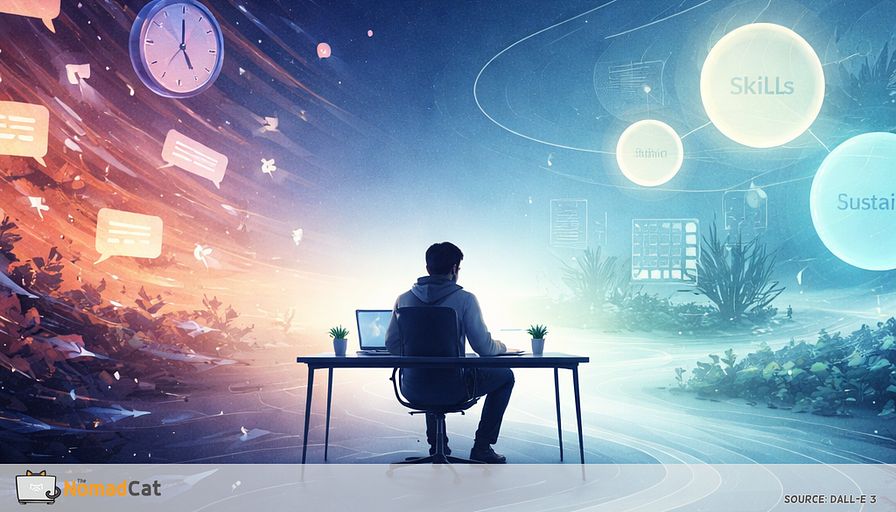
Early on, I realized I needed a new way to measure progress. That’s when I started using my own mini-framework: the Three S’s—Skills, Satisfaction, and Sustainability. Skills are about what I’m actually learning and building. Satisfaction is whether I feel good about the work and the way I’m working. Sustainability is whether I can keep going without burning out or sacrificing my health. Letting go of urgency culture isn’t just about slowing down; it’s about shifting focus to these three things. They’ve become my compass for a minimalist tech career.
If you’ve ever wondered if it’s possible to escape urgency culture and still keep your edge, you’re not alone. Here’s how urgency sticks around in tech, what it really costs, and how I’ve learned to find more focus, satisfaction, and sustainable growth—sometimes the hard way.
Why urgency sticks in tech
How speed became the standard
Think of early Silicon Valley—young engineers, too much coffee, and a race to outdo each other in crowded garages. From the start, speed was everything. Startups and investors chased fast growth, and soon tech giants adopted slogans like “move fast and break things.” Speed became the standard, even as a running joke. But it stuck. I saw this firsthand when I joined a Berlin scale-up: the pressure to ship fast was everywhere, and it shaped how I worked.
How industry habits make urgency normal
Agile and lean ways of working made speed the rule. With short cycles and constant releases, getting things out fast became normal. Careful planning often took a back seat. Teams were measured by how quickly they shipped—even if it meant cutting corners. The pressure to always be “on” turned into the default. When I managed a multicultural team in Beijing, I remember how our sprints blurred into each other, and the expectation was always to deliver yesterday.
The hidden costs of always being on
Venture capital and hopes of quick growth didn’t just encourage big bets—they often required them. Long hours, instant replies, and non-stop messages soon became expected. Working slowly started to look risky, maybe even pointless. When I left corporate roles, I thought I’d leave this behind. But I caught myself checking emails late at night, answering clients right away, and rushing to finish features overnight. Old habits really are hard to break.
When urgency becomes part of your identity
Years in fast-paced tech jobs taught me that speed meant competence. I used to think that replying instantly or handling every email right away was just what good work looked like. Even when the outside pressure faded, the habits stuck. And it wasn’t just about habits—it was also about a deeper fear of missing out or falling behind.
The fear of missing out
The feeling of needing to be available at all times isn’t just about keeping clients or managers happy. There’s this quiet worry about being left out or not staying current. I kept up the rush, even when it took away from the independence I wanted. This cycle brought a steady, quiet anxiety that was hard to shake off.
The background hum of anxiety
All this urgency built up to a constant, low-level worry: if I wasn’t working fast, maybe I was getting left behind. It was hard to appreciate slow, deep work—even if it gave better results. These habits stayed with me, even after moving to freelance work.
Why urgency follows you out the door
Even after leaving regular tech jobs, I found myself stuck in the same patterns. I’ve talked to other independents who feel the same—checking emails late at night, rushing to reply, and feeling like freedom is just more of the same grind. In one survey I ran for my science popularization company, over 70% of freelancers said they felt more pressure to respond instantly as independents than when they were in corporate roles.
The pressure to respond instantly
Freelance tech workers often feel real stress over being expected to reply quickly. There’s a worry that being slow might cost a client or hurt a reputation. This keeps the idea going that speed is everything. It quietly eats at the freedom that drew many of us to independent work in the first place.
When freedom turns into more of the same
Instead of finding the freedom I hoped for, I sometimes ended up living the same stress and burnout I left behind. That’s when I started asking: what does urgency actually cost?
What urgency really costs
The price of shallow productivity
Multitasking and jumping from one thing to the next can look impressive in tech, but in my experience, it just slows you down and causes mistakes. When I was leading the IT services company in Beijing, I tracked how much time my team lost to interruptions. On average, it took us 23 minutes to get back on track after each distraction—almost exactly what the research says.
Instead of making us more productive, this culture of urgency led to:
- More mistakes and missed details
- Taking longer to finish important work
- Forgetting key information
Constant digital interruptions broke up our attention so it was hard to focus for long. For me, especially when coding or designing systems, scattered attention made the work less creative and lower quality. My mind never fully relaxed, and deep problem-solving became rare. But the costs weren’t only mental—they showed up emotionally and physically.
Always-on communication and pressure for instant replies sparked stress and fatigue. Interruptions left me feeling drained, making it hard to recover and actually enjoy work. Over time, this wore down my job satisfaction, especially when I had no manager or team to share wins.
Emotional fallout—guilt, anxiety, and feeling invisible
Deep, focused work often happens quietly—and can feel invisible next to fast replies or showy results. I remember a project in Berlin where I spent weeks refactoring a legacy system. The work was invisible to most, and there was no instant feedback. I felt guilty for taking so long, even though the end result was solid and saved the company months of headaches later. If there’s no visible progress, self-doubt creeps in, even when the work really matters. Anxiety about seeming slow or out of touch adds to the guilt.
The fear of missing out or being ignored can chip away at motivation and well-being. For solo workers, no outside validation makes it hard to feel valued when the work is slow and thoughtful instead of flashy and fast. Over time, this pressure can drain the satisfaction that drew many of us to work for ourselves.
Without a real effort to fight these patterns, the joy and freedom of independent work fades. The problem doesn’t only hit feelings—it hurts growth and sustainability too.
When speed sabotages growth
Chasing speed often comes with technical and professional costs. Rushing to meet every demand builds up tech debt, creates unstable solutions, and means missing out on true innovation. Slower and more careful work turns out better quality, while urgency-driven shortcuts can create serious trouble later. Skill growth also suffers when there’s no time for real, focused learning.
Mastery in tech comes from time spent focusing without distractions. Creative leaps and true skills hardly ever happen between messages or meetings. Without steady pacing and real rest, burnout is almost a given. In the long run, urgency can lead to stalled careers, worse health, and less happiness.
Working sustainably isn’t just a fancy extra—it’s needed for real happiness and long-term growth. So how do you let go of urgency and find depth?
Choosing depth for sustainable tech work
Slow work as a mark of expertise
Choosing what to work on matters just as much as working fast. When fast replies are seen as competence, sometimes taking a bit longer for a thoughtful answer shows real care. A slower, more careful reply means someone is paying attention, not just reacting. Pausing can be a sign that you want to get things right.
I’ve learned to redefine what it means to be responsive. Focusing on “important but not urgent” work—like learning new skills, reviewing old projects, or setting long-term aims—brings more satisfaction and has a bigger impact than chasing every message.
Quality and consistency matter more than speed alone. Shifting attention from how quickly you reply to how well you do the work helps build trust and better, longer results.
Balancing speed and depth with frameworks
Getting the pace right isn’t only about gut feeling—some frameworks help. When I was running the Berlin scale-up, we used OKRs and the Eisenhower Matrix to prioritize. For example, we tracked how much time was spent on “urgent but not important” tasks, and after a quarter, we saw a 15% drop in shallow work just by blocking time for deep projects.
The Two-Speed IT model says to go fast on customer projects but slow down for core systems. The Cynefin framework helps tell which tasks are routine (and can be fast) and which are complex (and need time). Agile methods can be tweaked to support both speed and depth—using quick sprints for routine work and building in stops for bigger thinking.
Regularly asking, “Is this really urgent or just important?” helps keep balance. This kind of question creates a smoother and more satisfying way to work.
Making deep work visible
Work done deeply often happens out of sight, but it doesn’t have to stay hidden. Noting outcomes, sharing updates, and pointing out achievements to clients or in portfolios helps others notice the value of focused effort. These steps make it easier for people to appreciate work done with care.
Marking milestones—like finishing a tough refactor or learning a new skill—reinforces why depth matters. These are real signs of progress for anyone who wants a simpler, more sustainable tech career. Over time, simple routines can replace the need for instant praise with a quiet feeling of success.
When I moved from managing big teams in Berlin to a slower rhythm in Lisbon, I started tracking my own wins in a bullet journal. I remember finishing a tricky refactor for a client—no launch party, no Slack fireworks, just a quiet note in my journal and a walk by the river. That small moment brought more satisfaction than any fast-paced launch. It hit all the Three S’s: I built new skills, felt real satisfaction, and knew I could keep working this way for the long haul.
Building habits that highlight deep work can shift how you think about achievement—from speed to mastery and sustainability. Keeping track of wins helps anchor satisfaction in real progress, not just fast reactions. Practical routines and boundaries help these shifts stick around, supporting a healthier, more rewarding work life.
Setting boundaries for focus
Communicating response policies
Clear limits around communication can change the independent tech experience. Written agreements, email auto-replies, and onboarding notes help clients know when to expect answers. This makes misunderstandings less likely and eases the pressure to always be available.
Project management tools and kickoff meetings reinforce these limits, making them part of the daily routine. Checking and updating these policies from time to time keeps them useful as life or work changes.
Using ready-made templates or best practices for policies gives a good, professional base. With limits in place, the next step is protecting deep work during your real work hours.
Minimalist planning tools
Simple tools can really help keep focus. Blocking time with paper planners, using single-task lists, or trying the Pomodoro Technique can all cut back on digital interruptions and make space for deep work. A few solid tools I use:
- Paper planners or bullet journals for deep work sessions
- Single-item to-do lists to keep focus on one thing
- Pomodoro timers for short, focused sprints with breaks
Digital tools help too. Distraction blockers, like Freedom or SelfControl, and Do Not Disturb modes, keep out pings and digital noise—making work feel calmer. Sometimes, it’s tougher to ignore Slack than to debug a bit of code.
Scheduling important but not urgent tasks with frameworks like Eisenhower Matrix or OKRs keeps growth and learning on the agenda, not crowded out by the next urgent ping. Protecting this time is a solid way to make sure long-term goals stay important. Marking progress rounds things off.
Celebrating depth and making progress visible
Tracking deep work and noting wins can really help. Keeping a simple log of big tasks finished, new skills learned, or systems improved makes quiet progress visible. You can share these logs with clients or keep them for your own review—either way, small achievements become easy to spot.
Simple habits—like a quick end-of-week review or a quiet celebration—fix satisfaction in real progress, not just instant feedback. Even a small acknowledgment can remind you how valuable focused work is.
Over time, these routines shift self-worth from speed to mastery, satisfaction, and sustainability. Having moved from managing big teams in Berlin to a slower rhythm in Lisbon, tracking tough wins—like finishing a tricky refactor or building a new system—brings more satisfaction than any quick reply or launch.
Three steps to shift from urgency to sustainability
Here’s the mini-framework I use to keep myself on track:
- Check the Three S’s: Ask yourself—am I building new skills, feeling satisfied, and working in a way I can sustain?
- Block time for deep work: Use minimalist tools (bullet journal, Pomodoro, single-task lists) to protect focus and make progress visible.
- Communicate boundaries: Set clear response policies with clients and stick to them, so you’re not always “on.”
These steps help me move from urgency to a more sustainable, rewarding way of working.
Letting go of urgency and building confidence
Facing guilt and finding visibility
Many independent tech workers feel guilty if they aren’t always visible and available, especially during long hours of quiet, deep work. This feeling comes from old urgency habits, not from any personal failure. Sharing progress and showing results can help, making it easier to value deep work instead of just fast replies.
When deep work goes unseen, it can lead to anxiety and doubts. Regular updates or outcome logs help cut down that anxiety and build faith in the value of careful work.
Being kind to yourself matters. Accepting that slow, thoughtful work is both useful and important sets the stage for a healthier, more lasting career. Confidence in setting boundaries springs from here.
Building confidence to set boundaries
Clear, assertive communication—stating limits and needs—reduces stress and builds stronger work relationships. Written agreements and polite refusals make the rules clear and easier to stick to. Setting expectations up front means less urge to be always on, and more time for quality work.
Regular routines and self-checks help keep boundaries strong. Scheduling time to reflect and checking on stress levels can stop old habits coming back.
Redefining success as a mix of skills, satisfaction, and sustainability—the Three S’s—makes it possible to slow down, focus on quality, and trust that depth leads to better outcomes. Real-life stories prove these shifts can happen and feel rewarding.
Stories of tech minimalists breaking from urgency
Independent professionals like Paul Jarvis and Jason Fried chose to slow their pace. They report more satisfaction, less stress, and better work—showing it can be worthwhile to move away from urgency culture. Their paths show a calmer, more careful approach can lead to real results.
Others, such as Rob Walling and Pieter Levels, use deep work blocks and separate 'maker' and 'manager' days to keep focus strong. This leads to faster progress and less burnout, proving that protecting time for focused work can actually speed things up.
Celebrating wins that come from depth, not just speed or busyness, shifts both mindset and reputation. Over time, seeing these quieter achievements builds a sense that sustainable success isn’t just possible—it’s the new normal.
Since moving to Lisbon, I’ve learned that letting go of urgency isn’t just about working slower—it’s about finding a better, more enjoyable way to work in tech. The shift from constant busyness to meaningful depth felt awkward at first, with old habits and quiet pressures following me. But putting focus ahead of speed has brought higher quality work, less stress, and steady long-term growth. With simple tools, clear boundaries, and a focus on the Three S’s, I’ve found that deep work stands out—and that’s the kind of success I want to keep building.
You might be interested by these articles:


Finding enough in tech without losing yourself

Letting go of old tech habits for real freedom and fulfillment

Why setting boundaries makes independence work better

Measuring progress your own way in minimalist tech careers

Letting go of invisible ladders in minimalist tech work

Serial storytelling made simple for tech minimalists

How pingy workdays keep your sleep on watch