Abstract:
The article explains why weekends can feel oddly tense and why Sunday night often turns into a “quiet Monday exam”: not because you’re “bad at sleep,” but because unfinished work loops keep running under the combined pressure of high Monday visibility (standups, dashboards, quick syncs) and vague scoring criteria (“vibe goals” rather than testable outcomes), which drives perseverative cognition—like unseen browser tabs still eating RAM—and makes your brain keep scanning for risk and unclear ownership. It argues that common fixes (sleep hygiene, late-night planning, and especially obsessive sleep tracking that can become “orthosomnia”) often miss the real trigger by either failing to reduce uncertainty or creating new “surface area” right before bed. The proposed solution is deliberately boring: a one-page “Monday contract,” written ideally on Friday, that closes loops by specifying what happens first, what matters, what can wait, who owns what, and clear if/then escalation rules, plus a firm Sunday evening boundary (after 18:00, no new inputs like checking email/Slack or creating new tickets—only closure). It also offers small team norms to lower Sunday threat (async status due later, explicit “no reply expected” Sunday messages, a single urgent escalation path), and flags when to seek clinical help (e.g., symptoms suggestive of apnea, dangerous sleepiness, persistent insomnia), while noting the author’s own metrics-minded background (French, trained in fundamental physics, uses tools like a Polar H10) as a reason the approach resists optimization and focuses instead on reducing uncertainty so the nervous system can stand down.
The Friday cascade
If your week is the usual mix of screens, meetings, desk lunch, and the gym tab you keep meaning to open, Friday night should feel like relief. But sometimes it lands a bit scratchy. The laptop closes, and your head stays on. Saturday is fine, then Sunday goes strangely flat, and by Sunday night you are tired but alert, running a quiet Monday simulation in the dark.
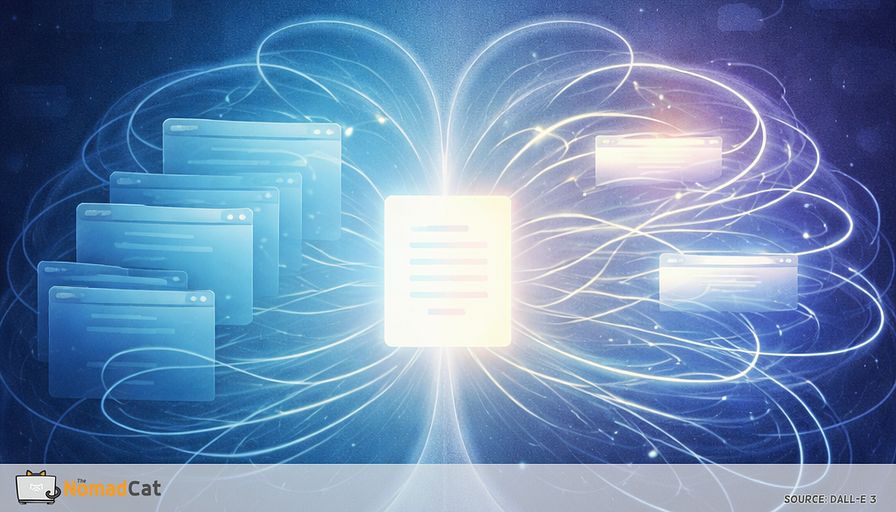
That pattern is not you being dramatic, or “bad at sleep”. It is often just unfinished work loops doing what unfinished loops do. Like browser tabs you are not looking at, still eating RAM. When the week ends without clean closure, the brain keeps checking what you own, what could go wrong, and what you might be judged on once the standups and quick syncs start again.
This is about making that weekend-to-work transition less costly. Not by adding another system, or perfect sleep rules, or a new spreadsheet that becomes its own performance review. The goal is simpler: reduce uncertainty before bedtime so your nervous system can stand down.
Here is what you will get, in plain terms.
- Why Monday can feel like an exam even in a normal job, visibility plus ambiguity is a weird combo
- Why common fixes like sleep hygiene and late-night planning often miss the real trigger
- The Monday contract, a deliberately boring 1-page note that closes loops early
- A 10-minute template that covers what happens first, what matters, what can wait, and who owns what
- A couple of team norms and red flags, including when it is worth getting proper clinical help instead of brute-forcing it
If Sunday night has started to feel like a weekly status meeting you did not agree to attend, good. That means there is something specific to change. And it can be small.
The early warning signs
Friday night can feel oddly scratchy, even after a normal week. You close the laptop, but your brain keeps running a low background buzz. Saturday is fine on paper, yet there is a little charge under the skin, like you forgot something but you can’t name it. Sunday afternoon goes flat, and the calendar feels loud without making a sound. Then Sunday night arrives with the classic tired-but-alert mix, and thoughts line up like a Monday preview of inbox, standup, and quick syncs.
If that arc repeats, it is probably not random insomnia. Stress researchers describe what happens when open loops stay open. A useful comparison is browser tabs: you are not looking at them, but they still eat RAM. Repetitive thinking can keep the stress response active longer than the original trigger, which is part of what researchers call perseverative cognition (Brosschot, Gerin, Thayer 2006).
It can even start Friday because the brain is not waiting for Sunday to do the math. The weekend is the last low-visibility window before Monday status rituals, so the system starts preloading. Even without clear conscious thoughts, attention scans for unfinished threads and detachment drops.
Why Monday feels like an exam
Visibility plus ambiguity
Monday is not just another day in desk work. It is a repeated evaluation loop.
- Standups where you summarize your existence in 45 seconds
- Leadership touchpoints where tone matters more than content
- Inbox archaeology to find what you missed while offline
- Backlog triage in public channels where silence looks like agreement
- Dashboards and KPIs that greet you before people do
- Quick syncs that are short only in the calendar
And then comes the very Monday thing: you get asked for a “quick update” on a thread you haven’t opened since Thursday, and now your silence is read as agreement.
Once visibility is back, the next stressor is the scoring rubric being vague. When you feel evaluated and you don’t control the outcome, the nervous system treats it as higher stakes than it looks on paper. Monday work is not a lab protocol, but the pattern is familiar: public, time-boxed, and slightly unclear.
Ambiguity gets worse when ownership and escalation are unclear. In modern roles, success criteria change mid-flight, or they exist only as vibes in someone else’s head. Compare these 2 categories.
- Vibe goals like be aligned or move it forward
- Testable goals like send the 1-page update by 16:00 or close the 3 open customer tickets
The first category forces the brain to keep simulating what good might mean because it cannot verify it.
This standby state is rough on sleep because it ramps up cognitive arousal. If who owns this is fuzzy, the mind plays defense. A customer sends a sharp email, an incident alert fires, and suddenly it becomes maybe mine because you cannot prove it is not. The fastest way to avoid being the person who missed it is to keep scanning.
Note: The research shorthand behind this section includes work on social-evaluative threat and role strain (e.g., Dickerson & Kemeny; Karasek; Lee & Ashforth).
Why the usual fixes miss
Sleep hygiene helps but it does not solve Monday
Screens and late caffeine matter, but they are not the main lever when your brain is simulating Monday under uncertainty. You can do everything right and still lie there doing a silent standup in your head.
Some planning strategies also recreate Monday at bedtime. Planning helps when it closes loops, but planning late often opens new ones. You start with quick look at the week and end with 14 tabs and a new sense of personal failure. A simple to-do list exercise right before bed can help sleep onset when it truly offloads tasks out of working memory (Scullin et al. 2018). The key is closure, earlier, with a clear next step. Not bedtime brainstorming dressed as responsibility.
If sleep trouble is happening 3 nights a week for months, proper help is worth considering. CBT-I is recommended as first-line treatment in guidelines (Qaseem et al. 2016) and evidence supports meaningful improvements (Trauer et al. 2015).
When tracking becomes another Monday performance metric
If Sunday night already feels like an exam, a sleep score becomes the extra grade. For some people, tracking pushes more monitoring and more effort to get sleep, which is the opposite of what helps insomnia. Baron et al. (2017) describe this pattern as orthosomnia.
If you track, use it like a log, not a scoreboard.
- Track simple continuity signals like time to fall asleep, time awake during the night, and how sticky the morning worry loop feels
- Ignore sleep stages as a decision tool; consumer devices often misclassify them and it becomes noise you can’t fix at 01:00
- Put a 2-week cap on it, long enough to spot patterns, short enough to avoid building a new obsession
The Monday contract
What it is and why it works
By 01:20, the brain does not want a motivational speech. It wants missing information. The Monday contract is a deliberately boring note that answers the questions your head keeps trying to run in the dark.
- What happens first
- What matters
- What can wait
- Who owns what
- What to do if something breaks
You are closing loops early so they do not keep running in the background. Unresolved thoughts can keep physiological activation going (Brosschot, Gerin, Thayer 2006). A credible next state beats willpower at night.
Small does not mean vague. It needs a few if then edges that stop deliberation. Knowledge workers already have too many planning surfaces: calendars, docs, tickets, chat threads, and 14 systems that are all slightly out of date. The contract is 1 page, or 1 pinned note, living where Monday actually starts.
The goal is not to do everything. It is to make the what will I be judged on question smaller, and to remove phantom ownership so you stop carrying tasks that do not belong to you.
A template that fits in 10 minutes
The point is specificity. Offload the plan out of working memory. Writing a to-do list can reduce sleep onset latency, and more detailed lists helped more in one experiment (Scullin et al. 2018).
-
3 outcomes
- Ship v2 onboarding email copy for review
- Close 5 open support tickets older than 7 days
- Align with sales on pricing page changes and timeline
-
2 risks
- If legal feedback slips, ship date moves
- If infra alert reappears, focus shifts to incident work
-
1 opening move
- 09:00 Monday, draft email outline and send to X for comments
-
Not doing list
- No redesign of the full onboarding flow
- No new dashboard this week
-
Owner clarity line
- Tickets A and B are on Y, I only support if escalated via Z
Ugly is fine. Short is fine. The brain only needs something credible.
The owner clarity line helps kill the maybe it is mine monitoring. Add a simple escalation rule so your brain does not feel it must keep checking Slack for landmines.
Bad: I will keep an eye on incidents.
Better: If incident alert fires, ping on-call in channel X. If no response in 15 min, escalate to team lead Y. Otherwise, ignore.
A note on personality and tools: I’m french, trained in fundamental physics, and my default move is to measure everything. I have a Polar H10 chest band for workouts and all the usual tracking apps. And still, sleep is the variable that does not behave nicely. The contract is intentionally boring because anything that feels like optimization tends to grow legs and invade the evening. The goal is less uncertainty, not better dashboards.
Timing and boundaries that stop the cascade
If Friday is messy, a tiny seal still works better than Sunday-night planning. Do the contract on Friday to close the week before the weekend-to-work transition ramps up.
Then protect Sunday evening from new inputs with 1 boundary: no new Monday surface area after 18:00. Closure-only is allowed if it reduces open loops.
After 18:00, new inputs looks like
- Opening email threads that you might need to answer
- Scrolling Slack channels just to see
- Adding new meetings or editing the calendar for Monday
- Starting new docs or tickets that create follow-up work
After 18:00, closure-only can look like
- Writing the Monday contract note if it is truly missing
- Sending 1 short handled Monday message to park a topic
- Moving a task from brain to note with a clear next step
- Setting 1 notification to mute a channel until morning
Checking email less often can reduce stress, which supports fewer input windows rather than a constant drip (Kushlev and Dunn 2015).
Team levers and red flags
Small team norms that lower the Sunday threat level
If Monday status is a live performance at 09:15, people will rehearse it on Sunday night. One tweak is to move status into an async written update due later, like Monday 11:00. Accountability stays, but the scoring moment shifts from say the right thing while half-awake to write the facts when you are actually online.
Make the Sunday boundary explicit, not implied.
- Norm: Sunday messages are allowed for dumping context, but replies are not expected until Monday working hours
- Exception channel: 1 escalation path for true urgent items, so nobody has to monitor ambient Slack just in case
- Leader modeling: if a lead posts on Sunday, add no need to reply, Monday is fine and actually mean it
Written escalation rules reduce the background scan that responsible people do by default.
Scope and when to get help
This targets a specific pattern: the weekend-to-work transition where uncertainty and evaluation pressure spike. If sleep problems persist on vacations, show up randomly across the week, or feel disconnected from work stress, the lever may not be workflow.
This is still a work-pattern article, not medical advice—but some sleep problems aren’t a “workflow” issue.
A few signs are less Sunday dread and more please talk to a clinician.
- Dangerous daytime sleepiness, especially drowsy driving
- Loud snoring, choking, or gasping at night that could suggest sleep apnea risk
- Restless legs symptoms that repeatedly delay sleep
- Parasomnias with injury risk
- Major mood red flags
- Sleep difficulty roughly 3 nights per week for 3 months
If none of those apply, a bounded test is usually enough to learn something. Try the Monday contract for 2 to 3 weeks and watch 1 signal: fewer projector thoughts after lights-out. If it helps, uncertainty and ownership were likely a big driver. If it does not, resist the temptation to add 6 more dashboards and a stricter bedtime spreadsheet. That is how orthosomnia happens for some people (Baron et al. 2017). Getting proper help is normal, and often faster than trying to out-stubborn a nervous system at 01:20.
The contract works because it turns “maybe I forgot something” into a small set of known next steps. The stress is often not “bad sleep”; it is open loops plus visibility plus ambiguity, and a brain that keeps checking ownership and risk once the week stops giving you external structure.
The fixes are also simple, and boring on purpose. Close the loops earlier with a 1-page Monday contract that spells out what happens first, what matters, what can wait, and who owns what. Add 1 boundary on Sunday evening so you stop creating new surface area. If sleep problems are frequent and persistent, it can be smarter to get proper help instead of brute-forcing it. When Monday feels like an exam, it is rarely willpower that fixes Sunday night. It is fewer unknowns.
You might be interested by these articles:


At 03:00 your brain starts doing reputation management

Thin sleep is a workday monitoring bug not a bedtime failure

Your 1st 45 minutes are training your 02:00 brain so change the input order

Your workday ended but your brain is still on duty at 23:40

After dinner no more invisible work so your sleep can actually power down

Stop getting punished for drinking water in back to back meetings

AI transforming healthcare logistics for cost savings and efficiency