Abstract:
The article explains how “micro-inputs”—those seemingly harmless 2-to-20-minute after-hours peeks at Slack, email, calendars, KPI dashboards, deploy logs, doc diffs, or ticket boards—quietly disrupt sleep by keeping the brain in “intake mode” even when the workday is technically over, leaving attention residue and unfinished mental loops that lead to nighttime rumination (drafting replies in the dark) and next-day “system lag” like tab-hopping, rereading messages, and compulsive checking. It emphasizes that this isn’t about real emergencies or on-call demands but voluntary novelty-driven monitoring that remote and async work subtly normalizes as “professional” low-grade vigilance, especially when the same laptop and browser session blend leisure and work cues. Instead of prescribing a new lifestyle, it proposes a practical configuration change: an “input curfew” that cuts off new high-salience information before bed (targeting novelty rather than bedtime), paired with low-friction substitutes that provide closure and a credible next step—like closing and physically putting away the laptop, logging out of work accounts, charging the phone out of reach, doing closure-only prep tasks, or writing a one-line paper plan (e.g., a timed check tomorrow) or a brief “status pin” of what’s already known. To keep it lightweight, it suggests a deliberately boring three-evening experiment logging the last novel input, whether sleep onset felt smooth or sticky, and whether morning scanning urges appear, plus a single defined escalation channel for true urgencies so Slack doesn’t become the default emergency system.
Micro-inputs and the quiet sleep leak
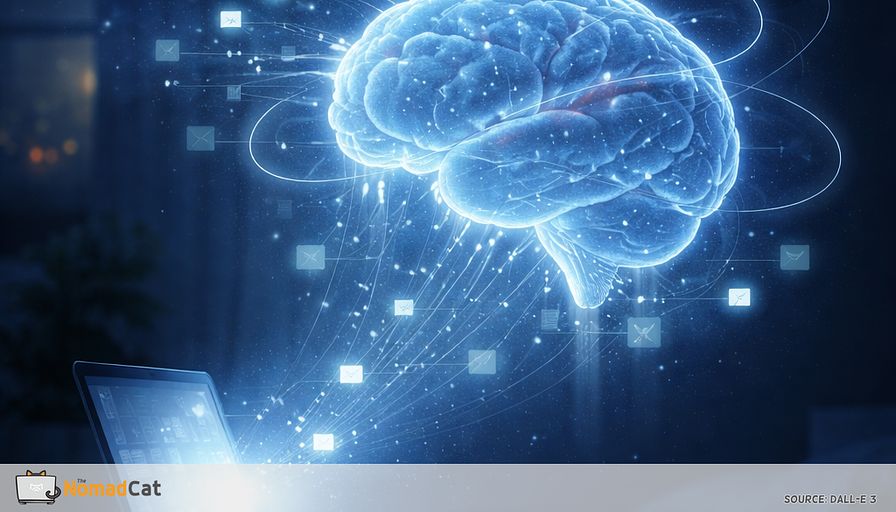
The day is “done”, but the laptop is still open. I’ve been doing desk work across Beijing, Berlin, now Lisbon (since 2023), and the geography changes, the browser doesn’t. Still at the desk, often past midnight, same little glow.
So it happens. And it is like this: the 2-minute Slack peek. The calendar check for tomorrow that changes nothing. The quick scan of a dashboard because 1 line moved. Each one is tiny. Together they keep the brain in intake mode, like a service that never really shuts down.
This article is about that specific leak. Not the obvious stuff like late-night emergencies or real on-call work. It is the voluntary micro-checking that feels harmless, but tends to leave information residue behind. You go to bed “updated”, not stressed, then the mind starts drafting replies in the dark anyway.
Here is what you will get, without a new lifestyle to manage
- what micro-inputs are and why 2 to 20 minutes can matter more than it should
- the mechanism behind it, including attention residue, unfinished loops, and novelty-driven alertness
- why remote and async work makes low-grade vigilance feel normal, even when it costs recovery
- a simple input curfew that targets novelty, not bedtime
- low-friction substitutes that still give the brain a credible next state, without opening 7 new tabs
- a 3-evening test to see if this is your bug, with a log that stays boring on purpose
No moralizing. No perfect evenings. Just a systems tweak for a common failure mode, where the device that runs your life also keeps whispering “just check once.”
Micro-inputs are the quiet sleep thief
The 2 to 20 minute hits
Work is finished. Technically. The laptop is still open because closing it feels like a commitment, and commitments after a 10-hour day are suspicious. You put a plate away, you come back, and your hand does the little trackpad move by itself.
A quick check. Just to be sure nothing weird happened.
Slack looks calm. Email looks normal. Calendar is still tomorrow, like always, but you open it anyway. It feels frictionless because it is the same device used for dinner plans, news, and that 12-tab research mission you did not need.
This is the part that messes with sleep even when bedtime stays “reasonable”. The brain never really gets an off-switch moment. It stays in intake mode.
After-hours checking is linked with poorer recovery, even when the workday is over (Derks & Bakker, 2014). And because the checking is often self-initiated, it can feel like control while still pulling attention back into work (Mazmanian, Orlikowski & Yates, 2013).
When the same laptop is both “work” and “life”, boundaries get porous by default (Kreiner, Hollensbe & Sheep, 2009). That mix is what this article calls micro-inputs.
You can spot them because they look harmless and short, but they restart the whole mental machine.
Common ones
- a “quick” calendar preview for tomorrow
- a 30-second peek at a KPI dashboard because 1 metric dipped
- checking deploy logs to see if the last run stayed green
- skimming a comment thread and noticing a new question inside it
- opening a doc diff “just to see what changed”
- clearing 4 emails to reduce the number badge
- scanning a ticket board and spotting something unlabeled
- reading a single message then opening the whole channel
These sessions are brief and frequent. The catch is the startup cost. Even 2 minutes can create a thought loop that keeps running after the screen is dark.
It usually does not feel like panic. It feels like curiosity with a sharp edge.
You go to bed feeling updated, not stressed, but the brain starts composing replies, sorting priorities, planning the next move. Nighttime work tech use is linked to a more “switched on” brain at bedtime and worse sleep (Lanaj, Johnson & Barnes, 2014), and it often shows up the next day as lower sleep quality and more exhaustion (Barber & Jenkins, 2014).
A quick self-check
- After a “quick peek”, does the mind start drafting messages or outlining tasks in the dark
- Is the body calm, but attention is on patrol
Micro-inputs are not on-call reachability. Not a big late decision you had to make. Not even the calm “second shift” where you build something for fun. They are voluntary novelty intake that leaves information residue, leftover attention that sticks after a switch (Leroy, 2009). What disappears is the simple part: actually feeling off work (psychological detachment), a recovery ingredient that gets harder when checking stays available (Sonnentag & Fritz, 2007).
Intake mode is a real state
What new information triggers at night
Intake mode is the automatic loop that kicks in when new information lands. For desk work, it is less motivation and more sensemaking and risk scanning. The loop usually does 3 things
- orient to what changed
- prioritize what might matter next
- simulate what to do if it gets worse
That is basically the opposite of feeling off work (Sonnentag & Fritz, 2007). Once work rumination starts running, sleep tends to take the hit, even if the trigger was “small” (Querstret & Cropley, 2012).
A micro-input reopens the mental stack because it creates unfinished interpretation. 1 new detail rarely arrives with a clean done state, so the brain keeps it active to avoid dropping something important. If you don’t speak in computer metaphors: you add one small “open loop”, and now your mind keeps circling it to make sure it doesn’t get lost.
Classic work on unfinished tasks shows how loose ends can linger in attention (Zeigarnik, 1927). Switching itself has cognitive costs even when it feels smooth (Monsell, 2003). So the “quick check” ends, but a few threads keep running.
There is also a simple reason interesting content can feel activating without feeling stressful. Novelty pulls you into vigilance mode. Great for a production incident. Less great at 23:40.
Light is a secondary pathway, but it is real. Bright screens in the evening can push your body clock later and reduce evening sleepiness compared to print, shown experimentally with eReaders (Chang et al., 2015). Still, for micro-inputs, the main issue is often the monitoring-ready state, the brain staying online, not just the photons.
Desk work leaks into the night
One portal for everything
Work and leisure live in the same place, on the same screen, often in the same browser session. A dashboard tab sits next to YouTube. Slack sits next to messages. The calendar is 1 click away from a recipe.
And yes, this is the remote-work special: same browser profile for work and dinner, whether you’re on a “workation” with a bad chair or back home in Lisbon. Nothing looks like a boundary, so nothing behaves like one.
So the evening becomes a mixed environment where the brain keeps context-switching even when you are “off”. After-hours tech use is linked with poorer recovery for a reason (Derks & Bakker, 2014).
The subtle part is that it is not only notifications. A laptop used for both leisure and production becomes a shared environment. Leisure time keeps stacking up work cues. In plain language, the default becomes work is available. So it takes design, not heroic discipline, to make offline the easy option.
And one more thing, because the “just stop checking” advice is too cheap: a lot of this pressure is created upstream. The tools, the norms, the expectation to be “loosely reachable” even when nobody says it out loud. Micro-inputs aren’t a personal defect; they’re what a leaky system produces.
Async work rewards low-grade vigilance
Async collaboration trains a particular kind of professionalism. You do not need to answer now, but you are supposed to notice things early and catch weak signals. That flexibility can feel like autonomy, yet it can also increase self-monitoring and checking (Mazmanian, Orlikowski & Yates, 2013).
Email and chat also make it cheap to send more requests and keep threads alive after hours (Barley, Meyerson & Grodal, 2011). With no clean done state, feeling off work gets eroded almost by accident (Sonnentag & Fritz, 2007).
Ambiguity is what makes the 3-minute check sticky. It creates attention residue, meaning part of your attention stays stuck on the thing you just touched (Leroy, 2009). At night, you rarely get the payoff of resuming and closing the loop. Mostly you just buy residue.
The next day feels like system lag
Sleep that looks fine on paper
A common outcome is boring and annoying at the same time. Bedtime stays roughly stable, time in bed looks normal, but sleep onset gets slower or more variable. At lights-out the mind feels recently updated, like a feed that still needs processing.
Nighttime work tech use is linked to being more mentally “on” at bedtime and worse sleep outcomes (Lanaj, Johnson & Barnes, 2014). Next day, it shows up less as drama and more as exhaustion and lower-quality recovery (Barber & Jenkins, 2014).
Micro-checks also displace time because a 2-minute peek becomes 20. Screens can also nudge sleep later via the light pathway (Chang et al., 2015), and bedtime screen use is broadly linked with worse sleep (Carter et al., 2016). No universal cutoff exists. It is just that the odds move.
Morning symptoms that look like personality
When recovery is thin, the brain tries to buy certainty with more checking.
- tab-hopping without finishing the tab you opened for a reason
- rereading the same message because it does not stick
- opening Slack, closing it, reopening it 90 seconds later
- low tolerance for ambiguity
- compulsive inbox grooming to get back to 0
- extra urge to monitor dashboards “to be safe”
This is how it becomes a loop. Poor sleep increases monitoring and checking. Checking increases pre-sleep arousal and monitoring again. Now the system is stuck in maintenance mode that can resemble monitoring loops described in cognitive models of sleep difficulty (Harvey, 2002). The annoying part is that it feels rational in the moment. Like risk management.
One caveat before we blame Slack for everything.
A quick boundary for credibility. Loud snoring, gasping, extreme daytime sleepiness, or symptoms that do not move at all when evening inputs change can point to a different subsystem. Evidence-based care matters. CBT-I is recommended as first-line care for chronic insomnia in major guidance (ACP, 2016).
Input curfew and the zero app fix
Cut novelty not bedtime
An input curfew is simple. After a cutoff time, no new high-salience information enters the system.
It is not a go to bed early rule. It is a stop feeding the brain new tickets rule.
A cutoff can be 30 minutes before bed if evenings are tight, 60 minutes if there is some slack, or up to 120 minutes if interactive stuff reliably wakes the mind up. No universal best number exists. The point is changing 1 variable by configuration, not willpower.
What counts as an input
After the cutoff, the ban list is anything that can create new questions and trigger the arousal loop tied to nighttime work tech use (Lanaj, Johnson & Barnes, 2014).
- Slack “just a peek”
- inbox scans and badge clearing
- calendar preview for tomorrow
- dashboards, KPIs, error logs, deploy status
- doc comments, diffs, PRs
- ticket board passes to see what moved
- news headlines, social feeds, group chats with fresh content
- “productive” reorg that opens decisions
- searching for 1 detail that might lead to 7 more tabs
If it can pull the mind into intake mode, it belongs here, even when it looks like being responsible.
What is still allowed
Allowed means closure-only actions with low novelty and low decision load.
Allowed equals
- pack the bag, set keys, charge devices
- prep a simple breakfast
- lay out clothes for tomorrow
- stage tomorrow’s materials you already have
- tidy the desk without opening new items
- light entertainment already chosen earlier
The goal is not purity. It is low novelty plus closure so the brain stops scanning for state changes.
If then wrappers for tired evenings
When the urge shows up, vague intention loses. If then plans are built for this, and they reliably improve follow-through (Gollwitzer, 1999; Gollwitzer & Sheeran, 2006).
- If the hand goes to Slack, then write 1 line on paper and close the laptop.
- If a dashboard itch appears, then pin current known status and schedule a check window tomorrow.
- If “maybe I missed something” hits, then capture the worry as a task and do a closure action instead.
Substitutes that feel like certainty
A substitute has to satisfy the same need as checking. Not motivation. Not a moral lecture. Just a credible next state, without adding inputs.
The smallest version is the 1-line capture. When tempted to check X, write 1 line with a time-boxed plan for tomorrow, so the brain has a resume pointer instead of looping.
Example
- Tomorrow 09:30, 10 min, check deploy status and reply if red
Bedtime to-do list writing has experimental support for reducing sleep onset latency (Scullin et al., 2018). It is not journaling. It is a tiny scheduler entry on paper.
If you want something even dumber: do a 30-second status pin. Write 1 fact you already know, add a timestamp, and stop. It looks almost silly, but the brain likes receipts.
Examples
- No fires as of 18:10
- Inbox cleared at 19:05, nothing flagged
And the no-app part: boring engineering that works because it adds a pause where the habit auto-runs.
Mini checklist
- laptop fully closed and put in a drawer or bag
- phone charges out of reach of the bed
- work accounts signed out in the browser
- Slack and email logged out on mobile, not just silenced
- work tabs closed, not parked
A 3-evening test that does not become a second job
Keep the log stupid simple
A 3-evening experiment is enough to see a signal. It should not require an app, a spreadsheet, or a new sleep-score obsession. I like data, but not at 23:40.
Copy this for 3 nights
- Last novel input at ____
- Sleep onset felt smooth or sticky
- Morning started with scanning urges yes or no
What improvement looks like
Keep the bar low and unromantic.
- fewer sticky downshifts after lights out
- less “1 more quick check” impulse in the morning
- fewer nights where the brain keeps simulating tomorrow
Exceptions that keep the curfew alive
A curfew survives adult jobs only if urgent has 1 channel and 1 owner. A common setup is a single escalation path like a phone call or SMS from a defined person, for defined categories, everything else waits.
Telepressure is often internal, a felt obligation not equal to real urgency (Barber & Santuzzi, 2015). If the only emergency channel is Slack, the system is designed to fail.
If nothing changes
If 3 evenings change nothing, it usually means the failure mode is different, like decision residue, on-call standby, or a 03:00 rehearsal loop. Decision residue is the classic one: you’re not checking, you’re replaying the 1 decision you didn’t finish at 18:00, trying to close it with your eyes closed. The fix has to match the bug.
And if sleep stays persistently bad or starts creating safety issues, evidence-based help is reasonable. Major guidance recommends CBT-I as first-line care for chronic insomnia (ACP, 2016).
Micro-inputs are rarely dramatic. They are the small peeks that keep the brain in intake mode after the day is supposedly over.
Most of the fix is not discipline; it’s making “no new inputs” the default.
You might be interested by these articles:


Late inputs are keeping your brain in planning mode at night

Thin sleep is a workday monitoring bug not a bedtime failure

Stop feeding Slack at 07:40 a simple morning intake gate for thin sleep

After dinner no more invisible work so your sleep can actually power down

How pingy workdays keep your sleep on watch

minimalist brands thrive by filtering feedback

The Symphony of Creativity in an AI-Powered World