Abstract:
The article explains that the common 11:00–14:00 “everything is 15% harder” desk slump—captured in the opening moment of rereading the same paragraph at 11:07 while typos, tab-sprawl, and “two-second” Slack checks multiply—is often not a personal failure but a predictable mix of circadian dip, accumulated sleep debt, hydration lag, and a meeting-constrained lunch that looks like a real meal but functions like a snack. It proposes a skeptical, no-guilt approach: use your work output as “system logs” (micro-errors, task-initiation hovering, sharper message tone, losing context) to spot the drift before it escalates into panic coffee, and do a simple differential check (sleep debt first, then a binary “was water present by lunch?”) before overhauling food. The piece argues many “meeting-safe” lunches (bread-plus-sauce, flimsy salads, liquid-ish meals) fail by design because low-chew/low-volume eating weakens fullness signals, while caffeine used as a camera-invisible fix can make the pattern feel random by degrading sleep later. Instead of chasing a perfect afternoon, it recommends a practical “2-hour runway check” (will this lunch carry you two hours without rescue coffee or random snacking?) and minimal upgrades: add one quiet, desk-friendly “runway anchor” (often a compact protein like Greek yogurt, cottage cheese, tuna pouches, jerky, eggs, or an RTD shake; or fiber/volume like edamame, chickpeas, chia, or soup as a soft-food exception), plus one meeting-compatible non-food lever—a 5–10 minute easy walk. It emphasizes keeping changes measurable but boring (a quick 13:30 status label, fewer rereads and compulsive checking) and includes guardrails: stop if it triggers anxiety/compulsive tracking or eating-disorder concerns, avoid abrupt carb shifts if on insulin/sulfonylureas, and treat serious symptoms (fainting, unexplained weight loss, extreme thirst/urination, severe fatigue, chest/neurologic issues) or persistent sleepiness as reasons to seek medical or sleep-focused help rather than endlessly “debugging lunch.”
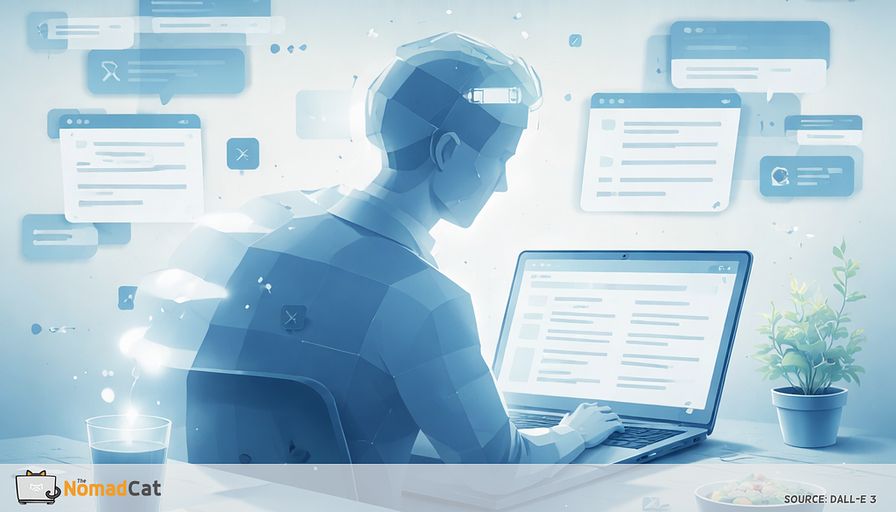
11:07, and you are rereading the same paragraph like it is written in another language. Not fully sleepy. Not exactly hungry. Just… friction. Typos you do not usually make. Tabs multiplying. Slack opened “for 2 seconds” and somehow you are still there. The annoying part is how fast this gets framed as a personal failure, when a lot of it is just timing, physiology, and a calendar that does not care.
This article is about that specific 11:00–14:00 window at the desk. The earlier, quieter dip that shows up as micro-errors and low-grade drift, then quietly sets up the later crash. The goal is not a perfect afternoon or a new personality. It is a more reliable 2-hour runway after lunch, with fixes that still work on meeting days.
Here is what will be covered, without turning lunch into a hobby:
- How to tell a glucose-style dip from the normal circadian performance dip, and why sleep debt makes both worse
- The desk-level “system logs” that show the problem before cravings or panic coffee appear
- Why meeting-safe lunches often fail by design, especially low-chew, low-volume meals that look like lunch but act like a snack
- The caffeine timing trap that makes the pattern feel random and then shows up later as worse sleep
- A simple runway check and minimal upgrades you can add without changing your whole meal, plus 1 meeting-compatible non-food lever
- Guardrails for normal humans, including when to stop debugging lunch and take sleep or medical red flags seriously
It is slightly skeptical on purpose. No moralizing, no food guilt, no productivity theater. Just a practical way to reduce the afternoon “why is everything 15% harder” tax, using small inputs and boring outputs you can actually notice on a busy week. (I tend to treat it like a debug log: change one input, watch what happens.)
The glucose gap window at the desk
The early drag you keep blaming on yourself
11:07. You are on the 3rd reread of the same paragraph and it still does not compile. This 11:00–14:00 window is not classic sleepiness. It can show up even when lunch happened and the calendar looks normal. It is more like quiet cognitive friction where everything costs 15% more than it should.
There is a real early afternoon dip in performance that is partly circadian, not just something you did at lunch. (Circadian here just means: your brain has a daily timing rhythm, and mid-day is a known low point.) And if sleep pressure is already high, that dip gets sharper because circadian timing and sleep debt stack.
Desk-level tells tend to look like this:
- Rereading lines because meaning does not stick
- Tiny typos and sloppy edits you never do
- Tab switching that feels automatic and justified
- Opening Slack just to check and drifting
- Copy pasting wrong versions or old links
- Losing the thread mid sentence in a doc
- Staring at the cursor then doing inbox
In knowledge work, this matters because it is visible in the output. Fragmentation and task switching have real resumption costs: you come back after “just a second,” and suddenly you paste the old link, edit the wrong version, or reread three times to find where you were.
A common next move is caffeine, often before you even feel hungry. Not because you got weak overnight, but because coffee is the fastest lever that works in meetings and looks normal on camera. Water, movement, even a real pause, those are visible. Coffee is conveniently not.
One problem is timing. Pushing caffeine earlier can boomerang later by nudging sleep quality down, which makes tomorrow’s window worse.
Glucose gap vs 15:00 crash: the difference is timing and how loud it feels. The glucose gap is earlier and quieter, more like friction and micro-errors. It can also set up the later slump by draining your ability to self-correct.
A quick check without food guilt
The dip is real even with a perfect lunch
If afternoons feel worse than your peers, or the window is drifting earlier, sleep debt is the 1st suspect. The circadian dip shows up even when food is controlled. Lunch can amplify the low point, but it often cannot erase it.
So yes, lunch matters, but the realistic target is often less bad rather than never dip. This is not you being lazy. It is biology colliding with a calendar.
Sleep debt makes you overconfident
Sleep debt stacks on top of the dip. Lapses show up faster and recovery takes longer. People also tend to underestimate impairment because you can feel fine while the output is clearly noisier, more reactive, and slower to resume after interruptions.
Sleep restriction research shows performance costs can build up across days even when subjective sleepiness does not track perfectly. Desk translation: if your 13:00 “system logs” show more typos and more tab pinball, trust that evidence over “I feel ok.”
The thirst plus coffee pattern that looks like a glucose issue
Mild dehydration can mimic “everything feels harder.” It is easy to create on meeting days, especially when coffee shows up early and water is somehow later. If the 1st liquid of the day is coffee and the 2nd is also coffee, lunch gets blamed for a problem that started at 09:30.
A simple binary check is enough:
- Was water present by lunch, yes or no
If the honest answer is no, treat that as a primary variable before redesigning meals. (It is boring, but it is often the variable.)
If sleep and hydration are good enough and the pattern persists, lunch design becomes the most repeatable knob.
Spot it before the craving email gets sent
The pre-craving phase that looks like boredom
There is a phase before cravings where the brain asks for stimulation, not food. Lunch happened, but attention is buffering and the screen has a thin layer of static. You are not starving. You are just slightly more impatient with everything.
A quick check can use work artifacts as evidence plus 1 simple sleepiness rating. Tools like the Karolinska Sleepiness Scale exist for a “right now” read (it’s a 1–9 scale: 1 = very alert, 9 = fighting sleep). Not to medicalize your afternoon, just to label whether alertness is slipping. Example: if at 13:30 you’re at KSS 7/9, treat it as sleep pressure first (walk, light, water), not automatically hunger.
Use work output as the system logs
Treat these as system logs, not as mood:
- Task initiation delay: you hover, open 3 tabs, start none
- Writing tone gets sharper and shorter than the situation deserves
- Reopening the same thread or ticket because context will not stick
When attention gets noisy, checking behavior ramps up because it feels like a safe micro-task. The content is not always the point. The checking itself becomes the stimulation.
Notice drift before coffee becomes urgent
If you notice drift early, the fix stays boring. Otherwise the day escalates into panic coffee plus fake urgency, which often just kicks the can into the next dip.
Fatigue often shows up as lapses and variability, not dramatic sleepiness. You can feel fine while attention drops frames. It is annoying like that.
Why meeting-safe lunches keep failing
The meeting-safe template is a real design spec
Lunch at work is rarely chosen to make your brain stable at 14:00. It is chosen to avoid friction. Not moral weakness, just constraints.
Remote work and camera norms make the spec stricter. The meal has to fit your role, your calendar, and your webcam frame.
- Low odor
- Low mess
- Quiet chewing
- Fast
- 1-hand operable
- No sauce disasters
Under that spec, your lunch becomes a UI element.
The 3 polite lunch archetypes that under-deliver
Many safe lunches look like meals but behave like snacks.
- Bread plus sauce
- Salad without structure
- Liquid-ish lunch
Some can be great if structured, but many are not. Then the loop forms:
Constraints push you toward weak lunches → weak lunches push earlier caffeine and reactive work → reactive work compresses time and tomorrow’s lunch gets even more safe.
Why low-chew meals send a weak meal signal
Low-chew, low-volume meals often generate a weaker fullness response. Chewing and oral processing seem to matter for the “meal is complete” signal. Remove that and hunger comes back earlier even if calories were present.
Liquid calories are polite and often unreliable. They tend to be less filling than the same energy in solid form. Office version: the “liquid-ish lunch” behaves fine at 12:15, then at 13:05 you are checking Slack again, thinking about coffee, and calling it “busy” instead of “underfed.”
There is 1 soft-food exception that stays meeting-friendly: soup. Volume and lower energy density can help with fullness. In real life, a mug of soup is also pauseable and less likely to explode on your keyboard.
Define lunch success by what happens after it
Lunch works if you can get through the next 2 hours of calendar without rescue behaviors like panic coffee, constant checking, or accidental snacking while just answering 1 email.
Caffeine makes the pattern look random
Caffeine drift in the 11:00–14:00 window is often a meeting-compatible control layer when lunch is weak. Silent, fast, nobody on the call can tell.
The risk is bedtime. Caffeine taken 6 hours before bed can still reduce total sleep time. Then the next day you pay it back as more lapses and slower performance even when you feel basically ok.
The goal is not zero coffee. It is fewer compulsory coffees. Coffee is not the villain, but it is a very efficient way to hide bad inputs until tomorrow shows up with receipts.
A testable guardrail: set a caffeine cutoff at bedtime minus 8 hours for one week, and log whether “panic coffee” decreases (not your motivation speeches, the actual coffees).
The 2-hour runway check and the minimal upgrade
The runway check
Will this lunch carry me 2 hours without rescue coffee or random snacks.
That is the whole test. Not because 2 hours is magical physiology, but because your calendar is. If the honest answer is maybe, your lunch is probably a snack wearing a lunch costume.
Interrupted lunch still counts. If lunch gets chopped into 3 micro-bites between calls, treat it as degraded mode and assume the runway will be shorter. It happens. C’est la vie.
Add 1 runway anchor without changing the meal
A runway anchor is a small add-on that makes your existing lunch more reliable. Think patch, not new identity.
Protein anchors are often lowest friction at a desk because they are compact and quiet:
- Skyr or Greek yogurt cup
- Cottage cheese
- Tuna or salmon pouch
- RTD protein shake
- Jerky or meat sticks
- Hard-boiled eggs
If protein is hard, fiber and volume anchors can work too:
- Edamame
- Chickpeas or lentils
- Chia in yogurt
- Soup next to your usual lunch
The non-food lever that still works on meeting days
A 5 to 10 minute easy walk after lunch. Not a workout, more like a hallway loop while your next meeting loads. If the calendar is tight: take the first few minutes of a low-stakes call on audio and pace.
Make it measurable with boring outputs
A tiny log makes the pattern visible without turning lunch into a hobby:
- fewer panic coffees
- fewer rereads and cursor-staring
- cleaner drafts with fewer micro-errors
- less sharp tone in messages
A 10-second label is enough:
- 13:30 status: steady / drag / crave (optionally add KSS number)
- Runway check: pass / fail
Guardrails for normal humans with calendars
Keep the scope boring on purpose. This is not a diet. Not macro counting. Not supplements. Not a moral ranking of lunch choices. It is a reliability patch for a specific workday window.
If rules start to create anxiety, guilt, or compulsive tracking, it is reasonable to stop the experiment and go back to regular adequate meals. If screening questions like SCOFF resonate uncomfortably, treat that as a flag to avoid these tests and get support instead of tightening control.
Reliability beats ideal on hostile days. Minimal but repeatable often wins over the perfect lunch that never occurs.
When to stop debugging lunch and get help
People using insulin or sulfonylureas (common diabetes medications that can lower blood sugar) should not abruptly cut carbs, skip lunch, or shift meal timing without clinician guidance.
Red flags that should beat lunch experiments:
- Dizziness, fainting, or near-fainting episodes
- Unintentional weight loss
- Excessive thirst and urination, especially with fatigue or weight change
- Rapidly changing appetite, persistent nausea, or inability to keep normal meals down
- Fatigue that is sudden, extreme, or comes with chest pain, shortness of breath, or neurologic symptoms
If the main complaint is persistent daytime sleepiness, sleep screening can be higher leverage than lunch tweaks. Sleep disorders and insufficient sleep are common and underdiagnosed, and they can quietly wreck daytime performance. The promise here stays small and practical: meeting-compatible reliability fixes for a predictable window.
That 11:00–14:00 drag is not a character flaw. It is often a predictable combo of circadian timing, sleep debt, hydration lag, and a lunch that looks meeting-safe but behaves like a snack. The win is not a perfect afternoon. It is fewer micro-errors, less tab pinball, and a calmer 2-hour runway after lunch without the compulsory coffee spiral that steals from tonight’s sleep.
Keep it boring and testable. Use the runway check. Add 1 small anchor instead of rebuilding your whole meal. If needed, borrow the non-food lever that still works on meeting days: a 5 to 10 minute easy walk. And if red flags show up, stop debugging lunch and get real help.
You might be interested by these articles:


Your lunch is too fast to count in your brain

Your desk lunch is not registering and your 15:00 brain pays for it

Your calendar is giving you jetlag and lunch keeps missing the handoff

Why your lunch feels like background noise in back to back meetings

Calendar-compressed eating and the crumbs then dinner day

Unlocking Intelligence: A CTO's Guide to Data Mastery

Navigating EU Regulations with Micro-Credentials for Startup Success