Abstract:
The article argues that when desk work repeatedly wipes out “simple” health plans—like a Tuesday schedule with a gym block, real lunch, and clean log-off derailed by Slack pings and meetings—it’s usually not a discipline problem but a “spec mismatch” between what most health advice assumes (a stable person who can protect time, say no, and be briefly unavailable) and what knowledge work actually demands (an interruptible, observed, low-latency “service node” performing competence through constant responsiveness). It explains how jobs train a work-identity where basic needs (water, movement, lunch away from the screen) start to feel like risky “special requests,” reinforced by telepressure, passive face-time expectations, and camera-on self-monitoring, until the “delayed error log” shows up as late-day stiffness, headaches, dinner cliffs, and poor recovery. To make health behaviors survive “work mode,” it offers a two-mode model (work-identity vs personal-identity) and says the core fix is to stop scheduling identity collisions by choosing pause-safe, interruption-proof actions during work hours—brief frequent movement breaks that can survive being pinged, “protein anchors” like Greek yogurt or a tuna pouch to prevent hunger chaos, and even planned “degraded mode” options like meal replacements for calendar-collapse days—then using a quick, blameless five-question post-miss debug to treat failures as interface data rather than character flaws, measuring progress by faster re-entry and fewer “health goes to 0” days instead of streaks.
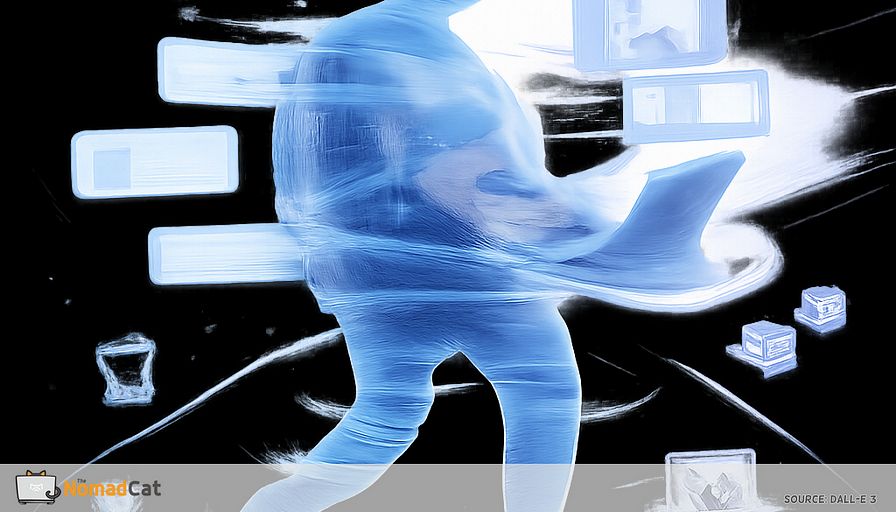
Tuesday. 09:00. You had a reasonable plan. Gym block, real lunch, clean log-off. Then Slack started doing Slack things, meetings bred new meetings, and lunch became something you ate while typing with 1 hand. Again.
If that sounds familiar, the problem is probably not discipline. It is a spec mismatch. Most health advice assumes a stable version of you who can protect time, say no without consequences, and follow a plan like the day is predictable. Desk work does not run that operating system. A normal 10-hour day turns you into an interruptible service node that is watched, pinged, and rewarded for being smooth.
This article is here to make that feel less personal and more fixable. Not with another app, not with a heroic routine, and not with a new identity you have to perform. The goal is simpler. Build health behaviors that can survive work mode, meaning they still work when you are reachable, observed, and context-switching constantly.
What you will get, concretely
- A useful way to diagnose why “small habits” still die on a random Tuesday
- How work trains an identity where basic needs start to feel like special requests
- The 3 breakpoints where plans collapse, even when they are only 8 minutes
- A 2-mode model that separates work-identity mode from personal-identity mode so you stop scheduling collisions
- A short blameless post-miss debug, so a miss becomes data instead of a character verdict
If you can work a full day without eating, drinking, or moving, congratulations, you are extremely employable. Also, that is not a superpower. It is just a system buffering errors until the log gets loud. This is about fixing the interface.
The plan and the job want different people
Most health plans assume a stable self
Most simple health advice quietly assumes a stable self. Same operator, same inputs, same outputs. You are the morning-training person. You are the protected-lunch person. You are the person who can say no without paying for it later.
Desk work is different. You are more like a context-switching service node handling meetings, tone shifts, mini emergencies, and the social pressure to respond fast. The useful point from time-famine research is this: it is not that you “lost” your time. The system is built to keep your time interruptible, so the day gets consumed in slices.
A boring forensic question helps
- What version of you does this plan require?
- How many hours per day does your job allow that version to exist?
If the answer is maybe 30 minutes on a good day, the plan is not small, it is high-risk.
Information work is fragmented by design, and interruptions create a real “resumption lag” (Mark is often cited here). In plain terms: two quick pings can cost you your next hour because you spend it reloading context. Example: you try to take an 8-minute walk between calls, but one “quick question” lands, you answer, then you spend the next block catching up and the walk never comes back. The plan fails at the interface, not in your character.
Your job trains an identity
Being reachable looks like competence
Even when nobody says it out loud, the next pressure is belonging and not looking difficult. Many knowledge roles quietly reward traits like these
- Instant replies and low latency on chat and email
- Always calm on camera, even when the calendar is on fire
- Being easy to work with, no friction, no needs
- No protected blocks, always available if needed
- Staying at the desk so you are visibly on it
If you want the smallest possible example: you stand up to refill water, your camera angle shifts, someone jokes “gym time?” and you laugh and sit back down. Nothing evil happened. You still learned the rule: visibility is safer than needs.
Research language calls parts of this telepressure and passive face time. The Tuesday translation is simpler: you start treating “brb 2 min” as a social risk.
The health cost is not dramatic. It is boring. These traits select for stillness, delayed meals, and ignoring body signals because the professional version of you is the one who does not interrupt the work.
Basic needs start to look like special requests
This pushes basic needs into a delayed queue, which looks efficient until the error log gets loud. Leaving for a walk, taking a real lunch, eating something that makes noise, coming back a bit sweaty, or blocking time can feel like waving a little flag that says complicated person.
Maybe nobody would care. But the pattern is real: using flexibility can attract stigma in some teams, especially where the “ideal worker” norm is strong. So people pick the safer identity. Responsive. Unproblematic. Always here.
The delayed error log always catches up
Now you can see why even tiny habits can fail exactly at the moments you think should be easy. The job trains you to postpone anything that feels hard to pause. Bathroom later. Water later. Lunch later. Movement later. Like a system that buffers errors instead of handling them, it works until the buffer overflows.
Then it shows up as tight upper back around 18:00, a dinner cliff where you eat too fast, a headache that feels random, sleep that gets thin because your nervous system never really came down. I have done desk work across Beijing, Berlin, and Lisbon, and the location changed a lot—what didn’t change was how quickly “I’ll eat after this” turns into “it’s 19:30 and I’m still at the laptop.”
Recovery research frames this as detachment, not just time in bed. Translation: if your brain never leaves “available mode,” sleep quality pays for it.
And yes, one line that is painfully true
I can work a full day without eating, drinking, or moving. I know now that is not a superpower.
Small plans still die on the same Tuesday
Time cheap but identity expensive
An 8-minute habit can be cheaper than a coffee refill and still feel impossible. Not because of time, but because of what it signals on a workday where available and smooth is the default.
- 8-minute walk between 2 calls
- 90 seconds of stretching while camera is on
- A real lunch away from the screen
- Closing the laptop at 18:00 when the thread is still warm
The internal rule is not I don’t have 8 minutes. It is I can’t be seen doing that.
With camera-on work, that self-monitoring gets stronger. Zoom-fatigue research has a lot of explanations, but the Tuesday takeaway is: when you can see yourself, you manage yourself harder. So even tiny movement starts to feel like a public performance.
The 3 breakpoints where micro habits get killed
It helps to name the breakpoints instead of blaming motivation.
- Right before joining a call. The body has time, but the brain is in optics mode, so standing up or walking feels like risk.
- Right after a ping. Telepressure kicks in and you drop 2 minutes for water to prove low latency.
- When the day is already messy. After disruptions, it takes time to resume. So you treat any break as something that will cost 20 more minutes to recover. The habit dies not because it is long, but because the schedule is held together with tape.
Health that fits the mode you are in
2 modes and why naming matters
Work-identity mode is what most of a Tuesday looks like. You are interruptible, observed, and context-switching. The only actions that survive are pause-safe ones, the kind you can stop mid-way with 0 cleanup and 0 weirdness. Think software that survives suspend and resume.
Personal-identity mode is the opposite. It is when you can cook, change clothes, take a shower, use gear, sweat, and be unavailable for 45 minutes without guilt.
The core bug is mixing modes. Lots of plans schedule personal-mode behaviors inside work-mode hours, then act surprised when responsiveness reflex and optics kill them. And optics are not paranoia: in many workplaces, being seen as “always on it” still buys you trust.
So the fix is simple and boring. Stop scheduling identity collisions. Choose work-mode actions that keep uptime even when Slack eats the day.
Lowest-change actions that fit work mode
Movement that survives pings is usually tiny and frequent, not heroic. Research on breaking up sitting points in the same direction: brief walking breaks can outperform “I stood up once.” A practical option is 2 to 3 minutes every 20 to 30 minutes when possible. Not a rule. Just a real input.
Food needs the same property: interruption-proof. One lever is protein anchors because they reduce later hunger chaos and lower decision load.
An optional anchor range is 25 to 35 g. Examples that do not become a project
- Greek yogurt
- Tuna pouch
Instead of collecting “perfect foods,” use a mode-based rule: if it requires 0 prep, 0 utensils, and 0 explanation, it has a chance of surviving work mode.
For worst-case days, plan a degraded mode instead of pretending lunch will happen. Meal replacements can be a tool here, not a shame object. When the calendar collapses, a planned fallback keeps health from dropping to 0.
The blameless autopsy after a miss
A 5-question post-miss debug
A 10-hour desk day has a special talent for killing simple plans without making noise. So treat the miss like a blameless postmortem, not a character test. Not why am I like this, but what requirement did I miss, and where did it collide.
Keep it 60 seconds
- What exactly did I plan, time and place?
- What identity did the plan require?
- What identity did work demand at that moment?
- What social penalty was I avoiding?
- What is the lowest-change version that fits work identity and avoids that penalty?
Example, planned walk at 16:00, missed it. The issue might be required being visibly offline, not lack of motivation.
Planned gym at 18:30. Then a thread heats up at 18:10 and suddenly work demands the responder identity. The avoided penalty is looking unavailable or slow.
A compatible fallback keeps uptime. 6 minutes of walking while reading the thread, or 2 minutes of stairs between replies, is not fake exercise. There is evidence for “exercise snacks” and short movement breaks having real value, even when they look small.
Then later, add a protein anchor instead of letting dinner become damage control.
What sticking means under this lens
Sticking stops meaning streaks and starts meaning compatibility.
- Did this plan require a personality transplant?
- Did it threaten the work-role identity I was performing today?
- Would it survive being interruptible again in 5 minutes?
If the answer is no, it is not a moral failure. It is a bad deploy. Habit research also shows automaticity varies a lot, so a broken streak does not mean the system is broken.
If metrics help, keep them ops-style and boring
- Smaller gaps between attempts
- Faster re-entry after a collision
- Fewer days where health goes to 0
- Less reliance on restart Monday
If you are the kind of person who likes a dashboard, this is where I’d use something simple like a Decathlon sport watch or a Polar H10: not to “win” the day, just to notice whether you got any pause-safe inputs at all.
The configuration error stays the same. Trying to run personal-mode behaviors inside work-mode hours, without changing visibility and responsiveness norms. Those norms can shift slowly when evaluation moves toward results, but the risk is real in some contexts.
Meanwhile, work-mode health during work hours is the minimal fix that does not require hero behavior. And yes, sleep stays the hard variable when work can run past midnight.
If your 10-hour desk day keeps eating your gym block, your real lunch, and your clean log-off, it is not proof you are weak. It is proof the plan required a version of you that only exists 30 minutes on a good Tuesday.
The fix is less heroic and more compatible. Separate work-identity mode from personal-identity mode, then stop scheduling collisions.
In work mode, aim for pause-safe inputs that survive pings. Tiny movement breaks. Protein anchors. A degraded-mode lunch that prevents the “health goes to 0” day.
When something slips, run the blameless debug and treat it like interface data, not a character verdict.
Over time this pays back in boring but real ways. Less stiffness at 18:00, fewer dinner cliffs, better chance to actually come down at night.
Where does your plan usually collide, right before calls, right after pings, or when the day is already messy?
You might be interested by these articles:


Your habits are fine your calendar is the bug

Write desk health like software with degraded mode built in

Build health habits that work when your workday never ends

A health plan that still works in 3 stolen minutes

Your calendar is the boss not your motivation

Eco Ethics in Modern Business

Your breaks keep getting deleted by the calendar