Abstract:
The article argues that most weekday “habit failures” aren’t about weak willpower but about work systems that silently erase healthy behaviors by rewarding visible responsiveness, stillness, and “always-on” availability—making stretching, eating real meals, or taking breaks feel like a small reputational risk in an environment of green dots, camera tiles, and fragmented calendars. Drawing on research about time famine, telepressure, passive face time, and loss aversion, it explains how desk professionalism turns basic human needs into “identity debt,” where every habit costs a mini-explanation (“brb,” “why are you away?”) that people avoid under pressure. The author—French, born in 1974, with decades of late-night desk work across Beijing, Berlin, and Lisbon—notes familiar signals like upper-back tightness and a spouse who’s a fitness trainer/nutritionist prompting posture fixes that last minutes, with sleep still the hard variable. The proposed solution is to stop chasing an ideal routine and instead design “identity-compatible” defaults via a two-mode system: a Public mode of optics-safe, boring, instantly stoppable micro-actions (standing on audio calls, shoulder rolls while something loads, a quick doorway loop, under-desk wrist stretches) and a Private mode for longer, higher-effort training and recovery when time is truly controllable. It also offers “desk-legal” food defaults that minimize mess and interruption (e.g., yogurt and fruit, soup in a mug, rice and tuna) plus short status scripts and low-drama tracking focused on continuity over perfection—aiming for fewer long statue-like sitting blocks and fewer costly restarts, especially on an ordinary Tuesday.
It’s not that you “can’t stick to habits.” It’s that your workday keeps deleting them.
Stiff neck. Tight shoulders. Lower back complaining. Bad sleep. That 15:30 to 17:00 energy crash. Lunch is some desk snack between pings. You had 5 minutes to stretch. Technically. But 5 minutes you can find is not the same as 5 minutes you can safely use when your calendar is chopped into pieces and your “availability” feels very visible.
This is for people who are tired of productivity-hack vibes and wellness branding that assumes you have long quiet mornings and a supportive schedule. The goal here is simpler: understand why one basic attempt keeps failing even when motivation is fine, then set up a default that survives a normal workday, without pretending to be a different person.
Here’s what you’ll get, in plain terms
- Why moving during the workday (especially between meetings) can feel like a small reputational risk
- How responsiveness norms and always-on tools quietly reward stillness and fast replies
- The “identity debt” problem, when a habit costs you a mini explanation every time you do it
- A 2 mode setup for movement that works with real constraints
- Public mode: optics-safe, boring, instantly stoppable
- Private mode: longer blocks where real training and recovery can happen
- Public mode: optics-safe, boring, instantly stoppable
- Concrete, camera-safe micro-moves that don’t create mess, sweat, or awkwardness
The pattern you keep misreading
When the week eats your plan
It’s Tuesday. Weekend-you ate something with a plate, maybe even went outside, like a normal carbon-based lifeform. Then you look up and it’s 16:40, you’ve been head-forward all day, eyes dry, shoulders tight, and lunch was a sad desk thing you barely remember.
This isn’t dramatic failure. It’s a repeatable pattern you can watch without shame. With heavy meeting loads and fragmented calendars now common in knowledge work, the “where did the day go” feeling is not rare (Microsoft Work Trend Index 2023–2024). When time feels rushed, eating time is often one of the first things that gets squeezed (Hamermesh & Lee, 2007).
If it keeps repeating, it is probably doing a job for you.
When the day gets volatile, the default becomes basic risk management. You do the actions that protect competence and credibility, and in desk work “still and responsive” often feels safest. Perlow’s work on time famine describes how responsiveness norms and constant interruptions crowd out real breaks, even when nobody explicitly says “don’t take lunch” (Perlow, 1999). Always-on tools add their own trap, where “work anytime” quietly turns into “reachable all the time” (Mazmanian, Orlikowski & Yates, 2013).
Here is the hidden assumption in many plans. They assume you can be briefly unavailable and visibly human during work hours, without it meaning anything.
But the issue is not whether 5 minutes exists. It is whether 5 minutes is defensible in that role, on that team, under that meeting pressure. Worktime control is linked with better recovery capacity and health outcomes (Nijp et al., 2012). Time you can find is not the same as time you can use.
So the plan didn’t fail on willpower. It failed on weekday optics.
Why your brain treats a stretch like a reputational risk
Desk work is an evaluation environment. It is not just output being assessed, it is also presence.
Green dots, “last active” timestamps, camera tiles, and the quiet fact that things can be recorded make small deviations feel meaningful. When visibility goes up, people change behavior because they expect to be judged, even if nobody says a word (Bernstein, 2012).
Then your brain does a very boring thing.
It protects credibility like it is fragile and expensive, because at work it often is. The health cost of skipping a 2-minute stretch is small and delayed. The social cost of looking distracted or unavailable can feel large and immediate. That mismatch is basically loss aversion: you’ll work hard to avoid a quick social “loss,” even if it creates a slow physical one (Kahneman & Tversky, 1979).
And no, this does not reduce to “stop caring what people think.” Interdependent work runs on signals. Everyone does some impression management, meaning you constantly manage the “i’m reliable” story even when you don’t want to (Goffman, 1959).
So you get this:
Habits that look harmless in private need to be signal-safe at work, or they will keep getting deleted by the system.
Desk professionalism is built on stillness
If the body is quiet, the work looks serious. That is the rule, even when the output would be identical if someone stood up, refilled water, or did 30 seconds of shoulder circles.
Research on passive face time (being seen working) suggests dedication gets judged by visibility, not just results (Elsbach, Cable & Sherman, 2010). Busyness can act like a status signal too: looking overloaded can read as “important,” which quietly rewards the head-down, don’t-move posture (Bellezza, Paharia & Keinan, 2017). Add always-on tools and stillness is not enough anymore. Fast replies start to count as proof of life.
That pressure has a name (telepressure): the itch to reply fast so you look alive, even when your brain needs a break (Barber & Santuzzi, 2015).
The part where this gets uncomfortably familiar
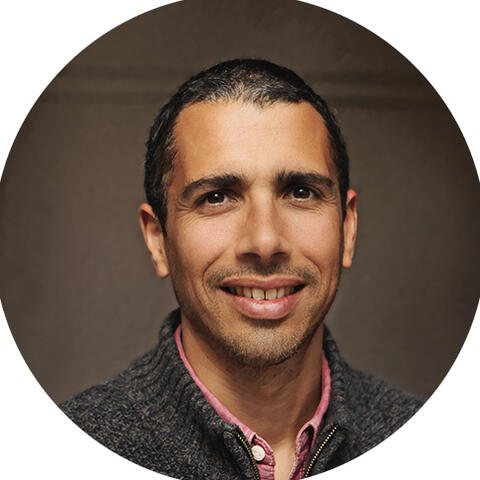
The author is French, born in 1974, and has spent most of adult life at a desk.
- Beijing → Berlin → Lisbon, often past midnight
- Can work a full day without eating, drinking, or moving, and for a long time that can feel like competence
- Early signal: upper-back tightness stacking up until it forces movement
- Wife is a fitness trainer and nutritionist; she’ll say “sit straight,” which usually lasts about 3 minutes
- Physical health started to matter more at 40, not because of a crisis, but because the data stopped looking good
- Sleep is still the unresolved variable
- Left to myself, i work through the night, and i can feel the cost accumulating
The cringe that kills the habit
The feeling is rarely “i don’t care.” It is more like a small internal flinch.
This will look weird. Someone will ask a question. It will create a tiny social debt i don’t have time to pay right now.
Weekdays collapse because the rule running in the background is consistent.
Protect credibility first, then do the optional stuff.
It often shows up as small, totally rational thoughts
- Camera might switch on any second
- A ping will land mid-stretch
- Meeting starts early obviously
- Someone asks why i’m away
- Heart rate or breathing looks visible
For people who like data, this is almost funny in a dark way. The plan is feasible on paper, but the day is run by “good enough and safest under constraints” decisions (Simon, 1955).
Public tracking can also backfire. When tracking is public, a lapse becomes a signal. That is when a missed day can trigger the “i broke it, so i might as well drop it” spiral (Marlatt & Gordon, 1985). Work adds a specific audience problem, colleagues and managers.
A blunt rule that fits office life is this:
If it creates performance theater, it will not last.
Make habits identity compatible
The principle is simple, and slightly annoying. The default habit must fit a normal workday, not a perfect day where everyone is calm and your calendar has air.
If it needs a new persona, it will only run on rare days. If your calendar is throwing interrupts all day, a habit that needs a clean 15-minute block is a config that won’t deploy.
This is why worktime control matters. Without real authority over breaks, “just do it at 14:00” is fiction (Nijp et al., 2012). And always-on tools tighten the box even when they claim to give flexibility (Mazmanian, Orlikowski & Yates, 2013).
A practical design is a 2 mode habit. The goal is not apathy. It is no identity debt, meaning the habit does not force a mini explanation, a vibe shift, or a “sorry brb” performance.
- Public mode: optics-safe, boring, instantly stoppable, no gear, no sweat
- Private mode: longer blocks, higher effort, gear-friendly, real training
Public mode has support in research on microbreaks: short breaks are linked with lower fatigue and performance is often unchanged (Kim, Park & Niu, 2017). Private mode is where capacity gets built. Public mode is what keeps continuity alive on Tuesdays.
Use optics safe defaults
A compact checklist for identity compatibility
- Camera-ready face and voice
- Instantly stoppable mid-rep
- No mess on desk
- Looks like normal work
- Preserves reply expectations
Some teams can renegotiate norms, many people cannot. Flexibility stigma is also real, where deviations from “always available” can get penalized (Williams, Blair-Loy & Berdahl, 2013). Designing for current reality is not endorsing it. It is choosing what will actually run.
Examples that survive a normal Tuesday
Movement that looks like work
These tiny moves are not “too small to matter.” They are the ones that survive the real constraint: not having to explain yourself.
- Stand while listening on audio-only
- Shift weight left-right while reading
- Roll shoulders once while something loads
- Look away from the screen for 20 seconds between messages
- Walk 1 doorway loop as “grabbing something”
- Refill water, then take the long route back
- Stretch hands and wrists under the desk
- Mute and do 3 slow neck turns off-camera
If/then rules make this usable when the day gets stupid:
- If a call runs longer than 25 minutes, do 1 doorway loop the moment it ends (even if the next one starts soon).
- If meetings are back-to-back, default to “stand on audio-only” for the first 5 minutes of each call.
- If you catch yourself statue-still, do one move that is instantly stoppable (shoulder roll, wrist stretch, neck turns) and keep going.
The target is fewer long statue blocks and less accumulated stiffness. Even very brief breaks can help maintain attention over time (Ariga & Lleras, 2011).
A note on food (because it’s the same problem)
Weekday eating often fails on optics and interruption cost, not nutrition knowledge. Add video calls and self-presentation pressure, and chewing starts to feel like a signal.
Weekday defaults tend to work better when they are quiet, low-mess, fast-reset, and easy to pause mid-bite. Not perfect, just defensible.
Examples that are desk-legal in most contexts
- Yogurt and fruit
- Eggs and salad
- Soup in a mug
- Rice and tuna
- Chicken and veggies
- Cottage cheese bowl
- Nuts and an apple
A small professional script can also help because it reduces ambiguity and protects response-time expectations
- Back in 2 min grabbing food
- Quick refill back at 14:10
- Stepping away 5 min then online
Tracking can stay low-drama too. Private and dull often beats public and motivating, at least on weekdays. If data helps, track continuity, not purity
- Private checkmark
- Weekly total minutes
- Minimum viable reps
- Longest seated bout
- 2 mode tally
- Missed then resumed
The north star stays the same.
No new persona required, just fewer long statue blocks and fewer costly restarts.
If your neck is stiff, shoulders tight, lower back noisy, and lunch keeps turning into a desk snack between pings, it is not a character flaw. The system is doing what it rewards. Stillness looks serious. Fast replies look reliable. And anything that makes you briefly human can feel like a small reputational gamble.
The workable fix is not a new identity. It is better defaults. Keep a 2 mode setup: public mode is boring, camera-safe, instantly stoppable; private mode is where longer training and real recovery can happen. Over time, those tiny interruptions to sitting and those desk-legal meals can add up, mostly because they don’t trigger the weekday delete button.
The smallest optics-safe habit is usually the one that doesn’t require a meeting with your own calendar.
You might be interested by these articles:


Make health habits compatible with meeting days

Your 10-hour desk day needs pause-safe health habits

Status-safe microbreaks for camera-on workdays

Your habits keep crashing on normal Tuesdays

Microbreaks that survive pings and meeting overruns

Micro-case studies make tech wins easy to share

Stop relying on break reminders and steal movement from meeting transitions