Abstract:
The article explains how modern desk culture quietly trains people to “eat” in ways that don’t interrupt productivity—coffee as breakfast, a smoothie as lunch, sparkling water as focus—because sipping fits back-to-back, camera-on days while chewing looks like an unjustified break, and this ends up editing the calendar without anyone consciously deciding to skip real meals. It argues that even when drinks contain healthy ingredients, liquid calories usually register as weaker “meal signals” than solid food because they’re consumed faster with little oral processing, so appetite and energy regulation lag and the predictable loop appears: low energy and irritability before clear hunger, an urgent late-afternoon crash around 16:00–18:00, dinner becoming a “now I need everything” event, and caffeine drifting later until sleep worsens and the pattern repeats. Using examples like the “apple ladder” (whole apple vs purée vs juice) and three common workweek failure modes—caffeine replacing breakfast, smoothies that either don’t satisfy or hide lots of calories/free sugars, and zero-calorie sipping that delays eating without creating a restorative boundary—the piece reframes chewing as a practical work tool that creates both a stronger satiety signal and a small chapter break for attention. Written in a systems-minded, slightly nerdy voice (the author cites training in fundamental physics and years of desk life across Beijing, Berlin, and Lisbon, plus living with a fitness-trainer/nutritionist spouse), it proposes minimal “hostile calendar” constraints: “chew before you brew” (2–4 minutes of chewable food before first caffeine/meeting block), “pair, don’t replace” (add something chewable to smoothies), and “drinks are allowed, delays are not,” along with a short, time-stamped audit to stop guessing and spot the pattern in simple logs.
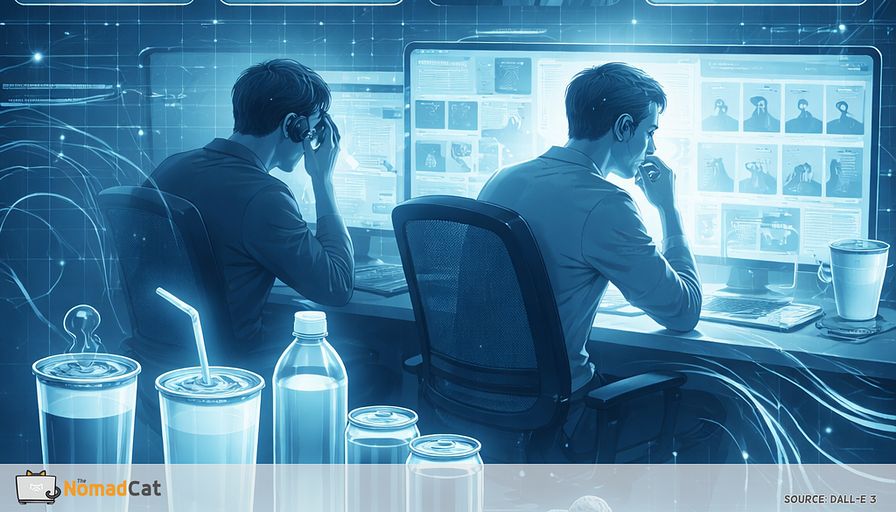
A desk day has its own food rules. Camera on, back-to-back calls, 17 tabs open. The only “meal” that fits the workflow is something you can sip with 1 hand while still looking productive. Coffee counts as breakfast. A smoothie counts as lunch. Sparkling water becomes a focus prop. Chewing, weirdly, starts to look like you’ve gone offline.
This article is about that trap. Not the dramatic kind. The quiet one where liquid calories keep the day moving, but the afternoon still crashes anyway. Low energy shows up. Irritability shows up before clear hunger. Dinner becomes urgent. Sleep gets a bit worse because caffeine slides later. Then the same pattern repeats, because the calendar never gave permission for a real meal in the first place.
What follows is a systems view of why “liquid lunch” so often fails on workdays, even when the drink is “healthy.”
The liquid lunch trap
Why liquids win at a desk
Back-to-back calls, camera on, 17 tabs open, and the mute button doing overtime. In that setup, the most compatible “meal” is whatever can be sipped with 1 hand, without leaving the frame. Refill, unmute, keep talking, repeat. On-camera norms make sipping basically invisible, but chewing reads like you stopped working. And modern calendars leave less and less real lunch space anyway.
And it is not only convenience. It is also visibility.
Coffee reads as work. Sparkling water reads as focus. A smoothie reads as efficiency. Chewing, meanwhile, looks like a break that needs a justification. Under time pressure, people drift toward “secondary activity” eating—fuel squeezed between the “real” tasks. Drinks look like work; food looks like a break.
Once that rule exists, it starts editing the calendar without anyone deciding it.
Beverages become a background process that keeps the day running, like a patch applied in production because there’s no downtime. The permission flips. Sipping needs no boundary, but a real meal does.
Boundaries matter for how the afternoon feels. A lunch break that actually detaches tends to pay back later in energy. A “break” where you keep working and just sip doesn’t.
You can usually spot the trap early from the logs.
- Coffee “counts” as breakfast, until 11:30 hits like a wall
- A smoothie “is lunch,” but hunger returns fast anyway
- Sipping all day feels stable, then suddenly there is urgency at 17:00
- Irritability shows up before clear hunger—snapping at Slack, rereading the same email
- Hunger and irritability often travel together (MacCormack & Lindquist, 2021)
Why drinks do not register as a real meal
Liquid calories are weaker signals
Think format, not ingredients. When calories arrive as a drink, the body often treats them as a weaker “fed” signal, and later adjustment is poorer. In plain terms: you don’t automatically eat less later just because you drank calories at noon (Mattes, 2011). Desk reality then looks weirdly logical. The smoothie “was lunch,” but the 16:30 hunger spike still happens. Calories came in, but the day didn’t get a clear meal event.
Fruit is a simple example because everybody already believes it is “healthy.” An apple and apple juice can start from similar raw material, but the format is different. Chewing, time in the mouth, and speed of intake change the signal you send upstream. This is not about being perfect or pure. It is signal strength and timing.
Texture helps a bit. Thicker, more viscous drinks can feel more filling than thin liquids. But drinks still tend to underperform solids calorie-for-calorie.
The classic apple ladder shows the same thing.
- Whole apple
- Apple purée
- Apple juice
The ingredient story sounds basically identical, yet structure changes how fast it moves through you and how “meal-like” it feels (Haber et al., 1977). Same ingredients, different input speed, and your 16:30 meeting is where you pay the bill.
Then there is the scheduling layer. Chewing is biology, but it also creates the same chapter-break effect mentioned earlier. A drink can be consumed while staying fully “on,” which keeps the work stream unbroken—right up until it breaks you.
The 3 ways liquid lunch breaks the afternoon
3 configurations that show up in busy weeks
This pattern tends to fail in 3 common modes. They are configurations, not personality types. The same person can rotate between them depending on meeting density, stress, and how much the calendar eats the day.
Mode A
Caffeine as breakfast. This is the “I’m fine” morning that is secretly running on fumes. Alertness goes up, but fueling did not really happen, so hunger gets delayed instead of solved. Caffeine’s appetite effects are usually small and vary by person, but for some people it’s enough to push a real meal later. Then hunger returns with urgency, irritability comes along for the ride (MacCormack & Lindquist, 2021), and dinner becomes a “now i need everything” event.
The sleep side-channel is simple and annoying. If coffee replaces food, it tends to slide later because the under-fueled afternoon needs support. Caffeine timing matters: 400 mg has been shown to impair sleep even when taken 6 hours before bed (Drake et al., 2013). Once sleep is shorter or lighter, next-day intake tends to rise in controlled studies (St-Onge et al., 2016). This loop is not dramatic, just persistent.
Mode B
Smoothie as meal. This is the “I was being good” lunch that still doesn’t behave like lunch. It can fail in 2 opposite directions, which is why it is confusing.
- Not filling enough. It goes down fast, little chewing, weak boundary, hunger returns early
- Too much energy too quietly. Portion size and add-ins (nut butter, sweetened yogurt, juice base) inflate calories and free sugars without feeling like a big meal
Thicker drinks help a bit, but beverages still underperform solids calorie-for-calorie. And audits in the UK found many smoothies marketed as healthy can be high in free sugars (Action on Sugar, 2016). Not a moral failing. More like format plus marketing.
Mode C
Zero-calorie sipping all day. This is the “I’m managing it” pattern: mouth busy, stomach ignored. Water, sparkling water, diet drinks, tea—anything that keeps the hands occupied and the brain feeling supervised. Water can increase fullness in the moment, but it is not a meal and it does not create a boundary. So the rhythm becomes small delay, then hours pass, then rebound, often late afternoon or evening.
Chewing as a work tool
Why chewable beats drinkable on a workday
Oral processing matters in a boring but useful way. Eating faster tends to increase energy intake, and slowing down tends to reduce it in experiments (Robinson et al., 2014). Chewing stretches the “time in mouth” window so fullness has a chance to arrive before the plate is already gone. Not magic. Just a lever you can actually pull.
The pushback is time. “I don’t have time” is true, in the same way “i don’t have time to pee” becomes true on a call-heavy day. A chewable bite forces the same chapter-break effect as above. It is not nutrition theatre. It’s a tiny boundary you can enforce even when the calendar refuses to cooperate.
A systems-minded way to approach it is to change 1 variable and watch the logs. The trade is rarely “meal vs work.” It is more like 3 minutes of high-signal chewing versus 30 tiny low-signal sips spread across the afternoon, each one keeping the brain half-on and never really detached.
The author bias here is practical and a bit nerdy. He is trained in fundamental physics, so observable variables beat vibes. After long desk years between Beijing, Berlin, and now Lisbon, “food form” is one of the rare inputs that is simple to change without reorganizing life. Also, living with a wife who is a fitness trainer and nutritionist makes it hard to ignore obvious checks, even when trying.
A minimal patch worth testing
Small constraints beat a full plan
When the calendar is hostile, a “plan” usually loses. A minimal constraint is different. It is a guardrail so fewer energy errors slip through while you are busy. Reversible, cheap, observable.
Rule 1 Chew before you brew
Prevents the 11:30 wall.
Before the 1st caffeine (or before the 1st long meeting block), add 2–4 minutes of chewable food. The point is an oral-processing checkpoint. Slower eating and more chewing support satiety logic (Robinson et al., 2014), and liquid calories tend to compensate poorly later.
- Protein-forward. Eggs, skyr or greek yogurt, cottage cheese, tofu, jerky
- Fiber-forward. Fruit you chew, oats, whole-grain toast, beans
- Crunch-forward. Nuts, seeds, carrots, cucumbers
Rule 2 Pair, don’t replace
Prevents the “I had lunch” illusion.
If a smoothie or shake is used for convenience, pairing it with something chewable makes the meal event louder. It helps satiety and creates a boundary in the calendar. Thicker, “spoonable” smoothies are already closer to food, but pairing still helps.
Rule 3 Drinks are allowed, delays are not
Prevents the 17:00 emergency.
Diet soda and flavored water are not the villain by default. In RCT evidence, non-nutritive sweeteners look generally neutral vs water and beneficial vs sugar (Toews et al., 2019). Still, the desk bug can remain if sipping becomes a tool to push real food later and later. The problem is the default replacement.
A tiny 2–3 day audit is often enough to see if this is actually the pattern.
- Time of 1st calories (not coffee, actual calories)
- Count of drinks before 13:00 (anything you sip regularly)
- Did anything get chewed by noon (yes or no)
- Time of the sudden hunger spike (often 16:00–18:00)
Confirmation signs tend to be boring and repeatable. Wired morning with a hollow stomach. Hunger arriving first as irritability (MacCormack & Lindquist, 2021). A late-afternoon spike despite “consuming things.” A time-stamped diary is basically the research version of stop guessing, check the logs.
If a desk day keeps shrinking lunch into something you can sip, it is not a character flaw. It is a system doing what it was configured to do. The problem is that liquid calories often land as weak “meal signals,” so the afternoon still throws errors. Low energy, irritability before real hunger, a 17:00 food emergency, and caffeine drifting later until sleep gets a bit worse. Same inputs, same loop.
The useful reframe here is simple. Food form matters, not as nutrition theatre, but as a practical boundary. A few minutes of chewing can do 2 jobs at once: a stronger satiety signal, and a small chapter break you can actually defend on a hostile calendar. The mode labels just help you notice the pattern earlier—before the day invoices you for it at 16:30.
You might be interested by these articles:


Coffee #2 should not be lunch

Chew Gate for Meeting Days When Your Tools Keep Picking Coffee for Lunch

The 3 to 6 minute food commit that stops desk day grazing

Your lunch is too fast to count in your brain

Calendar-compressed eating and the crumbs then dinner day

Revolutionizing BI: A CTO's Guide to Self-Service Insights

Generative AI Revolutionizing Content Creation