Abstract:
The article argues that many people under-eat on camera-heavy workdays not because they lack nutrition knowledge, but because of an “optics tax” in workplaces where visible busyness signals commitment and visible eating can look like unavailability—especially when meetings are recorded, transcribed, and replayable and psychological safety is low. It describes how tiny on-call “micro costs” (chewing sounds, being seen mid-bite, losing the ready-to-unmute posture, getting asked a question at the wrong moment, quick cleanup) combine with a culture that rewards instant responsiveness, pushing people toward coffee, shakes, and furtive “two bites off-camera” instead of real meals; the result is a recognizable late-day pattern of agitation, brain fog, rereading, sloppy decisions, sharper tone, and a caffeine-sleep spiral that produces a second performance hit. Using a “meeting-compatible food ladder” where liquids feel safest but don’t hold long, the piece frames the fix as a systems/permission problem rather than a meal-plan problem, offering a low-drama “permission protocol”: a predictable 2-minute, time-bounded signal (“Taking a 2-minute fuel break, back at 14:12, still listening”) plus a boring chewable bite and water, ideally normalized through senior modeling and meeting design (e.g., 25/50-minute meetings or built-in buffers). It also adds a health guardrail—if appetite stays low, fatigue is severe/new, or weight drops unintentionally, treat it as a clinical issue first—and notes, via the author’s own deskbound international career (from Paris physics studies to working long hours across Beijing, Berlin, and Lisbon), that going all day without eating isn’t a superpower so much as an environment that makes basic needs feel unprofessional.
the optics tax on eating
Some workdays don’t fail loudly. They fail quietly.
The calendar is full, the camera is on, Slack stays green, replies land in under 5 seconds. From the outside it looks fine. Then it’s 17:00 and the “food log” is basically coffee, maybe a couple of bites taken off-camera, and that odd hollow feeling that isn’t even clean hunger anymore. Just… low power, plus a slightly shorter temper.
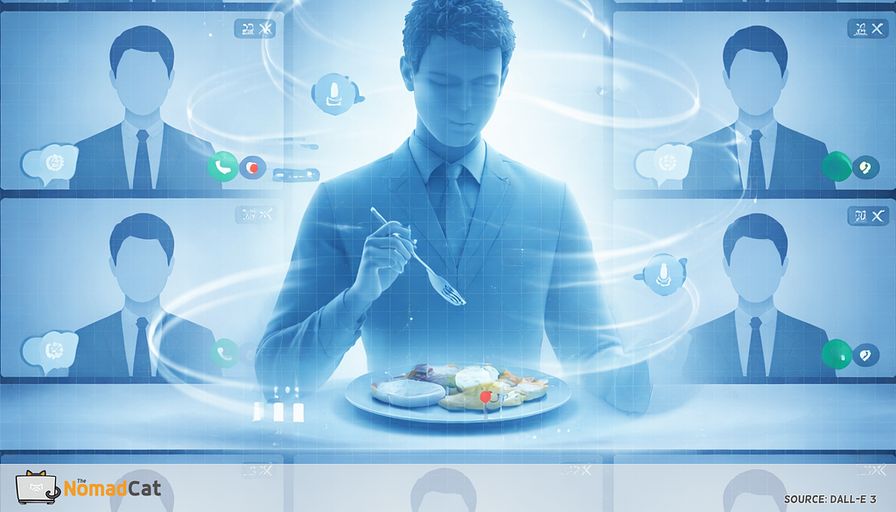
This is about why that happens even when people already know how to eat normally. The issue is often not nutrition knowledge. It’s visibility. In a lot of teams, visible busyness reads as commitment, while visible eating reads as “not fully available.” Video calls make it worse because the meeting isn’t just a moment. It can be recorded, transcribed, and replayed. When psychological safety is low, chewing starts to feel like a reputational risk.
The rest is simple: what the optics tax is, the tiny frictions that make eating feel expensive on camera, the under-fueling pattern that shows up later as fog and sloppy decisions, why liquids win (and where they fail), and one boring 2‑minute protocol that makes fueling look normal—plus a quick guardrail for when this is health-first.
No meal plans. No perfection. Just a systems problem that can usually be made less stupid with one small change in the way meetings work.
the optics tax on eating
a definition, not a moral story
The optics tax on eating is the extra cost you pay to fuel yourself when fueling looks like a distraction. Not minutes on the clock, but reputational risk.
In many workplaces, visible busyness reads as commitment, while visible eating can read as “not fully available.” Availability gets treated like a virtue.
Video calls raise the pressure because the meeting isn’t just a moment. It becomes a file somewhere. Camera-on, recording, and auto-transcripts make people monitor themselves more. When psychological safety is low, self-protection goes up. And chewing is, unfortunately, very easy to judge.
So yes, people say “no time.” A sharper diagnosis is often time without permission.
why chewing feels expensive at work
the micro costs that make food feel like a risk
Even before “is it polite” comes up, video meetings make eating feel like a hassle. It’s not hard to see why.
-
Audio risk from chewing, wrappers, forks on a plate
-
Visual risk from mouth movement, crumbs, “what is that?” curiosity
-
Hand risk because you lose the always-ready-to-unmute posture
-
Timing risk when someone asks you a question mid-bite
-
Cleanup risk when you need 10 seconds off-camera to fix a small mess
This isn’t really about manners. It’s a penalty structure created by visibility.
when responsiveness is the real KPI
Some teams run on an unspoken rule that “normal” means answering instantly, even when the question is minor.
If reply speed is rewarded, eating becomes risky because it can slow you down by a few seconds at the wrong moment. A predictable substitution happens. People drift toward coffee, shakes, and other liquids to stay interruptible.
status decides who can break the rule
Hierarchy matters. If the most senior people never step away, never eat, never say “back in 5,” the room learns what “serious” looks like. And the optics tax becomes regressive. The people with the least latitude are the ones most likely to keep basic needs private.
the default policy is secrecy
Most workplaces already have a policy about bodies. It’s just implicit. If nobody sets an explicit norm, the default becomes needs are private and availability is public.
the camera-on under-fueling signature
what the day looks like in logs
A classic pattern looks like this.
-
08:30 coffee, maybe “later”
-
12:30 vague agitation, not clean hunger
-
15:00–17:00 throughput drops, rereading the same paragraph 3 times, fixing stupid typos, Slack messages getting a bit sharper than intended
-
20:30 dinner becomes the first real meal
Covert snacks often don’t fix this because they don’t behave like a real meal. They are fragmented, rushed, and easy to forget. Relatable version is two bites standing at the fridge between calls, then back on camera, and later your brain still acts like lunch never happened.
Also, hunger and stress are not the same signal. During high-pressure blocks, appetite can mute. The sensor is not broken. It’s temporarily offline.
why liquids win and where they break
the meeting compatible food ladder
In a camera-heavy day, teams often run a quiet ranking of what counts as “still working.” It’s optics.
-
Liquids (coffee, tea, shakes)
-
Tiny bites (the discreet almond, the sad half-banana)
-
Chewable snacks (noise, crumbs, questions)
-
A real plate (basically a minor act of rebellion)
The catch is that the “safest” option is also the one that tends to hold people less. For me it buys maybe 60–120 minutes, then the body comes back later asking for the missing part, often at the worst time.
And the reason people choose coffee isn’t because they think coffee is lunch. It’s because coffee reads as work.
a quick health guardrail
If appetite is persistently low, weight is dropping without trying, or fatigue is severe or new, treat this as a health issue first, not a calendar issue. If symptoms persist or come with red flags like unexplained weight loss, get a clinical evaluation.
the double bill of skipping lunch
You pay once now and again later.
Phase 1 is a small, rational win. You look focused, interruptible, and “serious” because you never ask for a break.
Phase 2 is the invoice that arrives at 16:30. Under-fueling can mean lower cognitive throughput right when the meetings get more political and less forgiving. The effect often looks like slow bugs, not a dramatic crash.
- slower writing
- sloppier decisions
- rereading the same doc 3 times
Tone can drift too. Not “hunger causes workplace conflict,” more like it increases the odds of a sharp reply in a high-friction moment.
Then the patch becomes its own loop. Afternoon dip leads to more caffeine. Caffeine lingers. Sleep takes a hit. Next day performance is worse. The next afternoon rescue becomes more tempting.
make it one small boundary, not a meal plan
Most nutrition advice assumes 3 invisible prerequisites.
- time
- privacy
- permission
On a meeting-wall day, those are exactly what disappears. Then “just plan better” becomes extra cognitive load, plus a small shame tax when the plan collapses at 14:00.
A tiny break you can actually take tends to beat an elaborate plan you can only follow on calm days. Small breaks can help without needing a perfect setup.
why this matters even for metrics people
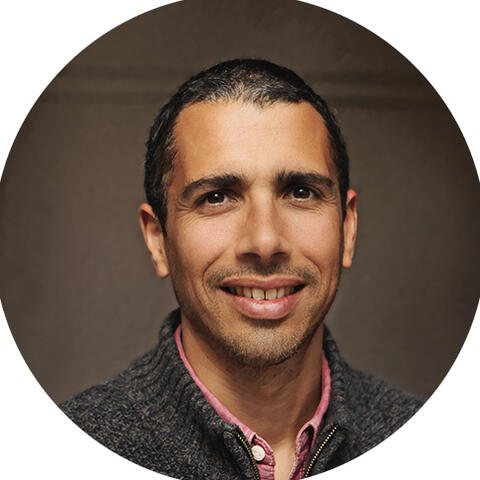
I’m french, born in 1974. I studied fundamental physics in Paris, and I spent most of adult life at a desk—Beijing, Berlin, now Lisbon—often late into the night. It’s very possible to work a full day without eating, drinking, or moving.
It’s not a superpower. It’s often just an environment where basic needs look unprofessional. Remote years made it even easier to hide breaks, not take them: bad chairs, worse desks, camera on, and you learn to be “available” as a performance.
a permission protocol that makes eating look normal
a 2-line signal that buys 2 minutes
The main idea is to convert “disappearing” into a predictable meeting behavior. Keep it operational.
- “Taking a 2-minute fuel break, back at 14:12. still listening.”
- “Off camera 2 minutes for water and a bite, back at 14:12. ping me if i’m needed.”
No apologies. No story. The key words are 2 minutes, back at X, and still listening.
A return time works like a tiny SLA. Others can coordinate. You stop guessing how it looks. This matters even more when psychological safety is low.
During the 2 minutes, keep it boring and chewable. The point isn’t a lunch scene. It’s a stable input so the afternoon doesn’t run on fumes.
- water
- plus 1 chewable thing like fruit, yogurt or cheese, or a sandwich half or leftovers bite
This is intentionally not “just drink calories,” because liquids often do a worse job of making you feel full.
Placement is what makes it socially normal. Pick a breakpoint and reuse it.
- after the 1st long meeting block
- right before a high-stakes call
- about 30 minutes before the usual early-afternoon dip
status-aware variants that do not create drama
If you’re senior, modeling is the fastest way to remove the optics tax. A simple opener helps.
“Quick note, camera-off listening and 2-minute breaks are fine. just drop a ‘back at 14:12’ in chat.”
If you’re junior, the lowest-drama version is to preserve legibility of attention, not legibility of your face. Chat is often safer than voice.
“off cam 2 min, still listening, back 14:12”
At team level, the cleanest fix is meeting design, not food rules. Add small buffers so basic maintenance fits inside the system. One option is a default like 25/50-minute meetings or a 2-minute buffer every hour on long blocks.
what improvement looks like and when to stop
The goal is not perfect eating. It’s a calmer afternoon.
- fewer rescue coffees after 14:00
- less fog on late calls, fewer rereads of the same paragraph
- dinner feels less like recovery from the day
- fewer covert snacks that somehow don’t count as lunch
If nothing changes after a few tries, the constraint is often scheduling, workload, or psychological safety, not food choice.
If fatigue is new, severe, or persistent, or comes with loss of appetite or unintentional weight loss, treat it as a clinician problem before it’s a calendar problem. And if these experiments start creating food anxiety or rigid rule-making, stop. The core idea stays small and low-drama: install one socially safe permission, then let the workday stop treating chewing like a reputational event.
A lot of “no time to eat” days are really “no permission to be a body” days—especially when everything is on camera, recorded, and judged through responsiveness. Once “back at 14:12, still listening” becomes normal, lunch stops being a personality test.
You might be interested by these articles:


The 3 to 6 minute food commit that stops desk day grazing

Performance-proof fueling and the predictable 15:00 crash

Calendar-compressed eating and the crumbs then dinner day

When lunch turns into a drink and your afternoon still crashes

When stress turns lunch into a 16:30 invoice

How small, steady actions quietly build a strong tech reputation

Finding satisfaction beyond output in tech