Abstract:
The article argues that remote work can feel “weirdly efficient” because the day runs smoothly in the same chair, with the same mouse reach and camera angle, but that smoothness quietly removes the constant micro-adjustments an office used to force, so by around 18:00 you “pay the invoice” in rusty neck, stapled upper back, and post-sitting stiffness even if you worked out. Its core point is that the missing ingredient isn’t motivation or formal exercise but micro-variability—ambient fidgeting and tiny “re-stacks” (like shifting feet, changing sit depth, leaning back briefly, swapping arm supports) that prevent long static holds, because sedentary time isn’t simply the absence of workouts. To make this workable inside real constraints (meetings, focus blocks, desk lunches), it proposes a simple, durable rule—change one variable before you stay in one shape too long—plus camera-safe micro-moves, wider video framing and short scripts (“Standing 30 seconds, listening”) to reduce the social awkwardness of moving on calls. It then offers a “7-day debug” that avoids apps and timers: pick one frequent trigger (Send/Join/Leave meeting), pair it with one default 5–15 second move, and track a single boring 18:00 stiffness score, while noting red-flag symptoms that warrant medical assessment.
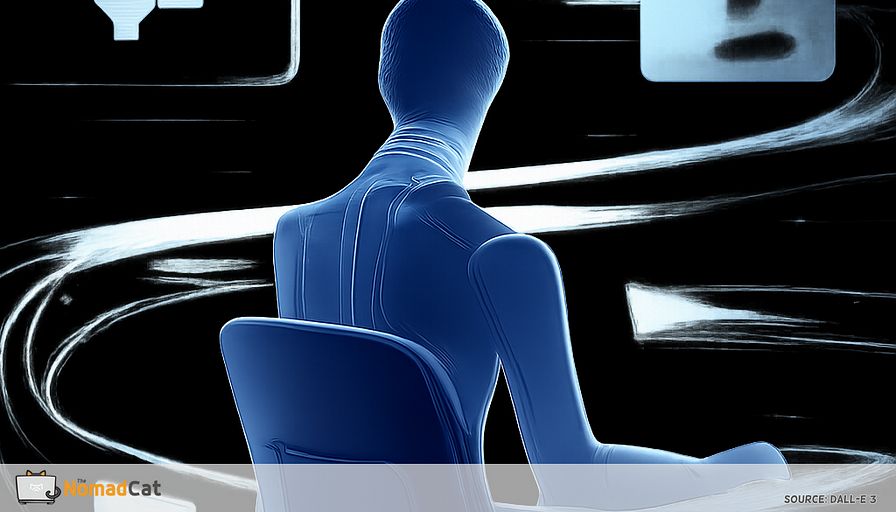
Remote work can be weirdly efficient. Same chair, same reach to the mouse, same camera angle, same 10-hour day that somehow contains 9 hours of sitting. The work gets done. The calendar stays full. And because nothing “bad” happens in the moment, it is easy to miss the quiet trade-off until around 18:00, when the neck feels rusty and the upper back is basically glued to the chair. Since Lisbon, I noticed I can sit past midnight without moving, and the first warning sign is always the same: upper-back tightness.
This article is about that hidden cost of a day that got too smooth. Not the lack of workouts. Not motivation. The missing layer is smaller and more annoying than that. It is micro-variability (tiny, mostly unconscious position changes every few minutes), those little posture and load changes that offices used to force by accident. At home, the system runs with less jitter, so the body pays the invoice later.
What you will get here is practical, low-drama ways to add movement without turning your day into a new project. The focus stays inside real constraints like meetings, focus blocks, desk lunches, and the fact that “free time” is often… how to say… a rumor.
We will cover
- Why static posture can create discomfort even when effort feels low
- What ambient fidgeting is, and why steps or a gym session do not fully cancel a frozen workday
- A simple rule that survives busy weeks, change 1 variable before you lock into 1 shape for too long
- Camera-safe micro-moves and small scripts that make movement less socially loud on calls
- A 7-day debug using 1 trigger, 1 default move, and 1 boring 18:00 check-in
Nothing here is about becoming a different person. It is more like fixing a configuration issue. Add a little day-to-day variation back in, and the complaints tend to quiet down.
The day got too smooth
A smooth workflow can create a rough body
Remote work can feel like a perfectly tuned pipeline. Same chair. Same reach zone for keyboard and mouse. Same gaze distance for meetings, Slack, docs, more meetings. The work ships, the tickets move, and nothing forces a physical reset anymore. Later, the bill shows up as that vague tightness that arrives even though everything went “fine”.
What disappeared is smaller than people think. It is micro-variability in posture and load, the tiny re-stacks that used to happen without planning. Static posture is a risk factor for musculoskeletal discomfort, even when effort is low (NRC, 2001). And also annoying, steps or a workout are not the same thing as how frozen the workday was.
The movement you did not schedule
Ambient fidgeting was the missing layer
Ambient fidgeting is the small re-stacks that happen every few minutes while you are still working. A knee angle change. A chair shift. A lean and return. It is not a break, not stretching, not a standup timer. It is more like keeping the body from getting stuck in 1 position.
The key is that it used to happen without thinking. Offices injected constant low-grade variation.
- Chair scoots to let someone pass
- Half-turns to hear a question
- Reaching for printouts
- Perching on a meeting-room chair that never fits
- The small reposition when a colleague stops by and you pretend you were not slouching
- Stairs, because the meeting room was never on your floor
- Leaving the building for lunch, even if it was just a quick walk to grab something
None of this was intense. But it broke up static posture, which is a boring workplace risk factor for discomfort (NRC, 2001). Best posture is the next posture, and offices forced a lot of “next”.
Remote work turns movement into a foreground task that competes with meetings. That is why someone can train hard and still rack up long frozen blocks at the desk. Sedentary time is not just the absence of exercise (Owen et al., 2010). A lot of basic workplace guidance is similarly unglamorous: avoid staying in the same posture too long.
And the remote equivalents can be just as boring: replace the stairs with 1 quick lap to the kitchen before you press Join, or replace “leaving the building for lunch” with “take the call while you walk to the far window and back.”
Why the bill shows up at 18:00
Static holds have a quiet cost curve
The day feels fine-ish. Maybe a little compressed, but nothing dramatic. Then you stand up to carry groceries, or you sit on the couch, and suddenly the neck feels rusty. Nothing broke at 18:00. You just got the accumulated cost of hours of low-level holding.
A simple way to think about it is supply and cleanup (blood in, waste out). If a posture asks for a small constant muscle “on” signal, circulation can get a bit constrained and the “cleanup” slows down. With no shape change, there is no catch-up window. This is also why your shoulders climb during the 3rd back-to-back call without you noticing.
So yes, you can be “active” and still get this bill. You can turn up the workout dial and leave the frozen-day dial untouched.
Why steps and workouts do not fully fix it
If this is your pattern, it often looks like this.
- Upper back feels stapled to the chair around late afternoon
- Neck resists turning, more stiff than sharp
- Low back feels stuck after sitting, then eases with a few movements
- Shoulders creep up without noticing
- Restless legs at night like the body asking for the movement it missed
Not a diagnosis. Just common signals that often improve when microbreaks are added. Across reviews, the pattern is boring: frequent short breaks beat heroic end-of-day fixes for day-to-day discomfort (Wendsche and Lohmann-Haislah, 2017).
So the target isn’t “more exercise.” It’s more shape changes during the hours you already work.
Make stillness slightly harder
The rule that survives a real workday
The hard part is making this survive meetings and focus blocks, when work bleeds into evenings.
A rule that tends to survive is simple.
- Never be perfectly still in the same shape for long
Change 1 variable when it fits.
- Feet position
- Sit depth
- Torso angle
- Shoulder height
- Gaze distance
Small is fine. If you want a concrete version: after any long typing stretch, move your feet, then sit back down into a slightly different depth before you re-anchor your forearms.
Timers usually die first because they fire at the wrong moment. Meetings ignore them, and the prompt feels like a random interrupt. Prompts that attach to something you already do tend to last longer.
Studies on short breaks during computer work often find less discomfort without obvious performance costs (Galinsky et al., 2000; Balci and Aghazadeh, 2003). The effect is usually modest. That is fine. This is about fewer predictable 18:00 problems, not some dramatic overhaul.
Defaults that are camera-safe
Keep it runnable. Simple rules beat having 27 options.
- Send then re-stack. After sending, shift feet or sit depth
- Join buffer shift. While joining, lean back 5 seconds, return
- Two-object reach rule. Touch 2 objects that are not the keyboard
- Alternate anchors. Swap forearm support points on desk or armrests
- No same sit twice. Stand 3 seconds, sit back differently
- Scroll tax. Every long scroll, relax shoulders and change gaze distance
These count. The point is not a mini stretch class. It is tiny load changes so you do not stay locked.
In tech terms it is operational jitter. Not to sound clever. Just to stop the process from sticking.
- Pick 1 trigger
- Pick 1 default
- Keep it boring
Move without making it a thing
Camera framing that gives your body room
Video calls make movement feel socially loud. Tight framing is a trap. Every small shift looks huge, so people freeze.
A slightly wider frame helps.
- Camera at eye level or slightly above to keep neck more neutral
- Back the camera up and use a little zoom, avoid face-cam framing
- Frame top of head to mid-chest or mid-torso
- Leave margins so small shifts stay normal
- Stabilize the camera so the image does not wobble when you move
Engagement is not measured by being statue-like.
Short scripts that keep motion non-narrative
Some movements still feel awkward on camera. A small line can remove the weirdness.
- “I’m just shifting position, still with you.”
- “Standing 30 seconds, listening.”
- “Quick chair adjustment, audio is fine.”
Keep the movement small and predictable. Skip big overhead stretches mid-call, dramatic shoulder rolls mid-sentence, disappearing from frame while someone talks, or noisy chair theatrics.
A 7-day debug that fits a production week
One trigger, one default, one metric
To see if this helped, keep 1 boring check.
- Pick 1 trigger you already hit a lot like Send, Join meeting, Leave meeting
- Pick 1 default micro-move that takes 5 to 15 seconds like stand 3 seconds, re-stack feet, lean back and return
- Run it for 7 days. No app. No timer. Misses are normal
For a metric, use 1 daily 0 to 10 rating at 18:00 for stiffness or first-steps rustiness. Write it as a single note. Diaries beat memory for within-person patterns, and this stays light (Shiffman, Stone, Hufford, 2008). If you already wear a basic sports watch, you can also note your resting heart rate at 18:00 once (not all day), just as a simple “was today a clamp?” signal.
Micro-variability is not treatment. It is replacing a missing baseline input remote work deleted. You are not fragile. The environment got too smooth. And the smallest win is usually the most repeatable one: one extra shape change per hour.
Guardrails that keep this sane
If something feels alarming, treat it as a different category.
- Sharp or severe pain
- Numbness or tingling
- Pain that shoots down an arm or leg
- New weakness or clumsiness
- Dizziness or fainting
- Bowel or bladder changes
- Symptoms after major trauma
- Symptoms that worsen quickly
If it keeps recurring or does not improve over 2 to 6 weeks, or it affects sleep or basic function, getting assessed is sensible (NICE NG59; ACP 2017). Early imaging is usually not the first move without red flags, which is why many guidelines try to reduce the scan spiral.
Micro-variability is the cheap countermeasure. Not glamorous, not a new identity. Just a better default for days that got too smooth.
Remote work did not make anyone lazy. It just removed the tiny forced re-stacks that used to happen all day, so the body stays in 1 clean shape until the 18:00 invoice prints. The main idea here is boring on purpose: static posture can create discomfort even when effort feels low, and a workout does not fully cancel a frozen desk day. The countermeasure is micro-variability—change 1 variable before you lock in too long, use camera-safe micro-moves, and run a simple 7-day debug with 1 trigger and 1 default move. The only version that works is the one that survives your calendar.
You might be interested by these articles:


Your feet are shrinking under the desk and your 18:00 steps notice

The 30 second range refeed that stops the 18:10 bug report after desk days

Your posture is not broken your attention is running the brace

Micro-exits for remote days that keep your body from timing out

Build an interruption ecology for remote work so your body stops billing you at 18:30

Turning GDPR Challenges into Opportunities for Smart Home Startups

Python for Enterprise Automation