
Abstract:
The article explains why long remote-work days can feel fine until you stand up and your body “files a complaint” (clenched jaw, stiff neck, shoulders creeping up, tight back): the real culprit is rarely a bad chair and usually the task-driven “working brace” your nervous system runs under mental load, which quietly reduces movement variety and delays discomfort like an error message that appears after the job is done. Rather than chasing “perfect posture” or relying on timers that interrupt fragile focus, it argues that posture is mostly an output of attention—especially during high-stakes writing, precision work like debugging or spreadsheet audits, and video calls that reward polite stillness—so the practical win condition becomes “more positions per hour,” not “sit straight.” The author, drawing on years of desk work across Beijing, Berlin, and later mostly remote life in Lisbon, emphasizes noticing early, low-noise “log files” (small, fast breathing; tongue pressed to the palate; one shoulder stuck high; feet tucked under; dry eyes and low blinking) and attaching boring 2–5 second micro-actions to natural task boundaries (send a message, switch tabs, end/join a call, hit compile), such as a slow exhale with a slight shoulder drop and jaw unclench, a brief hip-unfold by sliding one foot forward, or a quick far-gaze with a few deliberate blinks, so variability accumulates without breaking the work thread and the day ends with less stiffness debt.
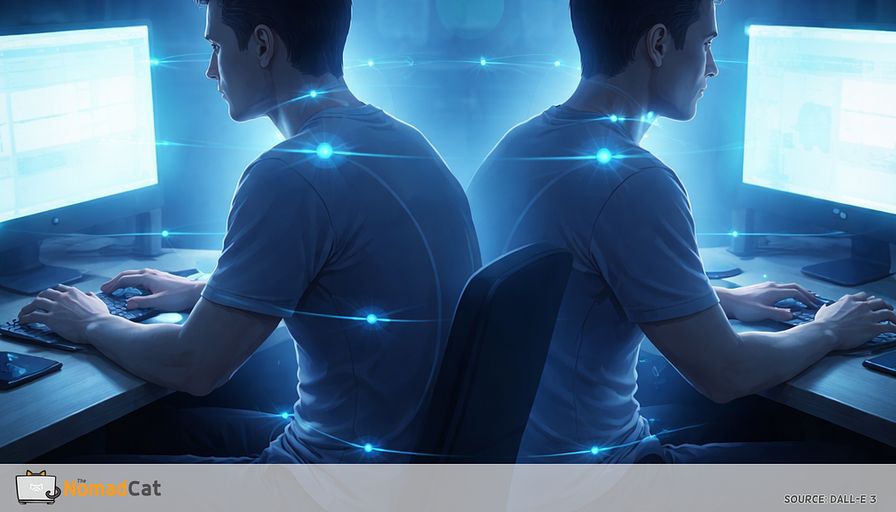
You know the moment. You sit down for “just 1 thing,” the day turns into 10 hours of screens, and you feel weirdly fine… until you stand up and your body files the complaint you postponed. Jaw slightly glued. Neck stiff. Shoulders migrating north. Lower back acting like it needs a reboot.
It’s annoying because you didn’t do anything “wrong.” You just worked. And remote work quietly removed the tiny movements that used to dilute the load: walking to meeting rooms, the commute, getting up to print something, even lunch away from the keyboard. Now the discomfort shows up late, like an error message that waits until the task is done.
This article is for that exact pattern. Not a perfect-posture fantasy, not a “new you” plan, and not another chair review. The goal is simpler and more realistic: understand why your posture drifts under real mental load, and how to add small configuration changes that still work when your calendar is ugly.
The map
- Why the chair is rarely the driver and the task usually is
- How “sit straight” turns into a willpower contest you lose by Tuesday
- The working brace your body runs during focus, and the low-noise signals that reveal it early
- Why timers fail and task boundaries tend to cooperate with actual work
- Micro actions in the 2–5 second range that add variability without breaking your thread, even on calls
The main idea is slightly rude but useful. Posture isn’t a moral virtue. It’s mostly an output of attention. If you treat it like system behavior, you can change it with small inputs that add up over time, instead of pretending you’ll suddenly live like someone with a 2-hour lunch break and a standing desk budget.
When you stand up and your body files a complaint
The delayed error message
You sit down. You work. You even feel productive, almost suspiciously fine. Then you stand up and your body finally sends the support ticket you ignored. Jaw a bit clenched. Neck like a rusty hinge. Shoulders creeping toward your ears. Upper back tight. Low back stiff. Sometimes a weird pinch near the hip.
It feels illogical because nothing hurt during focus. But delayed discomfort is common with computer work. Sustained positions and low-level muscle tension add up, especially when you don’t get much recovery.
Same pattern as above: fewer default transitions, more uninterrupted sit time. Breaks and changes of activity stop being “normal” and start feeling optional, even when they’re not.
This is why buying a better chair often feels like a partial fix. It’s like upgrading hardware while the same background process keeps hogging resources. Under mental load, the system stiffens and movement variety drops. The logs were there. You just didn’t see them until the task ended.
The annoying part is it can happen even if you think you’re “fine.” I’ve spent most of my adult life at a desk—first in offices in Beijing, then Berlin, then mostly remote for years, and now in Lisbon. Not in pain, but familiar with the early signals, like upper-back tightness that builds quietly until it forces movement. And yes, it is also possible to work a full day without eating, drinking, or moving, and it can feel like a superpower. It’s not.
The chair is not the driver, your task is
Same setup, different body
“Perfect setup” advice often sounds right and still fails on a busy Tuesday. The desk can be identical, but your posture won’t. Your nervous system organizes around what the task needs, not around the chair’s marketing promises. When you switch between typing, mousing, reading, or writing something stressful, your body changes with it, even if the workstation stays the same.
The chair sets constraints, sure. The task decides what you do inside them.
A more realistic win condition than perfect posture
So the target can’t be “sit straight.” That turns into a willpower contest you lose during the first difficult email.
A more realistic model is micro-movement and variability that still exists when the calendar is ugly. Posture tips and reminders don’t do much on their own if your actual exposure stays the same. Also, even if someone reminds you to sit straight, it usually lasts about 3 minutes.
Posture drift is an attention side effect
The core idea is simple: posture is an output of attention. Drift is not laziness. It’s often what happens when your brain wants stability for thinking. The goal is not to shame it. The goal is to design for more variability.
Attention posture is your brain protecting the thread
Why it gets sticky during real work
Stillness is sticky because it reduces variables. During debugging, negotiation, pixel-perfect work, or writing something that must be exact, the brain prefers fewer moving parts. Under mental load, people often stiffen and reduce movement without noticing.
You get more stability now, less recovery later.
Timers fight your calendar, boundaries cooperate with it
If the fix is “set a timer,” you already know the failure mode. Timers love to go off exactly when your brain is holding 7 fragile things at once.
Task boundaries cost less because you are already switching context. So instead of asking for more discipline, it often works better to attach tiny changes to moments that already exist.
The working brace without medical drama
This isn’t about diagnosing pain. It’s about noticing the brace while it’s still cheap.
Common patterns during focus
- Breathing gets smaller and faster. Ribcage moves less. Shoulders step in as backup stabilizers.
- Eyes lock forward. The head follows.
- Time pressure ramps up muscle activity. Stress can raise neck and shoulder tension even when the physical load is light, and the rest gaps shrink.
- Standing stiffness is often sitting’s accumulated bias. Hips stay flexed for hours. Things get stiff. Breaking up sitting changes the exposure, even if the results vary from person to person.
Put together, it’s the same loop: attention tightens the brace, variability drops, and the “error message” waits until you finally change state (usually when you stand).
This shows up hardest in a few attention traps.
The attention traps that create the worst drift
Conflict and stakes turn typing into bracing
High-stakes writing can get oddly physical. Jaw clamps. Breathing shrinks. Shoulders lift. It’s a stability strategy.
A useful move is a 2-second check you can do without dropping the thread. Not a stretch session. Just a quick unlock.
- Jaw unglue slightly
- Exhale once, slower
- Shoulders drop 1 cm
- Tongue off the palate
- Notice 1 “hot spot” without drama
Precision work creates screen tunnel
Debugging, spreadsheet auditing, pixel-level design. It can run forever, and posture creeps with it. Head forward. Mid-back goes quiet. Shoulders stop roaming. Mental load reduces variability, so the body locks to keep precision stable.
It’s like steadying a camera. You freeze the bigger parts so the tiny precise movements feel cleaner. Great for accuracy, expensive if nothing unfreezes after.
Video calls reward polite stillness
Camera on, face framed, shoulders held. Stillness becomes manners, not comfort. That’s a big part of what people describe as Zoom fatigue.
The good news is you can add variability without looking like you are doing yoga on camera.
A small dashboard for catching it early
Low-noise signals your body logs during focus
Treat these as log files, not a diagnosis. They matter because they show the brace before pain shows up.
- Jaw lightly clenched
- Tongue pressed to the palate
- Breathing small, mostly upper chest
- 1 shoulder creeps up and stays there
- Feet tucked under the chair, legs still
- Blink rate drops in screen work; swallowing can get oddly rare, and then your eyes feel dry or gritty in clusters
If these logs keep showing up, the issue is rarely 1 bad posture. It’s sustained low-level effort with too little recovery time between it.
If you like numbers, keep it lightweight
- Option 1: a quick localized 0–10 tension score for 1 recurring hotspot
- Option 2: a short end-of-day grid like the Cornell Musculoskeletal Discomfort Questionnaire
Attention breaks that don’t break your work
The rule that survives a messy calendar
A rule that tends to hold up under pressure
Every time attention changes, position changes.
You are not adding a break. You are attaching 2–5 seconds to something already happening. That’s why it works better than timers in real life.
Examples of existing boundaries
- Send a message
- Switch tabs
- End a call
- Join a meeting
- Hit compile
- Export a file
- Open a new doc
- Close a ticket
Pick 1 micro action and keep it boring
Choose something you can repeat without thinking.
- For the general brace: long exhale, drop shoulders, unclench jaw.
- For hips and sitting stiffness: slide 1 foot forward, then the other. Let the hips unfold for 2 seconds.
- For keyboard clamp and Zoom-friendly movement: reach 1 arm forward, then let both arms hang heavy.
- For fried eyes: look far for 3 seconds and do 2–3 intentional blinks.
My practical read of the microbreak literature (and what seems to hold up in real workdays) is: very small breaks don’t seem to tank output, but they do reduce end-of-day stiffness.
A common pattern is 2–5 seconds at every boundary, or 30–60 seconds every 20–30 minutes when feasible.
Invisible variability for meetings and deep work
The only metric that survives a real workday
Once the target becomes more positions per hour, not correct posture, the options get subtle and realistic.
Invisible variability can look like alternating feet flat vs 1 foot slightly forward, or shifting weight between sit bones by a few millimeters. You can also change elbow support (desk for 30 seconds, then armrests), and on mute do one slow exhale with shoulders down about 1 cm.
Other options
- Swap mouse hand position or keyboard reach for 10 seconds
Expect modest changes, not miracles. Often the first win is awareness. You start catching the lock-in moment earlier. Discomfort may show up later and with less intensity, not magically disappearing.
Drift is normal. Success is noticing sooner and adding tiny variability without breaking the work thread. If it feels almost stupidly small, that’s usually the correct size.
If your days keep stretching to 10 hours on screens, the problem is rarely that you “sit wrong.” It is that the task steals variability. Under load, the body runs a quiet brace, then sends the error message when you stand up. The win condition is not perfect posture. It is more positions per hour, added with tiny inputs that don’t break your thread.
Keep it simple and a bit boring. Notice the low-noise logs early (jaw, breathing, shoulder creep, dry eyes). Then attach a 2–5 second change to real boundaries (send, switch tabs, end call). Usually the first log file is jaw or breathing; catch that early, and the rest gets cheaper.
You might be interested by these articles:


Your 18:00 stiffness is a config bug fix it with micro-variability

Your feet are shrinking under the desk and your 18:00 steps notice

The 20 second wide angle switch for tunnel mode desk days

Micro thaws for the camera on freeze desk day

The 30 second range refeed that stops the 18:10 bug report after desk days

Advancing AI with NLP Breakthroughs

Transforming Work with AR Technology




