 Gilles Crofils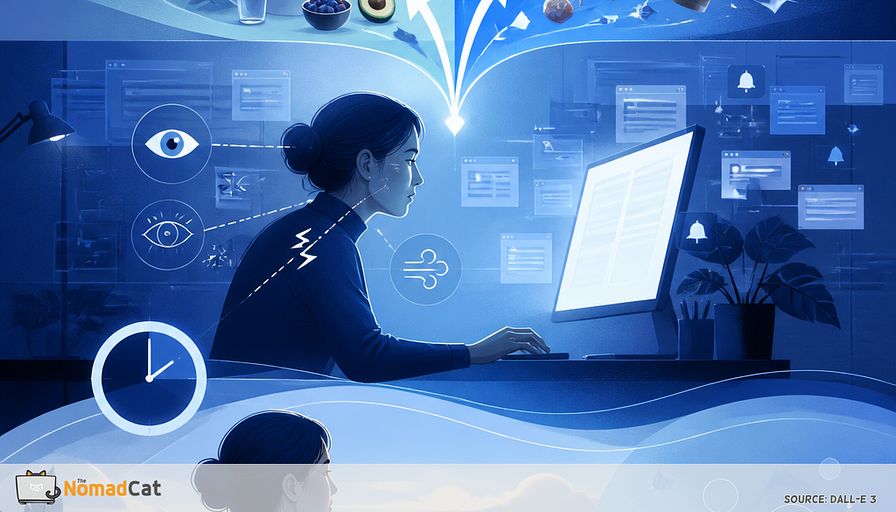
Around 15:00, something weird happens at the desk.
I’ve spent most of my adult life at a desk (Beijing offices, then Berlin, now Lisbon), and the pattern is boringly reliable: if I stay glued to the screen, 15:00 shows up.
It does not feel like normal hunger. It arrives like a popup you didn’t ask for. Suddenly the brain wants one very specific thing. Crunchy and salty. Sweet and fast. A warm drink. Coffee plus “a small thing” that becomes 3.
And then comes the unhelpful part. A little guilt. The quick story about discipline. The internal debate that somehow makes the craving louder, not quieter.
This article offers a calmer explanation. Sometimes the 15:00 urge is real fuel need. Sometimes it is state-change eating, when the nervous system wants a fast shift because the work setup is quietly getting uncomfortable. Eye strain, dry air, jaw tension, shallow breathing, notification irritation. Boring signals, but they add up.
What you’ll get here is a simple map to separate hunger from “something else,” without making food a moral issue. It covers
- the 2 overlapping systems that drive eating at 15:00
- the desk symptom cluster that often shows up at the same time
- a 10-second check to tell broad hunger from narrow craving
- a short, practical sequence to test whether a small state change lowers the urge
- guardrails so it doesn’t turn into a weird food rule
The goal is not perfection. It is fewer mystery crashes in the afternoon, and a 15:00 that feels more predictable than personal.
The 15:00 craving that feels like a system error
Why the 15:00 urge is often weirdly specific
Around 15:00, the urge doesn’t arrive like normal hunger. It pops up like an error message you didn’t click. Urgent. Weirdly precise. Even if lunch was fine and not 6 hours ago.
It’s rarely “food” in general. It’s a very particular button.
- something crunchy and salty
- something sweet and fast
- a warm drink
- or coffee plus a “small thing” (the small thing that becomes 3)
The mild guilt often comes from the wrong diagnosis. It gets labeled as “lack of discipline,” so the brain starts arguing with itself, and the urge gets louder.
A more useful frame is that 2 systems can overlap.
- homeostatic hunger, actual energy need
- hedonic eating, food as reward or state shift
It’s not cheating to say “not hungry, but I want something.” That split is real for a lot of people.
If it’s not classic hunger, what is the system reporting at the same time?
The desk environment creates a pretty repeatable error log.
- heavy eyelids, eye rubbing
- blurry refocusing moments
- low-grade headache or head pressure
- dry eyes or burning sensation
- dry mouth even if you’re not truly dehydrated
- jaw clench, teeth pressed together
- shallow breathing, held breath during focus
- rereading the same line and it still doesn’t land
- more typos and small mistakes
- irritation at normal things like Slack pings
Taken alone, each one is boring. Together, it’s a cluster. Screen work can reduce blinking, and that alone can make eyes feel dry and irritated. Add long focus blocks and the small mistakes start showing up even if you’re still “working fine.”
This is configuration, not character.
You see it more on days with long near-focus blocks. Spreadsheet days. Debugging days where you don’t move because you’re “almost done” for 2 hours. It also spikes on camera-on meeting days, where screen strain stacks with extra mental load and self-monitoring.
So give the pattern a neutral name.
Call it sensory-hunger, or state-change eating. It doesn’t deny real hunger. It’s just a label for moments when the brain wants a fast change in state and food or coffee are the easiest buttons.
Evidence that eye strain by itself causes snacking is limited. Treat this as a testable idea.
A 10 second map for hunger vs state-change eating
2 patterns that look identical at 15:00
A useful shortcut is fuel need versus state-change seeking. “Wanting” is not the same thing as hunger.
Real hunger tends to look like this
- comes on slowly
- feels broad, several foods sound fine
- boring food would still work
- linked to time since last meal, meal size
Sensory-hunger tends to look like this
- comes on fast, like a popup
- feels narrow, only one category will do
- shows up with eye strain, dry mouth, jaw tension, irritation
- wants a change in state more than calories
Not perfect, not medical. Just a map that helps avoid the automatic “I’m weak” story.
Also, cravings are not fake. Sensory-hunger can stack on real fuel debt, especially with short sleep. Sleep restriction tends to push snack intake up and makes reward foods more tempting. Heavy cognitive work can also nudge intake later.
Permission slip, because adults apparently need it. If you are actually hungry, eat.
What drives sensory hunger at a desk
Visual fatigue feels like an urgent state change
Unbroken near-focus is like running a laptop at max brightness with 27 tabs and pretending the fan noise is “normal.” After 30–120 minutes of continuous screen work, visual comfort can drop fast.
Near work locks your eyes at one distance, forces constant tiny refocusing, and eventually refocusing feels sticky or slightly blurry. It’s not dramatic pain. It’s low-grade annoyance that makes everything feel more effortful.
Lighting often makes it worse in quiet ways. The boring basics keep coming up for a reason: breaks, viewing distance, glare.
Dry air and blink suppression add irritation
Heated buildings often run dry in winter. That level of indoor dryness can increase complaints like dry eyes and throat. Then screen work adds a second layer.
Screen tasks tend to reduce blinking and increase incomplete blinks, which can make eyes feel worse over time. It’s local maintenance failure. Like skipped garbage collection, nothing crashes immediately. The system just gets progressively annoying.
Mouth dryness can also creep in during focus because swallowing drops and breathing gets shallow. Coffee becomes an easy patch, even when it’s not the real fix.
Clenching and chewing loops
Awake clenching is common on high-focus days. It can sit under the radar until later. Chewing becomes a fast regulation tool, which is why crunchy snacks work so reliably.
Chewing gum is the cleanest example because it separates chewing from calories. Evidence is mixed and effects are modest, but it’s not crazy that chewing can slightly shift alertness or stress.
The loop is learned relief, not a character flaw. Discomfort rises. Chewing gives relief. The brain stores the association.
The 20-second check before you eat
The plain food question
Do not turn this into a courtroom test. It’s a quick diagnostic, like checking logs before restarting the server.
Ask:
Would a plain, boring food work right now
If yes, that looks like fuel need.
If no and only a very specific crunchy sweet warm thing will do, that looks more like state-change seeking.
Plain-food options that work as a heuristic
- leftovers from lunch
- plain yogurt or cottage cheese
- a banana or an apple
- a handful of nuts
- a simple sandwich
This is not formally validated. It’s a clue, not a verdict. If it creates anxiety or restriction vibes, drop it.
The 2-minute state-change question
Ask:
If you change state for 2 minutes, does the urge drop by around 30%
Calories don’t fix an energy deficit in 90 seconds, but discomfort can shift fast. Short breaks can reduce discomfort without hurting performance in office-type tasks.
Speed is the tell. Mouth-feel, warmth, chewing, novelty change in seconds and the brain reacts fast. Caffeine is a good reality check. People feel relief immediately because the ritual is strong, but the actual stimulant effect is more like 15–30 minutes. So if the urge drops within 60–120 seconds after a sensory change, “energy delivery” is less likely to be the missing piece.
If the 2 minutes do nothing and plain food suddenly sounds good, eating is a reasonable fix.
A 2-minute sensory switch as a 5-day test
Pick a trigger that already happens.
- first strong snack or coffee urge after 13:30
- first reread-blur moment
When it fires, try the same tiny sequence. Not because it’s sacred. Because automation beats willpower at 15:00.
Eyes first
Keep it boring and fast. Pick 2 of these, not all 6.
- Look far for 20–30 seconds.
- Soften focus, let the eyes unlock.
- Blink slowly a few times, full eyelids.
- Drop screen brightness 1–2 notches.
- Kill reflections if you can, tilt screen, shift chair.
- Reduce overhead glare if possible.
The 20-20-20 rule is folk guidance, not religion. The idea behind it is simple.
Mouth and jaw, camera-safe
- Sip water or rinse then swallow.
- Unclench. Teeth apart, tongue on palate.
- 1 slow exhale, longer than the inhale.
- Drop shoulders 2 cm. Yes, really.
This is not a hydration doctrine. It’s restoring sensation and stopping the silent clench loop.
No new information for 60 seconds
No Slack. No email. No news. No “just checking” the phone.
Even if I don’t reply, one ping is enough to make me context-switch, and the craving gets louder. So for 60 seconds, remove the cues and let the nervous system stop scanning for pings.
Decide after, not before
After the 2 minutes, decide. Coffee or snack is allowed. The point is that it becomes a choice, not a reflex.
If chewing is the main pull, gum can be a decent non-caloric option. Just don’t expect miracles. It’s gum, not firmware.
What “working” looks like
No tracking. No morality.
Useful outcome markers for 5 days
- fewer urgent snack runs that still don’t satisfy
- less coffee escalation from 15:00 to 17:00
- fewer typos and rereads
- less 16:00 irritability and ping-reactivity
- dinner feels less like repayment for the afternoon
- if you track sleep, note whether late-afternoon coffee escalates into a later bedtime; sleep is the variable I have not solved
A 1-line log that won’t ruin your evening
“16:30: steady / snacky / coffee-urgent / foggy. Switch Y/N. Note 1 thing (glare, calls, sleep).”
Guardrails that keep this from becoming a weird food rule
When not to treat this as a desk tweak
If symptoms are severe, new, or getting worse, get evaluated.
Stop signs include
- dizziness, fainting, near-fainting
- new or severe fatigue out of pattern
- unintentional weight loss
- chest pain or pressure
- severe headaches or fast-changing headache pattern
- sudden visual changes beyond normal blur
- anything progressive where each week is worse
If there is a known higher-risk glucose context, delaying food to “test a hypothesis” can be unsafe.
And if any of the checks increase food anxiety, guilt, or restriction thinking, drop them. Debug tools that make the system worse are not useful tools.
If the switch fails after 5 days
Same trigger, same 2-minute sequence, 5 workdays, and nothing changes. That suggests sensory strain was not the main driver for this pattern.
Switch hypotheses to the usual big ones.
- underfueling or low-satiety lunch
- sleep restriction
- stress load
- caffeine timing drift
- office air quality
The point
The goal was never virtue. It was fewer mystery crashes.
That 15:00 snack alarm is not always a discipline problem. Often it is 2 systems overlapping. Sometimes you are simply underfueled and plain food would work. Other times the desk has been quietly loading the error log: eye strain, dry air, jaw clench, shallow breathing, ping irritation. Then the brain asks for the fastest state change it knows: crunchy, sweet, warm, coffee plus “a small thing.”
The useful move is keeping it neutral and testable. Run the 10-second “would boring food work” check. If it feels like a popup craving, try a 2-minute state change first, then decide. No virtue points, no weird food rule, just fewer mystery crashes and less late-day repayment at dinner.
Most people will recognize one of the 2 first: broad hunger, or the very specific button.


